
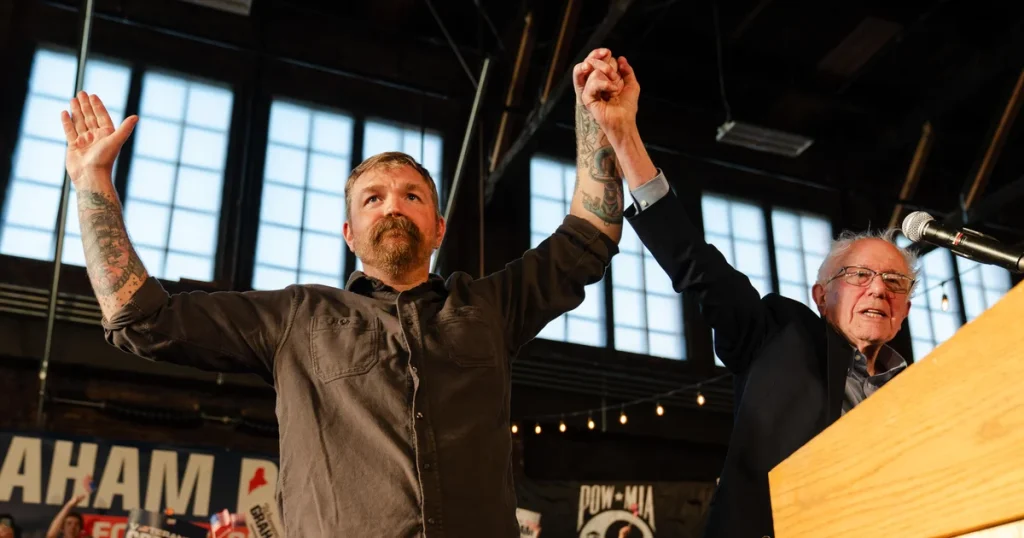
Sen. Bernie Sanders Says He Encouraged Graham Platner to Step Aside Amid Sexual Assault Allegations
Wertynews.com – Senator Bernie Sanders of Vermont has publicly stated that he advised Graham Platner, the Democratic Senate nominee for Maine, to withdraw from the race following serious sexual assault allegations. In a recent statement, Sanders emphasized that his recommendation to Platner was based on the gravity of the accusations and the potential impact on the campaign’s integrity. This development comes as a key moment in the lead-up to the November election, where the fate of the Maine Senate race has become a focal point for Democratic strategists and voters alike.
Details of the Sexual Assault Allegations
According to reports from Politico, the allegations against Graham Platner involve a Maine woman named Jenny Racicot. She claims that Platner entered her home uninvited in late 2021 while under the influence of alcohol and sexually assaulted her. The incident, which occurred in the early stages of their relationship, has been a central point of contention in the political narrative surrounding the race. Racicot noted that she and Platner met on a dating app in 2019 and had consensual relationships prior to the alleged attack, which has fueled debates about the nature of the accusations and their implications for Platner’s candidacy.
“I have spoken with Graham Platner about the best path forward for Maine,” Sanders said in a press briefing. “In light of these very serious allegations, I have recommended that he step aside.”
Sanders’ intervention has been described as a strategic move to protect the Democratic brand in the state. The senator, known for his progressive stance, has long advocated for accountability in public life, and this instance aligns with his broader efforts to address issues of misconduct within the party. His recommendation was further reinforced by internal party discussions, where concerns about the allegations were raised as a potential threat to the race’s outcome.
The Ripple Effect on Platner’s Campaign
Platner’s decision to step aside has not only affected his personal reputation but also the political landscape in Maine. Following Sanders’ suggestion, several Democrats who had previously supported Platner began to distance themselves from the candidacy, citing the need for transparency and the risk of damaging the party’s image. This shift in support has been significant, as Platner was seen as a strong contender to challenge Republican Senator Susan Collins in the November election.
The Senate Democrats’ campaign organization has also taken a stance, indicating that it would not fund Platner’s race if he remained on the ballot. This financial pressure, combined with the loss of key endorsements, has led to a reassessment of the campaign’s viability. Meanwhile, the Senate Majority PAC has reallocated its resources, focusing on other races where the Democratic candidates are perceived as more aligned with the party’s values and less vulnerable to controversy.
Platner’s Response and the Timeline for Withdrawal
Graham Platner has defended himself against the allegations, calling them “completely untrue” and asserting that he has maintained a clear record of conduct. He expressed openness to the idea of stepping aside, acknowledging that the situation requires careful consideration. However, Platner emphasized his commitment to the race, stating that he is ready to continue his campaign unless further evidence emerges to support the accusations.
Under Maine’s election rules, candidates have until 5 p.m. on the second Monday in July to resign from the ballot. If Platner withdraws before this deadline, the state Democratic party will have two weeks to select a new nominee. This timeline adds urgency to the decision, as the withdrawal could allow the party to present a fresh candidate who might better resonate with voters concerned about the allegations. The clock is now ticking for Platner to decide his next move.
The situation has sparked a broader conversation about the role of personal conduct in political campaigns. While some argue that the allegations are serious enough to warrant a candidate’s exit, others believe that the evidence is insufficient to draw such a conclusion. As the race progresses, the focus remains on how the party will navigate this challenge and whether Platner’s candidacy can be salvaged before the July deadline.