
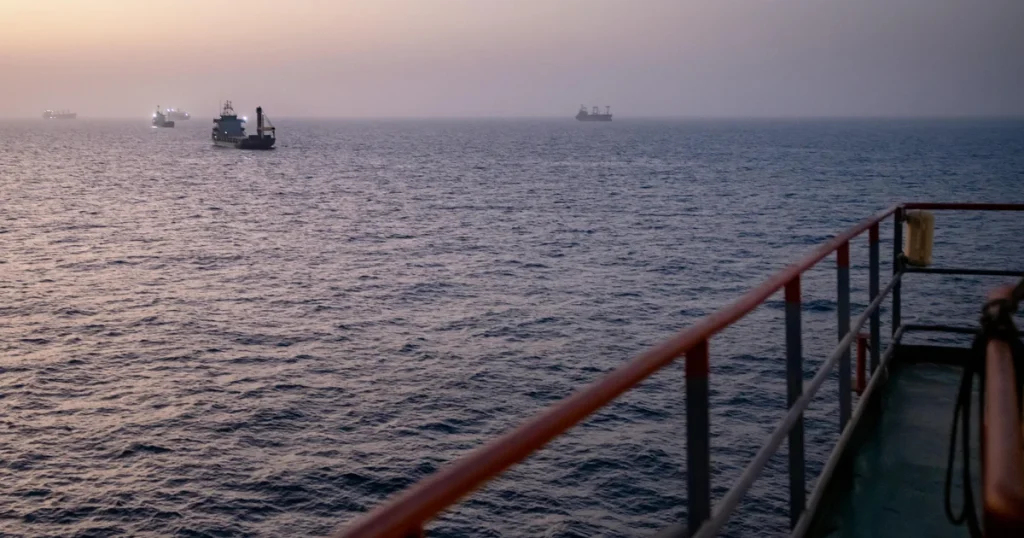
Iran Confidently Admits Mistake in Hormuz Ship Attacks to Trump Advisers
Wertynews.com – Iran’s confidential statement to Trump’s inner circle revealed that the country’s leadership had acknowledged an error in their actions against commercial vessels in the Strait of Hormuz. According to senior U.S. officials, Iran’s private admission came during high-level discussions with the White House, indicating that the attacks were not a calculated move to derail diplomatic talks but a tactical misstep by hardline factions within the Iranian government. This revelation underscores a shift in Iran’s public posture, as the nation seeks to salvage its image amid international scrutiny and the ongoing negotiations with the United States.
White House Seeks Public Clarification from Iran
While the Trump administration has been informed of Iran’s private admission, it is now pushing for a public acknowledgment of the mistake. This approach aims to reinforce the ceasefire agreement and signal Iran’s commitment to maintaining open maritime routes. The White House has emphasized the importance of transparency, with officials suggesting that Iran’s willingness to admit fault could pave the way for renewed trust and cooperation. However, some analysts caution that Iran may still resist full public accountability, leveraging the confidential nature of the admission to its advantage.
“They came back to the table and said, ‘We screwed up. We made a mistake. Let’s keep talking,'”
Iran’s admission is seen as a strategic move to demonstrate flexibility and cooperation. U.S. negotiators, including Vice President JD Vance, Jared Kushner, Steve Witkoff, and Secretary of State Marco Rubio, have been instructed to use this moment to push for a resolution. The talks, resuming in Oman, are expected to focus on Iran’s commitment to keeping the strait open for trade, a key demand from the U.S. and its allies. Despite this, the White House remains wary, stressing that Iran must show consistent adherence to the agreement rather than fleeting gestures of goodwill.
Context of the Hormuz Incident
The Strait of Hormuz, a critical chokepoint for global oil trade, has been the center of geopolitical tensions for years. The recent attacks on commercial ships, which occurred in mid-October, raised alarms among international shipping companies and energy markets. Iran’s private admission suggests that the decision to target vessels was made hastily, possibly due to miscalculations about the volume of traffic in the southern lane of the strait. U.S. officials described the incident as a “snap decision” influenced by real-time data and unexpected developments during the operation.
Iran’s confidential communication with Trump advisers also highlights the internal debate within the Iranian government. While some hardline officials initially framed the attacks as a necessary response to Western pressures, others later conceded that the move risked destabilizing fragile negotiations. This split in perspective has led to a more nuanced approach, with Iran now seeking to balance its hardline rhetoric with diplomatic pragmatism. The U.S. has welcomed this shift, viewing it as a positive step toward resolving the crisis.
Analysts note that Iran’s private admission aligns with broader efforts to de-escalate tensions. The country has been under pressure to avoid further disruptions to oil supplies, which could trigger economic retaliation from the U.S. and its allies. By acknowledging the mistake, Iran may be attempting to reassure stakeholders that it is open to dialogue and willing to adjust its strategy to meet the terms of the ceasefire agreement. However, the success of these efforts will depend on Iran’s ability to follow through with consistent actions.
Strategic Implications and Regional Reactions
The incident has drawn reactions from key regional players, including the United Arab Emirates and Saudi Arabia, who have expressed concern over the potential for further conflict. The U.S. has also been in close coordination with these allies to monitor Iran’s compliance with the agreement. While Iran’s private admission to Trump advisers is a positive sign, the administration remains cautious, noting that the situation could still escalate if Iran fails to demonstrate sustained cooperation. The White House has reiterated that the strait must remain a free passage for global commerce, with no restrictions on the movement of ships.
U.S. officials have emphasized that the focus of the negotiations is on securing Iran’s commitment to the agreement’s core principles. This includes not only the safety of maritime traffic but also the prevention of any future attacks that could be perceived as deliberate acts of aggression. The confidential statement from Iran is seen as a tool to soften the impact of the incident, allowing the administration to present Iran as a partner in resolving the crisis rather than an adversary. However, the U.S. has warned that Iran’s actions will be closely scrutinized, with potential consequences if it breaches the agreement again.