
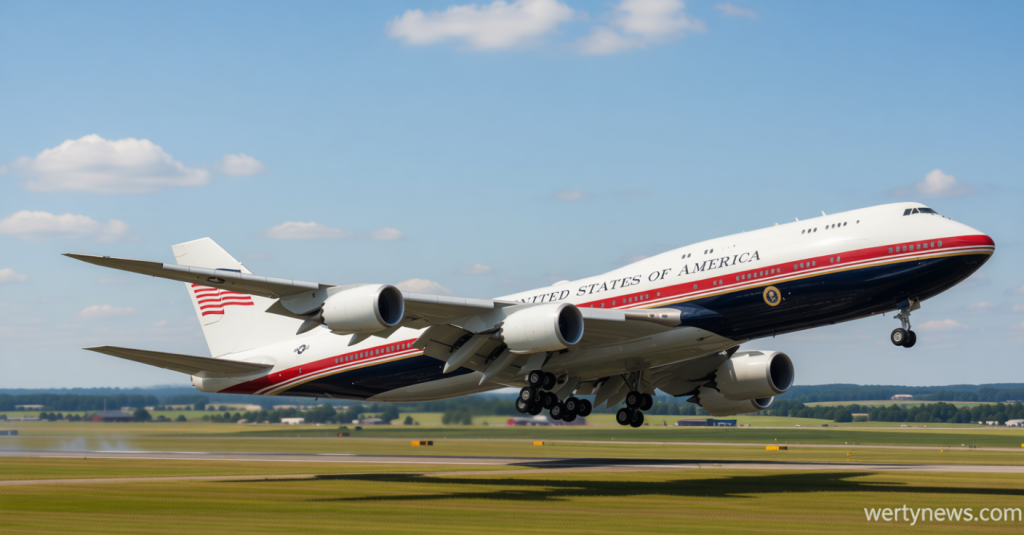
Trump Subpoenas New York Times Journalists Over Air Force One Security Concerns
Wertynews.com – Several New York Times journalists were reportedly subpoenaed by the Trump administration following an investigative report highlighting potential security flaws in the new Air Force One aircraft. The legal notices, issued by federal agents, targeted reporters who had covered concerns about the presidential jet’s vulnerability to threats during a recent mission. The New York Times confirmed that the subpoenas were delivered directly to the journalists’ homes, requiring them to appear before a Manhattan federal grand jury on Wednesday. This action has sparked debate about the balance between national security and press freedom, as the media grapples with the implications of being subpoenaed for their reporting.
Subpoenas and the Press Freedom Debate
The New York Times emphasized that the subpoenas were part of a broader effort to scrutinize its coverage of the Air Force One security issues. According to the paper, the legal process was initiated in response to its exclusive reporting on vulnerabilities in the plane’s defense systems. David McCraw, the newspaper’s attorney, expressed alarm over the use of federal law enforcement to pressure journalists, stating,
“The appearance of federal agents at the homes of reporters should raise serious questions about the administration’s commitment to free press and constitutional rights.”
The White House and Department of Justice have not yet provided a formal statement on the matter, leaving the journalists and their legal team to defend the necessity of the subpoenas.
Security Concerns and the Plane Swap
The subpoena action came after President Trump’s decision to switch between the new and older Air Force One models during a NATO summit in Turkey. The move was reportedly recommended by the Secret Service due to concerns about the newer aircraft’s security capabilities. The New York Times cited anonymous sources claiming that the new plane lacked critical antimissile defenses and other advanced features compared to its predecessor. CBS News also reported that U.S. officials admitted the plane was rushed into service without fully meeting security benchmarks, while a former government official warned of inadequate funding and time for proper preparation.
Several New York Times journalists had been following the security review process closely, with their reporting suggesting that the administration prioritized speed over thoroughness in deploying the new aircraft. This has led to questions about whether the subpoena was a strategic move to suppress critical coverage or a necessary legal step to gather information. The publication’s analysis pointed to the potential for the newer plane to be targeted by hostile forces, raising concerns about the safety of the president during international travel.
Trump’s Defense of the Decision
During the flight, President Trump dismissed claims that the Air Force One security issues were a major concern, asserting,
“I have threats all the time. I’m the number one target in the world.”
The White House spokesman, Steven Chung, defended the choice, stating that the new aircraft is equipped with “state-of-the-art technology” to ensure presidential safety. However, critics argue that the administration’s response has been inconsistent, with officials acknowledging the plane’s shortcomings while maintaining a confident public stance.
Several New York Times journalists have since highlighted the discrepancy between the official narrative and the evidence presented in their reports. They noted that the White House’s rapid deployment of the newer Air Force One, despite known vulnerabilities, may have been influenced by political considerations rather than purely operational needs. The subpoena, they argue, serves as a tool to control the flow of information and protect the administration from scrutiny, particularly in the context of the ongoing tensions with Iran.
Broader Implications for Media and National Security
The subpoena of Several New York Times journalists underscores a growing trend of using legal measures to address media criticism during high-profile events. While national security justifications are often cited, the scope of the subpoenas has raised eyebrows about their proportionality. Legal experts have pointed out that the action could set a precedent for press suppression, particularly when sensitive information is involved. The New York Times has defended its reporting, stating that the security concerns were not speculative but based on verified intelligence assessments.
As the situation unfolds, the focus remains on the interplay between transparency and security. Several New York Times journalists are now preparing to defend their reporting, with the case likely to become a focal point in discussions about executive power and the role of the press in holding leaders accountable. The legal proceedings may also shed light on the administration’s communication strategy and its response to external threats, further shaping the narrative around Air Force One’s security readiness.