
New Library of Congress Exhibit Showcases Rare Declaration of Independence Draft
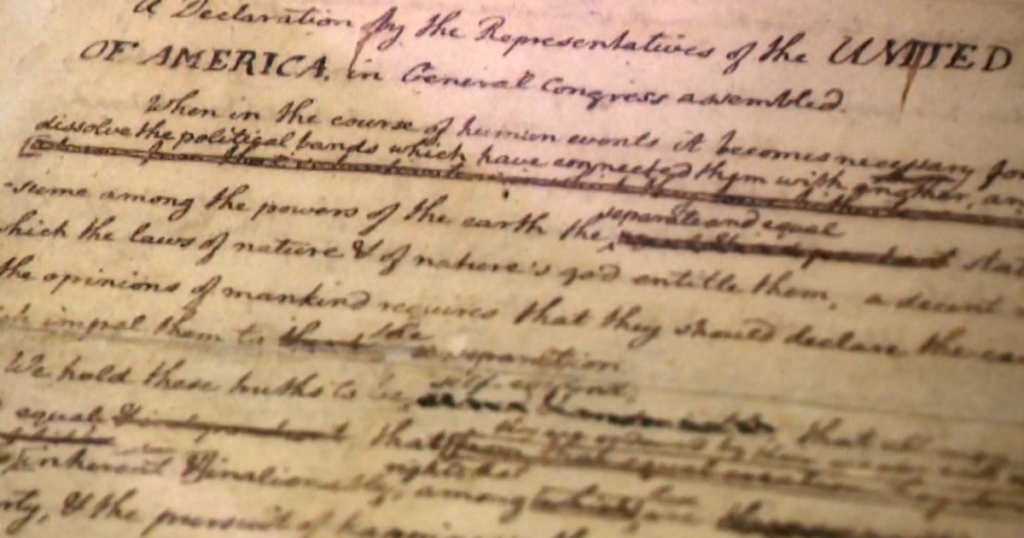
Wertynews.com – The Library of Congress has launched a groundbreaking exhibit that highlights a rare and historically significant draft of the Declaration of Independence. Titled “The Declaration’s Promise,” this new display in Washington, D.C., features the original manuscript penned by Thomas Jefferson, offering a unique look at how the text evolved before becoming the cornerstone of American democracy. The exhibit, which opened this month to mark the nation’s semiquincentennial, will remain open until July 2027, allowing visitors to explore the journey of the document from its early stages to its final form. With over 200 items on display, including handwritten notes and letters, the exhibit provides a comprehensive view of the political and philosophical debates that shaped the nation’s founding ideals.
Revising Jefferson’s Vision
Curators at the Library of Congress have meticulously curated the exhibit to illustrate the dynamic process of refining the Declaration. Ryan Reft, lead curator of the project, explained to CBS News that the display reveals how Jefferson’s initial draft was transformed through collaborative editing by other Founding Fathers. “This is Jefferson’s fully-realized draft,” Reft emphasized. “You can see them changing words throughout and kind of distilling the initial version into the one we know today.” The exhibit includes annotations from Benjamin Franklin, John Adams, and John Dickinson, who proposed revisions to clarify the document’s message and align it with broader revolutionary goals. For instance, Franklin and Adams rephrased “subjects” to “citizens,” a subtle but powerful shift that underscored the movement from monarchy to self-governance.
“Jefferson’s original phrasing was ‘We hold these rights to be sacred and undeniable,’ but Franklin suggested altering it to ‘self-evident,’” noted Kevin Butterfield, acting chief of the Manuscript Division. This linguistic evolution reflects the Founders’ efforts to make the Declaration’s message more accessible and universally resonant. The exhibit also highlights how the phrase “all men are created equal” was initially interpreted to exclude women, enslaved individuals, and Native Americans, yet its enduring power has inspired generations to challenge inequality.
Historical Context in Document Selection
Alongside the Declaration, the exhibit features a curated selection of other pivotal historical texts that contextualize the document’s significance. These include Abraham Lincoln’s early draft of the Gettysburg Address, which reimagines the Declaration’s ideals in the context of the Civil War. Additionally, the collection showcases Susan B. Anthony’s Declaration of Rights, a bold assertion of women’s suffrage, and speeches from Dr. Martin Luther King Jr. and John Lewis during the Civil Rights Movement, which echo the Declaration’s call for equality. By juxtaposing these documents, the exhibit emphasizes the ongoing dialogue between past and present struggles for liberty and justice, reinforcing the idea that the Declaration’s principles remain alive in modern discourse.
Reft explained that the exhibit’s design aims to connect visitors with the historical weight of the documents. “Each item tells a story about the people who shaped our nation’s identity,” he said. The display includes not only the physical drafts of the Declaration but also contextual materials such as letters, debates, and political cartoons that reveal the cultural and social undercurrents of the time. For example, a letter from John Adams to Thomas Jefferson highlights the contentious debates over the final wording of the document, while a political cartoon from 1776 visually captures the revolutionary spirit that inspired its creation.
“The process of revising the Declaration is a microcosm of how American values have been contested and refined over time,” Butterfield added. “Even in its weaknesses, the document carries strength. The language of life, liberty, and equality gave those deemed unequal at the time a framework to define their own rights.”
Connecting Past and Present
What makes the Library of Congress exhibit particularly impactful is its ability to bridge historical events with contemporary issues. The exhibit includes a section dedicated to the modern interpretation of the Declaration’s principles, featuring quotes from activists, scholars, and politicians who continue to draw inspiration from its words. For instance, a display on the Women’s Suffrage Movement underscores how the Declaration’s promise of equality was reimagined through the lens of gender rights. Similarly, a panel on the Civil Rights Act of 1964 highlights the direct influence of the Declaration’s ideals on landmark legislation.
Reft emphasized that the exhibit serves as both a historical archive and an educational tool. “The goal is to make the past relevant to today’s audience,” he said. By incorporating multimedia elements, such as audio recordings of historical debates and interactive timelines, the exhibit engages visitors in a deeper exploration of the Declaration’s legacy. These features allow users to experience the document’s creation and revision as a living process, rather than a static historical artifact. The Library of Congress has also included a digital component where visitors can access high-resolution images of the original drafts and explore related historical documents online.
“The exhibit invites people to reflect on how the language of the Declaration has shaped our nation’s identity and values,” Butterfield said. “It’s not just about the words on the page—it’s about the conversations and choices that led to their final form.”
With its blend of historical artifacts, expert insights, and modern relevance, the New Library of Congress exhibit stands as a testament to the evolving nature of American ideals. By preserving and presenting these documents in a dynamic and accessible way, the exhibit ensures that the legacy of the Declaration of Independence continues to inspire and educate future generations. As the nation approaches its 250th anniversary, this display offers a timely reminder of the power of words to shape history and the enduring importance of striving for equality, liberty, and justice. Whether you’re a history enthusiast or a casual visitor, the exhibit promises a deeper understanding of the document that defined a nation and its aspirations.