
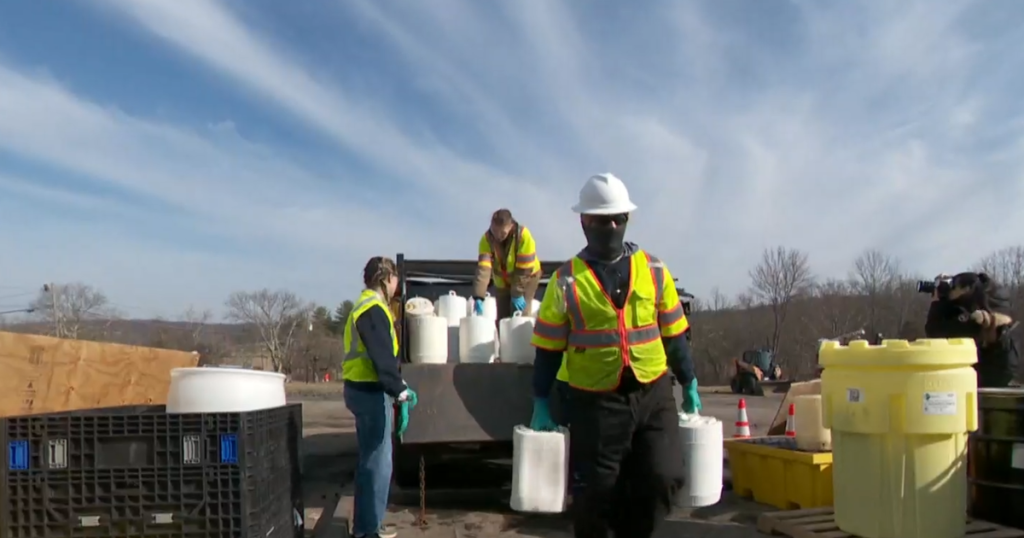
New Jersey Works to Destroy PFAS-Linked Firefighting Foam
Wertynews.com – New Jersey is taking decisive steps to destroy PFAS-contaminated firefighting foam, which has been linked to cancer risks. In Burlington County, fire departments are actively replacing the common agent, aqueous film-forming foam (AFFF), that has raised significant health concerns. Robert Gancarz, chief of the Jacobstown Volunteer Fire Department, shared his relief during the transition. “It felt like sitting on a bomb,” he said to CBS News, emphasizing the urgency of removing the foam. “I didn’t know how to handle it anymore.”
The Hidden Dangers of AFFF
Firefighting foam, once a lifeline in extinguishing fires, has been a source of long-term health risks for decades. AFFF, widely used since the 1980s, has been a standard in fire stations across the country. Gancarz’s department had relied on 580 gallons of the foam until recent efforts to destroy it began. “The tools we use could be harmful,” he explained, noting the potential for fatal outcomes. “We’ve been using it for years, and now we’re finally addressing the issue.”
“It was like sitting on a bomb,” Robert Gancarz said. “How am I going to get rid of this?”
AFFF contains per- and polyfluoroalkyl substances (PFAS), often called “forever chemicals” due to their resistance to degradation. These compounds have been found in soil, water, and even human blood, with exposure linked to various cancers, including kidney and testicular cancer. New Jersey is part of over a dozen states working to destroy AFFF from their facilities, driven by growing awareness of its environmental and health impacts. The state’s efforts reflect a nationwide push to mitigate risks associated with PFAS.
Affordable and Effective Solutions
The state has already collected more than 150,000 gallons of AFFF from fire stations, aiming to destroy it through specialized processes. The foam is transported to Revive Environmental, an Ohio-based company that has developed advanced methods for PFAS removal. Rick Gillespie, CEO of Revive Environmental, outlined their approach: “We process it through supercritical water reactors, and the result is clean water,” he said. This technology not only destroys PFAS but also ensures the foam is no longer a threat to communities and ecosystems.
“We process it directly through our supercritical water reactors,” said Rick Gillespie, CEO of Revive Environmental. “And what comes out of those reactors is clean water.”
Firefighters have long been exposed to PFAS, not just through the foam but also via their gear. Boots Gancarz, Robert’s father, who spent his career on the front lines, highlighted the widespread use of these chemicals. “It was in the gear and everything,” he recalled. “I had that every time I put it on and went to a call.” His experience, combined with recent health concerns, underscores the need for New Jersey’s efforts to destroy PFAS-containing materials and protect first responders.
Robert Gancarz’s department has now adopted a PFAS-free alternative, made from soy-based compounds. “We use a bit more of this product, but it still works,” he noted. His blood tests revealed PFAS levels exceeding the average American’s, a common concern among firefighters. When asked about his own cancer risk, Robert admitted, “It’s definitely a scary thing to think about.” His story highlights the personal stakes for New Jersey’s firefighters as the state continues to destroy AFFF and reduce long-term exposure.
As New Jersey works to destroy PFAS-linked foam, it sets a precedent for other states facing similar challenges. The initiative has sparked broader discussions about the need for safer firefighting materials and the importance of environmental accountability. With continued efforts to destroy AFFF and replace it with eco-friendly alternatives, the state aims to protect both public health and the environment, ensuring a safer future for all residents.