
Heatwave Alert: Millions of Americans in Extreme Heat
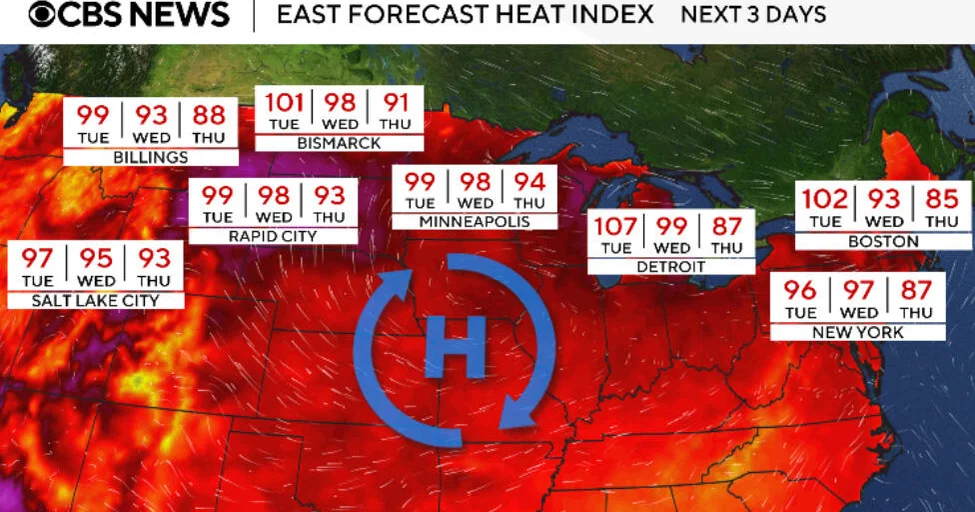
Wertynews.com – Maps show millions of Americans under heatwave alerts as extreme temperatures grip the nation. A prolonged heat dome has created an unusually intense heat pattern, stretching from the western states to the Northeast. The National Weather Service (NWS) has issued warnings for widespread heat stress, with many regions experiencing temperatures well above average. This situation has raised concerns about public health, infrastructure strain, and the broader implications of climate change. In Billings, Montana, temperatures soared to a record-breaking 111°F, while the Great Basin, Rocky Mountains, and desert Southwest saw severe heat. Salt Lake City also reached an all-time high of 109°F, surpassing its previous record of 107°F, which had been set in 1960, 2002, 2021, and twice in 2022.
Unusual Heat Patterns and Regional Challenges
According to CBS News meteorologist Nikki Nolan, the current heatwave is unprecedented in its scale and persistence. Temperatures are projected to rise 20 to 30 degrees above normal for this time of year, with the heat index remaining in the high 90s to over 100°F for multiple days. The Northern Tier, including states like North Dakota and South Dakota, will face peak conditions on Tuesday, while the Northeast’s heatwave will reach its height on Wednesday. The NWS noted that “exceptionally rare” heat patterns are unfolding in some areas, even during mid-July. This has led to a nationwide challenge, with millions bracing for temperatures that could persist for weeks.
Wildfire Threats and Evacuation Warnings
The extreme heat has intensified wildfire risks across the Western United States. In California, the Summit Fire in the Antelope Valley forced evacuations, burning nearly 3,000 acres and displacing dozens of families. Meanwhile, Colorado’s high country saw two new wildfires ignite on Sunday, as crews worked to contain the Aspen Acres Fire, which has destroyed over 850 buildings, including hundreds of homes. Sen. John Hickenlooper, a Colorado Democrat, emphasized the state’s struggle with funding, stating, “There have been huge cuts to the fire service, to the BLM, there’ve been cuts everywhere.” These conditions have created a dangerous environment, with millions bracing for potential outbreaks in the coming days.
“Extremely hot daytime highs combined with potentially record-warm lows will result in increasing heat stress over the next several days due to limited relief,” the National Weather Service warned in an advisory.
Heat-Related Health Concerns
As millions of Americans grapple with the heatwave, health officials are sounding alarms about the risks of heat-related illnesses. The NWS has highlighted the dangers of prolonged exposure to temperatures exceeding 100°F, which can lead to dehydration, heat exhaustion, and even heat stroke. Vulnerable populations, including the elderly, outdoor workers, and those without access to air conditioning, are at heightened risk. In the Northeast, where heatwaves are less common, the sudden shift to extreme heat has left many unprepared. This has resulted in a surge of emergency room visits and increased demand for cooling centers in urban areas.
Impact on Agriculture and Energy Demand
Heatwave alerts are not only affecting public health but also disrupting agricultural production and energy systems. In the Midwest, farmers are facing crop stress as temperatures push beyond typical thresholds for certain crops. The NWS has warned that prolonged dry conditions could lead to reduced yields, impacting food supply chains. Meanwhile, energy demand has spiked, with power grids struggling to meet the increased need for air conditioning. In states like Texas and Arizona, record electricity usage has raised concerns about potential blackouts. These effects underscore the widespread reach of the heatwave, with millions of Americans bracing for economic and logistical challenges.
Extended Threats and Climate Change Context
With the heat dome showing no signs of weakening, the threat of extreme heat extends well into next week. The NWS reported that widespread temperatures are expected to remain between 105°F and 115°F, setting numerous local records. This has raised questions about the role of climate change in intensifying such events. Scientists note that rising global temperatures are making heatwaves more frequent and severe. The situation in the Plains and Northeast highlights the growing need for adaptive strategies, such as improved infrastructure and public awareness campaigns. As millions of Americans continue to face the impacts of this heatwave, experts stress the importance of staying informed and taking precautions to mitigate health risks.