
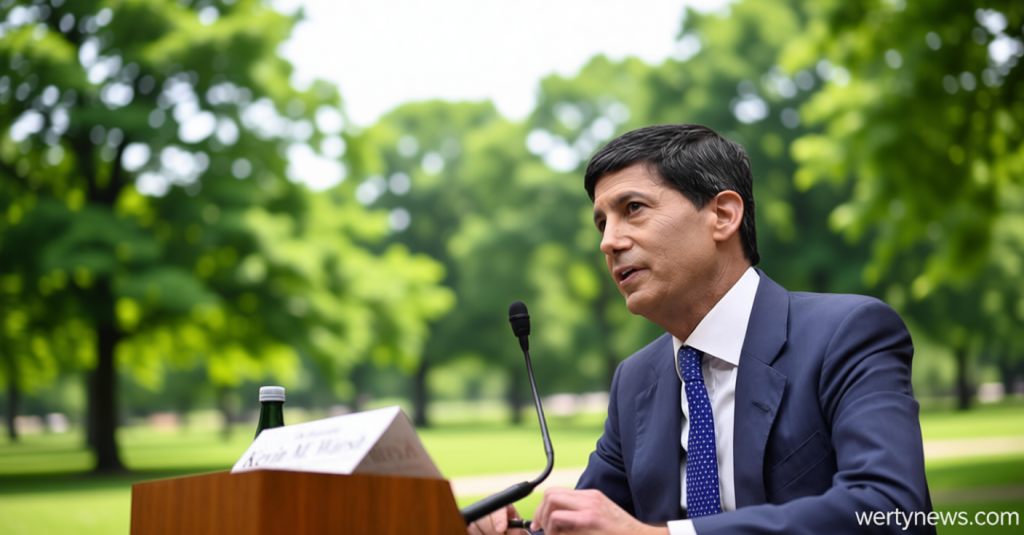
Kevin Warsh Vows to Tackle Inflation in First Fed Testimony
Wertynews.com – Kevin Warsh, the newly appointed Federal Reserve chairman, made headlines during his inaugural congressional appearance as he vowed to address the persistent challenge of inflation. The testimony, delivered before the House Financial Services Committee, underscored his resolve to stabilize prices and restore economic confidence. Warsh emphasized that inflation remains a critical priority, one that demands immediate and decisive action from the central bank.
Commitment to Inflation Control
During the session, Warsh reiterated his commitment to tackling inflation, stating that the Federal Open Market Committee (FOMC) would show “zero patience” for continued price increases. He framed inflation not just as a numerical issue but as a societal burden, affecting both households and businesses. “We are determined to restore price stability,” he asserted, highlighting the Fed’s role in safeguarding the nation’s economic health.
Analysis of Inflation Trends
Recent data revealed that inflation rose to 3.5% annually in June, a slight decrease from May’s peak of over 4% but still surpassing the Fed’s 2% target. This uptick was linked to global supply chain disruptions, surging energy costs, and heightened consumer demand. Warsh acknowledged these factors, stressing that the central bank must remain agile in its response. “Inflation is a decision we must make,” he noted, underscoring the importance of proactive policy measures.
Warsh’s testimony included a detailed discussion on the Fed’s tools for curbing inflation. He outlined the potential use of interest rate hikes and balance sheet adjustments, emphasizing their role in managing inflationary pressures. However, he avoided specifying the exact path forward, leaving room for interpretation and ensuring the FOMC’s strategy remains adaptable to evolving economic conditions.
Market analysts closely observed the inflation report, noting a shift in the Fed’s approach. While the central bank had previously signaled a more aggressive stance, the June data suggested a possible pivot toward stability in rate policy. The CME Group’s FedWatch tool indicated an 86% probability of maintaining current rates at the next meeting, reflecting cautious optimism among investors.
Warsh also addressed the Fed’s communication strategy, proposing a more precise approach to avoid overexposure of future plans. By increasing clarity in policy decisions, he argued, the Fed could better align with market expectations. “Monetary policymakers must prioritize price reductions,” he said, drawing a parallel to a baseball analogy where “calling balls and strikes” with precision enhances effectiveness.
During the hearing, questions about the Fed’s independence arose. When Rep. Nydia Velázquez inquired about potential pressure from the Trump administration on rate decisions, Warsh reaffirmed his dedication to the Fed’s autonomy. His remarks highlighted a balance between political considerations and economic expertise, ensuring the central bank’s decisions remain rooted in data and long-term stability.