
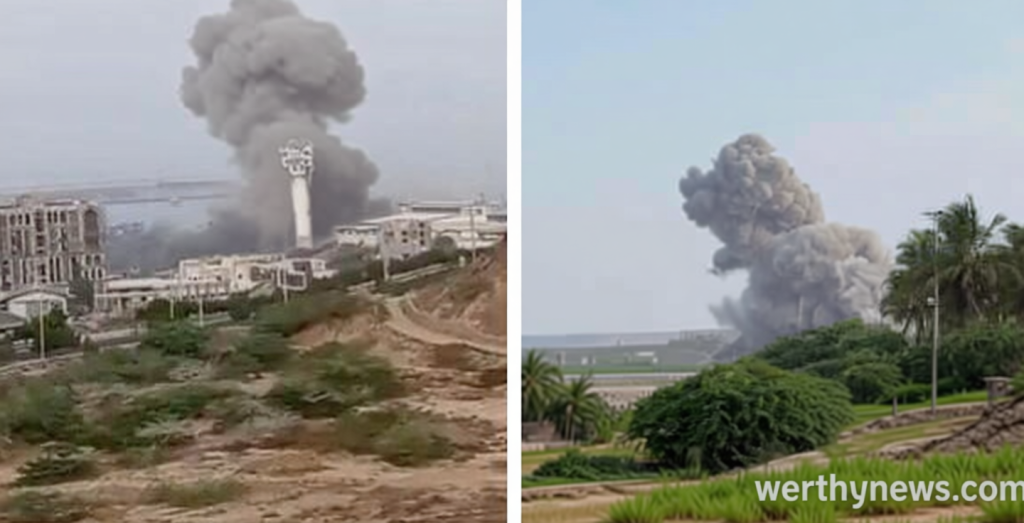
Iran War Latest: U.S. Escalates Strikes Over Strait of Hormuz Amid Rising Tensions
July 15, 2026 / 8:28 AM EDT / CBS News
Wertynews.com – The Iran War Latest updates reveal a dramatic escalation in military confrontations near the strategic Strait of Hormuz, as the U.S. intensifies its strikes against Iranian targets. These attacks come amid growing fears of a broader conflict, with tensions spiking after a series of skirmishes and retaliatory actions. The situation has drawn global attention, particularly due to the potential impact on international oil supplies and maritime trade routes.
U.S. Strikes Target Iranian Infrastructure
On Wednesday, the U.S. Central Command (CENTCOM) launched a coordinated barrage of strikes targeting key Iranian military installations near Chabahar, a vital port city in southern Iran. The attack, which lasted over seven hours, focused on missile silos, drone launch pads, and coastal defense systems. According to official reports, the strikes were aimed at weakening Iran’s ability to threaten commercial shipping and protect its naval assets. Chabahar, located approximately 200 miles from the Strait of Hormuz, plays a critical role in regional trade and logistics, making it a prime location for such operations.
Iranian state media confirmed the attacks, stating that over 260 people were injured in the latest overnight strikes, though exact casualty figures remain unclear. The government spokesperson also claimed that at least 30 fatalities had occurred in recent days, though specific dates were not provided. The assault followed a previous night of U.S. air strikes, marking a sharp increase in the frequency and intensity of operations in the region.
Escalating Tensions in the Persian Gulf
The Iran War Latest developments have intensified the already volatile situation in the Persian Gulf. The European Union Aviation Safety Agency (EASA) issued a warning on Tuesday, advising airlines to avoid certain airspace over the Gulf of Oman, Bahrain, Kuwait, Qatar, and the United Arab Emirates. This precautionary measure was prompted by ongoing U.S.-Iran hostilities, which have seen repeated violations of the ceasefire declared by President Trump on July 8. The EASA notice emphasized the risks posed by unpredictable military activity, including missile and drone attacks, which could lead to civilian aircraft being targeted at any altitude.
International oil prices have also been affected by the conflict, reflecting market anxieties over the disruption of vital shipping lanes. Brent crude prices surged above $85 per barrel on Wednesday, rising from $85.50 the previous day, while U.S. benchmark Texas Intermediate remained slightly lower but still higher than pre-war levels. The Strait of Hormuz, which accounts for roughly 20% of the world’s oil transit, has become a flashpoint in the ongoing Iran War Latest episode, with both sides vying for control of the region’s strategic chokepoints.
Regional allies have also been caught in the crossfire, with Kuwaiti forces reporting drone attacks in the early hours of Wednesday. Hours earlier, they had repelled a barrage of projectiles, indicating the heightened risk of Iranian aggression. Jordan’s military confirmed intercepting three Iranian missiles, underscoring the widespread threat posed by the conflict. These incidents highlight the interconnected nature of the Iran War Latest tensions, as neighboring countries face the dual challenge of protecting their own infrastructure and maintaining stability in the region.
As the U.S. renews its military pressure on Iran, the conflict over the Strait of Hormuz has taken on new urgency. The American-led strikes are part of a broader strategy to counter Iranian influence in the Gulf, particularly in light of recent reports of Iranian attacks on oil tankers and U.S. naval vessels. The ongoing Iran War Latest developments have prompted calls for increased international coordination to prevent a full-scale war that could disrupt global energy markets and destabilize the region further.
The standoff has raised concerns among global powers about the potential for a larger military engagement. With both sides accusing each other of breaking the ceasefire and escalating hostilities, the situation remains precarious. Analysts warn that the Strait of Hormuz, a critical artery for oil exports, could become a battleground for a prolonged Iran War Latest conflict, with far-reaching consequences for the world economy and international security.
As the situation evolves, the Iran War Latest continues to dominate global headlines. The U.S. and Iran remain locked in a high-stakes game of brinkmanship, with each strike and counterstrike bringing the possibility of a full-scale war closer. The international community is closely monitoring developments, hoping to mediate before tensions reach a breaking point. For now, the conflict shows no signs of slowing, with the Strait of Hormuz at the center of a geopolitical storm that has no clear end in sight.