
Wildfires Expose Millions in Midwest to Dangerous Smoke
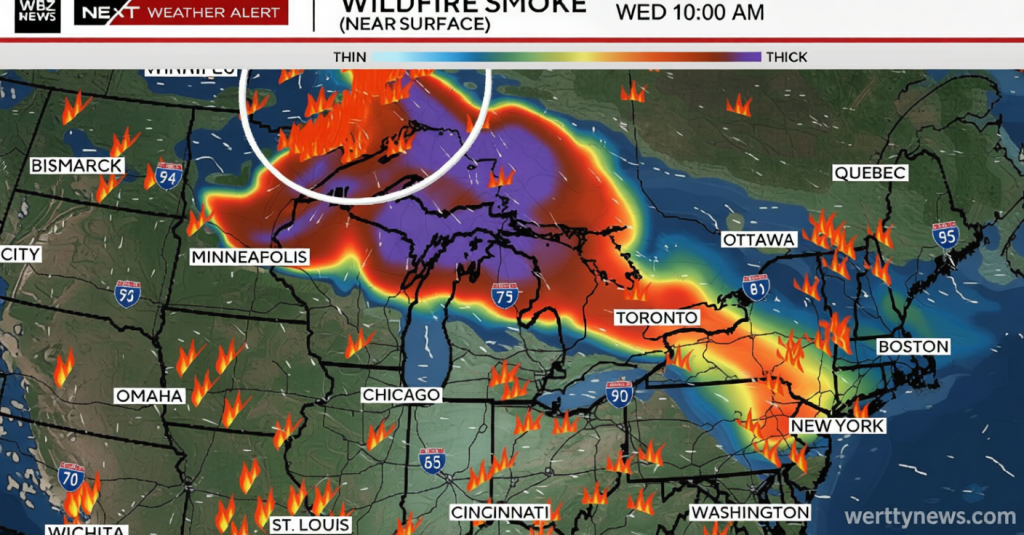
Wertynews.com – Wildfires are sending hazardous smoke across the Midwest and Northeast, exposing millions of people to harmful air quality. The spread of this smoke, fueled by extensive fires in Canada and northern Minnesota, has created a dangerous situation for residents in states like Michigan, Wisconsin, and parts of New York. The National Weather Service reported that smoke plumes have unexpectedly reached Boston, turning the sky into a murky brown/yellow color. Similar conditions were observed in Maine, where the atmosphere took on a noticeable yellowish tint due to the intense particulate matter.
Midwest Regions Under Air Quality Alerts
Minnesota officials have issued air quality alerts for the Twin Cities metro area, Alexandria, and Two Harbors, effective from Tuesday through Friday. These alerts highlight the severe impact of wildfire smoke on the region, with northeastern Minnesota expected to face the highest levels of pollution. Evacuation orders were also issued for some residents as the fires continue to grow and intensify. The National Weather Service in Gray, Maine, noted that “there is plenty of smoke upstream, so expect periods of hazy skies over the next day before the cold front pushes through,” adding that the smoke could linger for several days.
Smoke from Canadian wildfires is now extending eastward, affecting multiple counties in western and central New York. Officials have warned that air quality advisory measures will remain in place until midnight Wednesday, as particulate pollution levels remain high. The most severe smoke could even reach Washington, D.C., by midday Thursday, demonstrating the far-reaching consequences of these fires. This cross-border impact underscores the interconnected nature of environmental challenges in the region.
Health Impacts of Wildfire Smoke
Wildfires expose millions in Midwest regions to fine particulate matter (PM2.5), which can penetrate deep into the lungs and bloodstream. This pollution leads to shortness of breath, coughing, and fatigue, particularly in vulnerable populations such as children, the elderly, and those with asthma or heart conditions. Experts recommend limiting outdoor activities, wearing N95 masks when necessary, and using air purifiers to reduce exposure. In Michigan, the entire state will experience an air quality alert on Wednesday, with Wisconsin also issuing warnings about prolonged fine particulate matter levels.
Health professionals have emphasized the need for immediate action to protect public health. The smoke’s presence is not just a temporary inconvenience but a significant health threat. According to a study from Columbia University’s Climate School, the combination of extreme heat and drought conditions has created a “perfect storm” for dangerous wildfires. These factors, when combined with smoke exposure, increase the risk of respiratory and cardiovascular issues, particularly for those in the Midwest who are now facing prolonged air quality challenges.
Environmental Factors Behind the Smoke Crisis
The current wildfires expose millions in Midwest areas to smoke due to a confluence of environmental stressors. Drought conditions, exacerbated by climate change, have left forests and grasslands dry and prone to combustion. Simultaneously, record-breaking heat waves have accelerated the spread of flames, creating a feedback loop that intensifies the crisis. The National Weather Service has highlighted that these conditions are not isolated to one region but are part of a broader trend affecting both Canada and the U.S. Midwest.
As the smoke continues to spread, its effects will be felt across diverse landscapes. From the boreal forests of Alberta to the urban centers of Detroit and Milwaukee, the air quality has deteriorated to critical levels. The prolonged exposure to smoke is not only a concern for immediate health but also for long-term environmental consequences. Scientists warn that the repeated occurrence of such events could lead to lasting changes in regional weather patterns and air quality standards, further complicating efforts to mitigate the impact on communities.
Broader Implications for Regional Health
Wildfires expose millions in Midwest states to smoke that is not only affecting air quality but also highlighting the region’s vulnerability to climate-related health risks. The combination of high particulate matter levels and prolonged exposure has raised concerns among public health officials. For instance, the smoke’s presence in northern Pennsylvania and New England has led to heightened awareness about the dangers of fine particle pollution, which can trigger asthma attacks and worsen existing chronic diseases.
Experts caution that the situation could evolve into a longer-term health crisis. With the smoke plumes projected to remain in the Midwest for several days, the need for continuous monitoring and public advisories is critical. The National Weather Service and environmental agencies are working together to provide updates on the smoke’s movement, ensuring that residents can take timely precautions. This collaborative effort reflects the growing recognition of the interconnected challenges posed by wildfires and their impact on air quality across the region.