
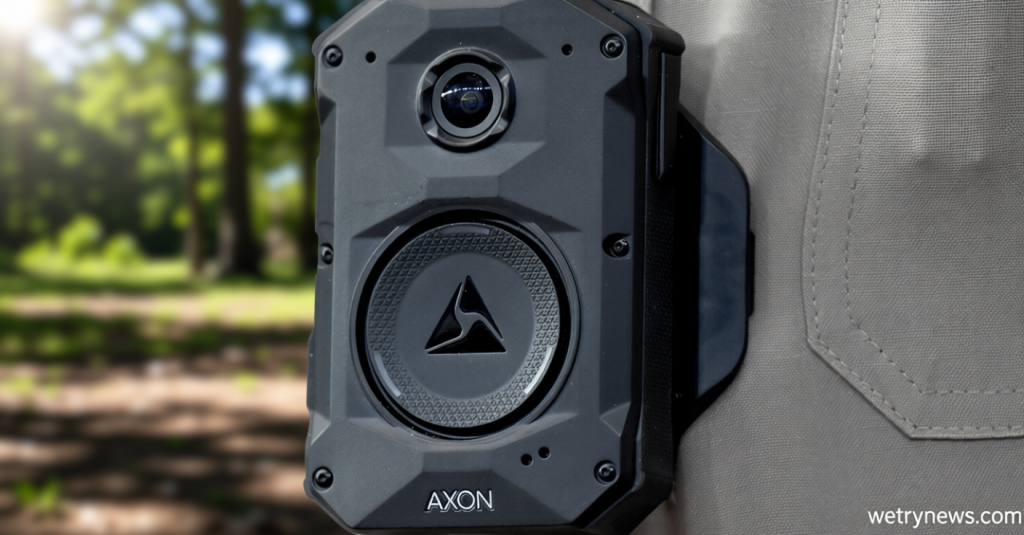
Every ICE Arrest Team Will Now Have Body Cameras, DHS Announces
Wertynews.com – Every ICE arrest team will now have at least one agent equipped with a body-worn camera, according to a recent announcement by the Department of Homeland Security. This decision follows heightened public scrutiny after two fatal shootings involving ICE officers in Houston and Biddeford, Maine, which sparked demands for greater transparency in law enforcement practices. The new policy mandates that all arrest teams include camera-ready personnel, effective immediately, as part of a broader effort to document interactions and enhance accountability.
Response to Recent Fatal Incidents
The Houston incident occurred last week when an ICE agent shot and killed a Mexican man during a traffic stop. A week later, another ICE officer in Biddeford, Maine, fatally wounded a Colombian man in a similar vehicle encounter. In both cases, the officers involved were not wearing body cameras at the time of the shootings, prompting immediate questions about the clarity of evidence and the potential for bias. DHS officials emphasized that the body camera requirement is designed to address these concerns and provide a clearer record of events during arrests.
Public and political reactions to the shootings have intensified, with advocates calling for stricter oversight of ICE operations. The introduction of body cameras is seen as a pivotal step in balancing law enforcement authority with the need for public accountability. By ensuring every arrest team has a camera, DHS aims to reduce misunderstandings and support its claims that the victims in both cases were not the primary targets of the operations.
Funding and Implementation Challenges
DHS acknowledged that delays in funding contributed to the slower adoption of body cameras by ICE agents. The agency cited the partial government shutdown earlier this year as a key factor, which disrupted the allocation of resources for the program. Despite this, the Trump administration had initially proposed budget cuts for the initiative, but Congress later approved an additional $20 million in April to expedite its rollout. This funding is expected to cover the cost of cameras and training, ensuring compliance with the new policy.
Acting ICE Director David Venturella emphasized that the decision to mandate body cameras is a direct response to public demand for transparency. “We are committed to making sure every ICE arrest team will have the necessary tools to document their work,” he stated. The agency also highlighted the importance of visual evidence in defending its actions, particularly in high-profile cases where critics argue ICE officers are disproportionately targeting immigrants.
Training and Operational Adjustments
While the policy is in effect, ICE has implemented temporary measures to ensure proper use of body cameras. Agents are now required to undergo additional training on camera protocols and documentation procedures, especially during vehicle stops and other high-risk encounters. These adjustments aim to prepare officers for real-time recording and to minimize disruptions to ongoing operations.
“DHS has plenty of money to deploy cameras faster, both in the April funding bill and last year’s ‘big, beautiful bill,’ which allocated billions for immigration agencies,” said Democratic Rep. Sylvia Garcia, who represents Houston. “I’ll hold him to it,” she added, referring to Acting ICE Director David Venturella.
The impact of the new policy is expected to be significant, particularly in cases where the presence of cameras could influence public perception. Advocacy groups have praised the move but remain cautious, noting that the cameras will only be effective if they are consistently used and the footage is made publicly accessible. With every ICE arrest team now required to have a camera, the agency has taken a step toward greater transparency, though challenges in implementation and oversight remain.
In the Houston case, the suspect was reportedly in a vehicle with a weapon, a claim that was contested by his family. The Biddeford shooting also raised questions about the proportionality of the force used, as the victim was not initially armed. By requiring body cameras, DHS hopes to gather more detailed accounts of these incidents and address concerns about how ICE officers conduct themselves during arrests.
As the policy takes effect, officials are working to ensure that all teams are fully prepared to use the technology. This includes equipping officers with the necessary devices and training them to capture footage without interruption. While the change is a positive development, experts warn that sustained efforts to monitor and report on camera usage will be critical to maintaining public trust. Every ICE arrest team will now have a tool to document their actions, but the effectiveness of this measure will depend on its consistent application and transparency in sharing the evidence.