
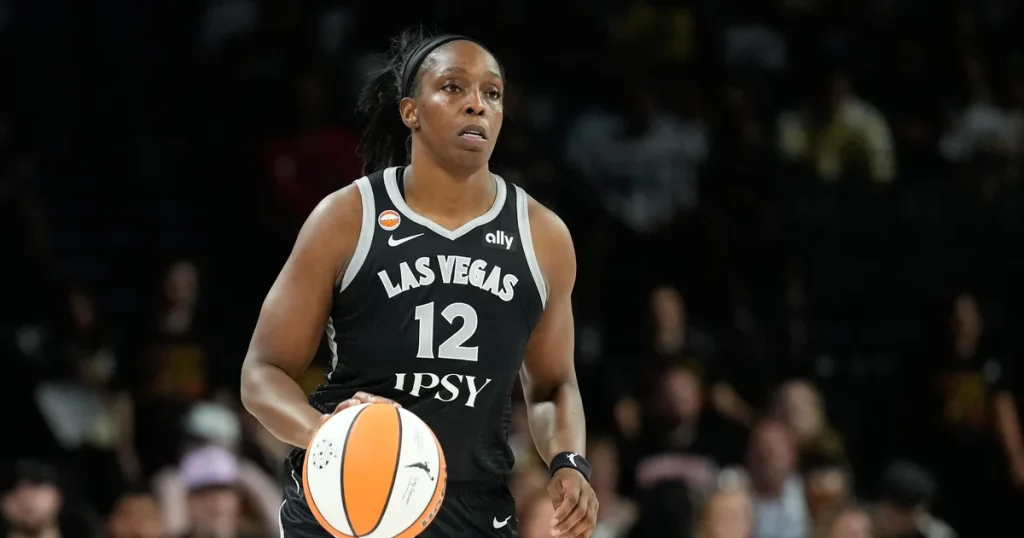
Hilton Grand Vacations Employee Fired After Sending Racial Slur to Las Vegas Aces’ Chelsea Gray
Wertynews.com – Chelsea Gray, a 33-year-old player for the Las Vegas Aces, has become the center of attention following an incident involving a Hilton Grand Vacations employee. The employee, who sent a racial slur to Gray, was recently terminated by the company after the message was shared on her Instagram story. The incident occurred after the Aces suffered a 109-75 loss to the Indiana Fever, which sparked a wave of online criticism. Gray’s post included a screenshot of the message, which she described as an example of the prejudice she faces as a professional athlete.
“People act like we just make this s— up,”
she wrote,
“And the audacity to tell us as athletes to ‘shut up and dribble.’”
Company Response and Policy Violations
Hilton Grand Vacations swiftly addressed the issue by announcing on Tuesday that the employee had been fired. In a statement, the company emphasized that the individual’s actions violated several of its policies, including those related to diversity, equity, and inclusion. “His behavior was in violation of multiple company policies and does not reflect our company’s values in any way,” the statement read. The decision to terminate the employee was made in response to the public backlash and the racial slur’s impact on Gray’s professional reputation. The Aces organization, however, did not immediately issue a formal comment on the matter, leaving the broader implications of the incident open to interpretation.
Online Harassment in the WNBA
The incident highlights a growing concern about online harassment targeting WNBA players, particularly those of color. Despite the league’s recent collective bargaining agreement, which aimed to enhance security and support for athletes, such attacks continue to occur. Gray’s experience is not isolated; other players have reported similar instances of racial and personal attacks. For example, Minnesota Lynx guard Courtney Williams shared her story with KLAS, revealing she received hate messages after a game, with critics blaming her for a lost prop bet. These incidents underscore the need for stronger measures to protect athletes from discriminatory online behavior.
Phoenix Mercury forward Alyssa Thomas also faced a barrage of racial slurs and death threats following a physical play in a game against the Fever. Thomas expressed frustration with the level of hostility, stating,
“It’s unfortunate that it’s come to this over basketball… A lot of us — myself included — didn’t even know the play took place until after the game. Now we’re being painted as thugs. There’s death threats out on us. It’s really unacceptable. It’s something that needs to change in this league and I’m just really sick and tired of it.”
Her comments reflect a pattern of systemic bias that persists in sports, even as institutions attempt to address it.
Impact on Athletes and Public Perception
The racial slur sent to Gray has intensified discussions about how athletes, especially women, are perceived and judged online. Many fans and critics have used the incident to question the broader culture of the WNBA, with some arguing that the league’s emphasis on performance has led to harsher scrutiny of its players. Gray’s post has since received thousands of comments, with supporters condemning the employee’s actions and calling for greater accountability. The hashtag #ShutUpAndDribble, which gained traction after her message, has become a symbol of the intersection between sports and social justice.
Clark and Fever coach Stephanie White have also criticized the environment in which WNBA players operate, noting that the toxicity of online interactions often overshadows their achievements. “The racism, homophobia, straight-out nonsense, hate nonsense — it’s absolutely unacceptable,” White remarked. These statements align with calls for the league to implement more robust fan engagement programs and to provide athletes with tools to manage their public image during and after games.
Broader Implications and Future Steps
While Hilton Grand Vacations has taken immediate action by firing the employee, the incident raises larger questions about how organizations handle incidents of discrimination. The company’s statement suggests a commitment to diversity, but critics argue that more proactive measures are needed to prevent such occurrences. For instance, training programs for employees on cultural sensitivity and bias could help reduce the likelihood of future slurs being sent to athletes. Additionally, the WNBA may need to collaborate with sponsors like Hilton to ensure that their partnerships align with the league’s values of inclusivity and respect.
Gray’s experience serves as a reminder of the challenges athletes face in navigating both the physical and digital arenas of their sport. As the WNBA continues to grow in popularity and visibility, it must address the root causes of online harassment. This includes fostering a culture of support among fans and ensuring that players are not only celebrated for their skills but also protected from the harsh judgments that come with public scrutiny. The incident with the Hilton employee may be a catalyst for change, prompting the league and its partners to take a more active role in promoting a positive and inclusive environment for all athletes.