
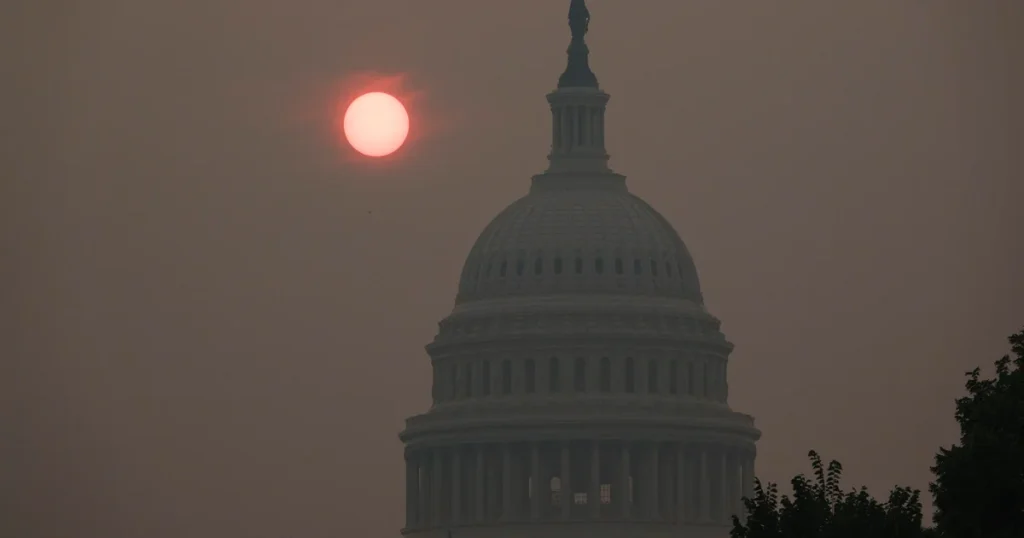
More Than 50 Million in Northeast Face Severe Weather Risk Amid Wildfire Smoke
Wertynews.com – More than 50 million individuals across the Northeast region are now at risk from severe weather conditions, compounded by the lingering effects of wildfire smoke that have significantly impacted air quality. The National Weather Service has issued warnings for extreme weather events, including damaging winds, large hail, isolated tornadoes, and flash flooding, stretching from the Ohio Valley to the East Coast. Cities like New York City, Washington, D.C., Philadelphia, and Boston are among the most vulnerable areas, with residents urged to prepare for unpredictable weather patterns. This dual threat of severe weather and hazardous air quality has raised concerns for both safety and health, highlighting the growing challenges faced by the region.
Severe Weather Patterns and Regional Impact
As the cold front intensifies, meteorologists predict a surge in storm systems that could bring torrential rain, strong wind gusts, and elevated flood risks. These conditions are expected to affect urban centers with high runoff potential, such as Washington, D.C., and Boston, where flash flooding could disrupt daily life and infrastructure. In New York City, the ongoing flood watch has prompted emergency management teams to coordinate with local authorities to ensure preparedness. The combination of heavy rainfall and high-speed winds could also lead to power outages and fallen trees, creating additional hazards for commuters and businesses.
The Northeast’s weather forecast has become increasingly volatile this week, with multiple systems converging to create a perfect storm of threats. Meteorologists emphasize that while the severe weather is temporary, the wildfire smoke from Canada and Minnesota has established a long-term presence in the East. This haze has already reduced visibility in several states, prompting health advisories for vulnerable populations, including children, the elderly, and those with respiratory conditions. The air quality index (AQI) in the region has been fluctuating, with some areas recording levels that exceed safe thresholds for extended periods.
Wildfire Smoke and Health Implications
Wildfire smoke from distant blazes has created a complex challenge for public health officials, as it continues to blanket the Northeast. The smoke contains particulate matter and other pollutants that can penetrate deep into the lungs, increasing the risk of respiratory illnesses and exacerbating existing conditions. In cities like Philadelphia and Pittsburgh, hospitals have reported a rise in emergency room visits linked to breathing difficulties. The National Weather Service has also warned that the smoke could linger longer than expected, depending on wind patterns and atmospheric stability, which may extend the health concerns into the coming days.
“The wildfire smoke is not just a visual concern—it’s a health risk that can affect people for weeks,” noted Dr. Emily Carter, an environmental health specialist. She added that the combination of smoke and severe weather could create a “double whammy” for residents, with poor air quality worsening the effects of flooding and high winds. Local governments have issued guidelines advising people to limit outdoor activities, especially during peak pollution hours, and to use air filters in homes and vehicles. Schools and businesses in affected areas are also implementing measures to protect employees and students from prolonged exposure to polluted air.
The impact of wildfire smoke is not limited to health risks; it also affects transportation and visibility. Airports in the Northeast have experienced delayed flights due to reduced visibility, while roadways are seeing increased incidents of vehicles being slowed by dense smoke. The Environmental Protection Agency (EPA) is monitoring the situation closely, with officials stating that the smoke’s presence may lead to a temporary spike in pollution levels across the region. This has prompted discussions about the need for regional air quality coordination to mitigate the effects of cross-border smoke events.
Community Response and Preparedness Efforts
Residents across the Northeast are taking proactive steps to prepare for both the severe weather and poor air quality. Many have stocked up on emergency supplies, including flashlights, batteries, and water, to cope with potential power outages and flooding. Community centers are hosting workshops on how to protect against respiratory issues, with a focus on using N95 masks and indoor air purifiers. Local news outlets are playing a crucial role in disseminating updates, ensuring that people stay informed about changing conditions and safety protocols.
“We’re seeing a strong community response, but there’s still a need for more awareness,” said Maria Gonzalez, a local organizer in Cleveland. “People are volunteering to help neighbors, especially those with chronic illnesses, by checking on their homes and ensuring they have access to clean air.” Schools have also closed early in some areas, and remote learning options are being prioritized to minimize exposure for students. Meanwhile, state and federal agencies are working together to allocate resources for cleanup efforts and to monitor the long-term effects of these environmental challenges on the region’s ecosystems.
As the weather and air quality continue to evolve, the focus remains on protecting the over 50 million people in the Northeast. Emergency management teams are emphasizing the importance of staying alert and following safety guidelines, while health experts urge continued vigilance to reduce the risk of prolonged exposure to pollutants. With the potential for extended severe weather and the threat of wildfire smoke, the Northeast is facing a test of its preparedness and resilience in the face of climate-related challenges. The coming days will be critical in determining how effectively the region can manage these dual threats and support its residents during this time of uncertainty.