
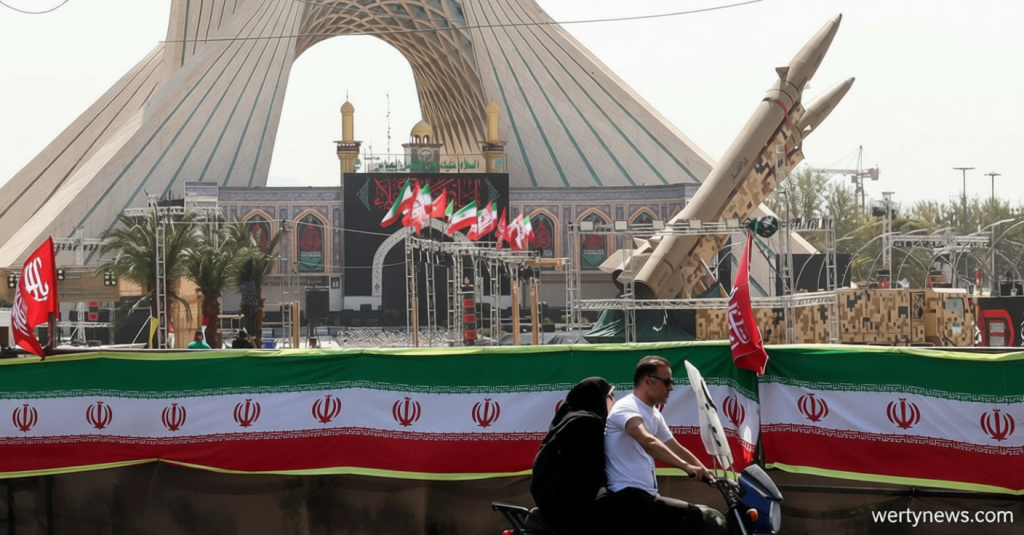
Oil Markets Stabilize as Shipping Routes Show Signs of Recovery
Wertynews.com – Brent crude prices retreated below the $100 mark on Friday, easing after a turbulent week of volatility. By 2 p.m. Eastern Time, the benchmark had dropped approximately 4 percent to roughly $96 per barrel. This represented a decline from Thursday’s peak of $101, which marked the highest point since May. Despite the recent pullback, prices remain elevated by about 8 percent for the week overall.
The stabilization comes as concerns about maritime disruptions begin to subside. The ongoing closure of the Strait of Hormuz, driven by Iranian warnings to commercial vessels, had created uncertainty in global markets. Simultaneously, the Iran-aligned Houthi movement in Yemen targeted two Saudi-flagged oil tankers in the Bab el-Mandeb Strait, located at the Red Sea’s southern entrance. However, no additional vessels have been attacked since those initial incidents, potentially restoring confidence among investors.
Maritime Traffic Patterns Shift
Intelligence analysis from Kpler revealed significant changes in shipping routes. Only six commercial ships navigated the Strait of Hormuz on Thursday, a sharp decrease from the fifteen that passed through the previous day. Of those six vessels, five opted for the northern corridor designated by Iran rather than the southern path sanctioned by the United States.
Conversely, the Bab el-Mandeb Strait experienced improved activity. Forty-nine ships transited the waterway on Thursday, nearly matching historical averages. This represented a substantial increase from Tuesday’s count of just 29 vessels following Houthi threats to restrict passage.
Several ships that had previously reversed course in the Gulf of Aden and Red Sea completed their crossings, while others remain on hold following earlier U turns. The data points to a cautious but selective return to transit activity as operators continue to assess security conditions.
On Friday, Houthi representatives clarified that their operations would focus exclusively on Saudi vessels moving through the region.
Domestic Fuel Costs Rise
Americans are currently facing higher gasoline expenses due to these geopolitical tensions. According to AAA, the national average for regular fuel has climbed to $4.11 per gallon. This represents a notable increase from the $3.16 average recorded during the same period last year.
Market observers noted that prices had previously dropped from well above $100 into the $70 range after the United States and Iran reached a memorandum of understanding in June, which facilitated the reopening of the Strait of Hormuz.
Netanyahu to Visit Washington
Israeli Prime Minister Benjamin Netanyahu is scheduled to travel to the United States next week for diplomatic engagements. His office announced that he will depart for Washington, D.C., on Monday and hold discussions with President Trump at the White House on Tuesday.
During his visit, Netanyahu will also participate in the funeral service for Senator Lindsey Graham, whom he characterized as “a friend of Israel.” Graham has historically functioned as an important liaison between American policymakers and Israeli leadership, extending his influence throughout the broader Middle East region.
This marks Netanyahu’s second visit to the U.S. in 2026. He previously met with President Trump at the White House in February, arriving just days before the United States initiated its first military strikes against Iran.
New Sanctions Against Iranian Elite
The U.S. government has introduced additional penalties targeting Babak Zanjani, a prominent Iranian billionaire currently accused of assisting Tehran in circumventing existing restrictions. Zanjani is also alleged to be providing financial support to the Islamic Revolutionary Guard Corps.
Today’s action targets four individuals and nine entities tied to Zanjani’s operations. Zanjani’s re-emergence as a regime-linked financier — despite previously receiving a death sentence in Iran for embezzlement — demonstrates the lengths to which Iranian state-affiliated elites will go to preserve access to the international financial system so that they can enrich themselves, even as they mismanage the Iranian economy.
Tommy Pigott, a State Department spokesperson, provided details regarding the new measures. According to the U.S. Treasury Department, Zanjani originally received a death penalty for allegedly stealing millions from the National Iranian Oil Company. That sentence was reduced in 2024, and he subsequently became one of the regime’s most significant financial backers.
Treasury Secretary Scott Bessent emphasized the economic consequences facing Iran. He noted that the rial has hit another historic low while inflation continues to surge dramatically.
The Iranian regime continues to pay a steep economic price for its reckless behavior, with the rial plunging to another record low and inflation up massively. Under President Trump’s leadership, Treasury will continue cutting off economic access for corrupt Iranian regime elites, along with their financiers and facilitators.
The sanctions specifically affect Zanjani’s Dot One conglomerate, which the U.S. government has identified as a key vehicle for channeling funds to Iranian state institutions.