
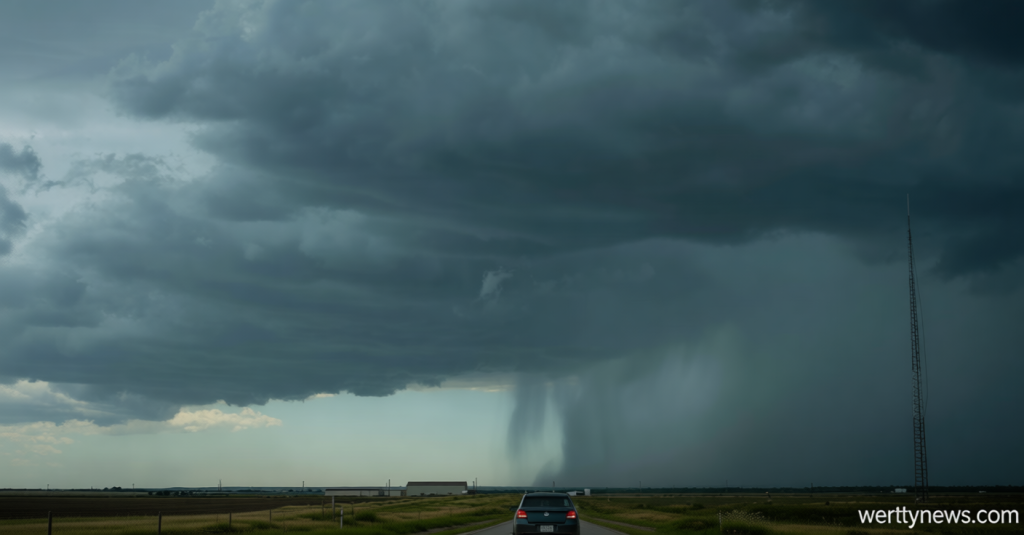
Convective Storms Now Top Weather Threat for Homeowners
Wertynews.com – Climate change has shifted the landscape of weather-related risks for property owners. According to fresh research, tornadoes, hail, and powerful winds now represent a greater danger to homeowners than traditional threats like hurricanes and flooding. Climate risk modeling organization First Street reports that in 2025, insurance payouts for severe convective storms (SCS) exceeded those for cyclones, establishing SCS as the most expensive insured natural disasters globally.
Jeremy Porter, First Street’s chief economist, explained to CBS News that these weather phenomena have “become top of mind for insurance companies, for anybody that owns assets and for residential homeowners.” The firm’s analysis, drawing on data from risk management consultant Aon, reveals that global insurance payouts from intense convective storms over the past quarter-century reached $794 billion. That figure surpasses combined losses from flooding, earthquakes, and drought.
Americans Bear the Brunt of Storm Costs
First Street’s research indicates that severe convective storms represented one-third of worldwide natural disaster economic losses in 2025. Combined insured and uninsured damages from SCS events totaled $82 billion, exceeding any other natural disaster category. Of that amount, $68 billion occurred within the United States.
Financial losses from damaging wind, hail, and tornadoes show particular prevalence in the U.S. because of the concentration of insured residential, commercial, and industrial properties. “In the U.S., we have a lot of really valuable real estate,” Porter noted. “So if you start to [combine] insured assets with the increases in severe convective storms, that’s where you see those numbers balloon.”
Since SCS typically falls under homeowners’ insurance coverage, most Americans carrying mortgages remain protected against these risks. Yet as climate change drives these storms to occur more frequently, homeowners may encounter rising insurance premiums. Porter told CBS News that insurance costs are climbing faster in certain American regions, especially the Midwest and northern Texas, as severe storms spread across wider areas.
“We haven’t seen private insurance companies pull out of those markets yet,” he said. “We have seen them raise rates relatively rapidly.”
States at Highest Risk
First Street identified Illinois and Ohio as particularly vulnerable states, citing their substantial urban centers and valuable real estate. Porter described both states as situated along a “severe convective storm belt.” North Carolina and Georgia also face significant risk due to real estate density in cities like Atlanta and Charlotte, he added.
Understanding Severe Convective Storms
The National Weather Service defines “convection” as the upward movement of heat and moisture within Earth’s atmosphere, a process that generates thunderstorms and clouds. First Street characterizes severe convective storms as “short-duration but high-impact weather events” — storms that move through regions quickly yet can cause substantial destruction.
“Unlike hurricanes or earthquakes, which concentrate losses in a small number of catastrophic events, SCS generates recurring losses through frequent hail, wind, and tornado outbreaks,” First Street stated in its report. Among various weather types qualifying as severe convective storms, hail represents the largest driver of insurance payouts, with severe winds ranking second.
“When a big hailstorm hits an area, it tends to damage everything in the area: homes, cars and infrastructure — whatever’s there,” Porter explained.
Looking Ahead
Should current patterns persist, First Street forecasts that SCS will emerge as the world’s third-costliest natural disaster over the coming decade when measuring lost economic growth. These economic losses typically arise from factors including mass transit closures, reduced retail shopping activity, and diminished commercial productivity.
“We’re expecting to continue to see growth in frequency, exposure and damages from these types of events,” Porter said.