
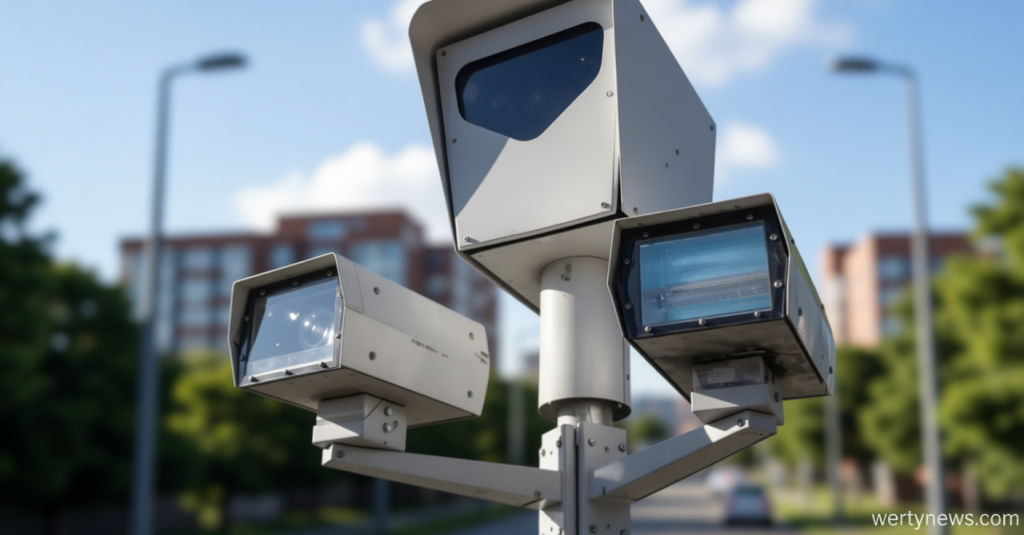
Los Angeles Speed Camera Initiative Faces Further Setbacks
Wertynews.com – Los Angeles falls behind other California cities in deploying automated speed cameras. The City of Los Angeles continues to lag behind its California counterparts regarding the deployment of automated speed enforcement technology. Despite initial projections suggesting the devices would be operational and undergoing testing by July, none of the 125 planned cameras have been placed on city streets yet.
This postponement arrives at a critical moment, as excessive speed continues to be a primary contributor to vehicular collisions throughout the state. California Highway Patrol statistics reveal that over 24,000 incidents connected to speeding took place across California in 2025 alone. Approximately 10,000 of those accidents resulted in injuries to drivers or passengers.
Statewide Pilot Program Origins
The current initiative traces back to 2024, when Governor Gavin Newsom signed legislation establishing a pilot program. The original six municipalities selected for participation included Los Angeles, San Francisco, Oakland, San Jose, Glendale, and Long Beach. Subsequently, Malibu received authorization through Senate Bill 1297 to place cameras along the Pacific Coast Highway.
Early adopters like San Francisco and Oakland have already seen positive outcomes. Municipal Transit data from San Francisco indicates that after twelve months of operation, the percentage of motorists exceeding the speed limit by 10 mph or more decreased by nearly 80 percent in zones covered by the city’s 56 cameras. Additionally, daily speeding incidents dropped by approximately 40,000 across all camera locations.
Oakland reported similarly encouraging results. Within just five weeks of activating its 35 cameras, officials noted that vehicle speeds had stabilized near the posted limits at every installation site.
Advocates Push for Faster Implementation
Los Angeles falls behind other participating municipalities in camera deployment, according to traffic safety advocates. A December evaluation from the nonprofit organization Streets Are for Everyone (SAFE) assigned the city a “D” grade, placing it behind all six other participating municipalities.
Damian Kevitt, SAFE’s executive director, pointed out that Los Angeles devoted excessive time to analysis rather than action. “San Francisco took the authorization by the state seriously,” Kevitt explained. “They didn’t wait for years to think about it, study it and debate about it.”
Kevitt emphasized that these delays carry real implications for public safety. He noted that speeding ranks as the foremost cause of severe injuries and fatalities in Los Angeles. “For the past three years, Los Angeles has had more traffic fatalities than homicides,” he stated.
City Responds and Outlines Next Steps
In correspondence with CBS LA, LADOT spokesperson Colin Sweeney asserted that substantial improvements have occurred since the organization’s report card was published. He indicated that Los Angeles now aligns with Glendale, San Jose, and Long Beach in terms of implementation progress.
The department anticipates launching the automated enforcement system this autumn, with an official commencement date to be revealed shortly. Concurrently, LADOT has initiated a public awareness effort featuring billboards and social media content.
Kevitt recognized the city’s recent momentum, stating he would upgrade LA’s assessment to a “C-” or “C.” “They are still in last place, but they’re at least moving now, and there is a light at the end of the tunnel,” he said.
How the System Will Operate
Following installation, the city will perform testing procedures before entering a 60-day notification phase. During this interval, motorists captured speeding will receive warnings rather than penalties. Once the warning period concludes, citations will commence at $50 each.
Tracking Camera Locations Across California
While LADOT has published the positions of its 125 new cameras online, no centralized public database exists for all speed and red light cameras throughout California. TicketSnipers, a platform assisting drivers in contesting traffic violations, recently developed an interactive map utilizing publicly accessible data from municipalities, counties, transportation departments, and enforcement program disclosures. The service also incorporated information from actual California traffic citation cases spanning the previous two years.
“Our goal is to provide a practical public resource that helps drivers stay informed, slow down, pay closer attention in high-enforcement areas, and better understand where automated enforcement is being used across the state,” said Jorian Goes, founder of TicketSnipers.