
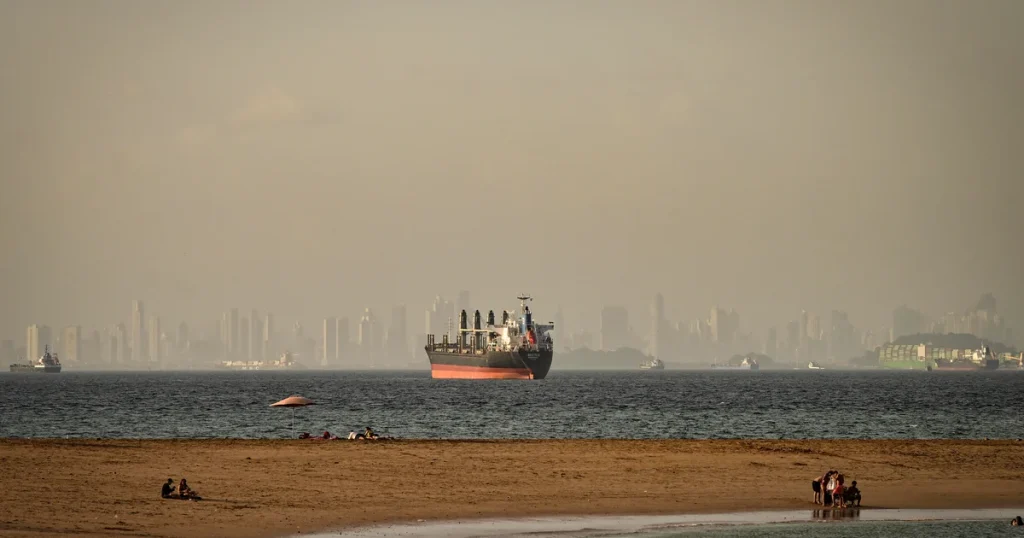
Global Trade Faces Rising Risks at Key Chokepoints
Wertynews.com – Conflicts occurring thousands of miles away are increasingly impacting what American households pay for basic necessities. The ongoing hostilities between the United States and Iran highlight this vulnerability. As the war approaches its six-month anniversary, the Strait of Hormuz has become a critical bottleneck for energy shipments. Attacks on commercial vessels have heightened safety concerns along this vital artery. Consequently, global oil prices have climbed, pushing gasoline costs beyond $4 per gallon and contributing to broader inflationary pressures.
While Washington and Tehran attempt to negotiate a peace agreement, their rivalry for dominance in the Strait illustrates how waterways serve as geopolitical leverage. A recent analysis by Oxford Economics identifies twenty-six additional major chokepoints worldwide. If shipping were to halt entirely, these locations could severely damage the economy.
Where Trade Concentrates
Asia contains the highest density of essential global passages. The Taiwan Strait facilitates approximately one-fourth of worldwide commerce. Meanwhile, the Strait of Malacca is positioned between Malaysia and the Indonesian island of Sumatra. The Mediterranean Sea also functions as a major hub for international activity.
The Suez Canal, an artificial channel in northeastern Egypt, connects the Mediterranean to the Atlantic Ocean via the Strait of Gibraltar. According to Oxford, the Gibraltar passage handles around one-fifth of global trade volume. Although the Panama Canal plays a smaller role internationally, it remains crucial for the Americas. The Council on Foreign Relations reports that 40% of all U.S. container traffic moves through this man-made waterway annually.
Threats to Navigation
Political maneuvering stands as one of the most significant dangers to international commerce. Harry Murphy Cruise, who leads economic research and global trade at Oxford, told CBS News that nations frequently exploit critical passages for strategic advantage. This trend is evident in the Strait of Hormuz, where both the U.S. and Iran strive to control shipping lanes.
Environmental changes present another growing threat. Climate change is causing more frequent and severe natural disasters. The Panama Canal serves as a prime example, where droughts combined with El Niño—a weather pattern raising Pacific Ocean surface temperatures—are reducing water levels and limiting cargo capacity.
Backup Routes and Rising Costs
The risk level for each chokepoint depends on its ability to reroute traffic during emergencies. The Strait of Hormuz transports one-fifth of the global oil supply and lacks a direct alternative. Murphy Cruise explained,
There’s no alternative path that it can take because the Strait is effectively where the oil is coming from.
He noted that other global chokepoints are somewhat less dependent on single production sources.
Even routes with backup options encounter difficulties
Related Reading
Frequently Asked Questions
What is Most global trade flows through these 27?
Most global trade flows through these 27 is the main topic of this guide. The article explains the context, practical details, and next steps readers should understand.
Why does Most global trade flows through these 27 matter?
Most global trade flows through these 27 matters because readers are looking for a useful answer, not just a short summary. Good content should match search intent and help them decide what to do next.