
Three Renoir Masterpieces Vanish from Cagnes-sur-Mer Museum in Pre-Dawn Heist
Wertynews.com – A quiet Tuesday morning on the French Riviera was shattered when two intruders slipped into one of southern France’s most treasured cultural institutions and made off with paintings by Auguste Renoir, the late-19th-century master whose luminous portraits and pastoral scenes helped define the Impressionist movement. By the time the thieves reached the street, they had abandoned one canvas on the museum floor, leaving three works in their possession as they fled into the dawn. The estimated value of the missing art stands at roughly 9 million euros, or approximately $10 million, according to the office of the town’s mayor.
The Break-In
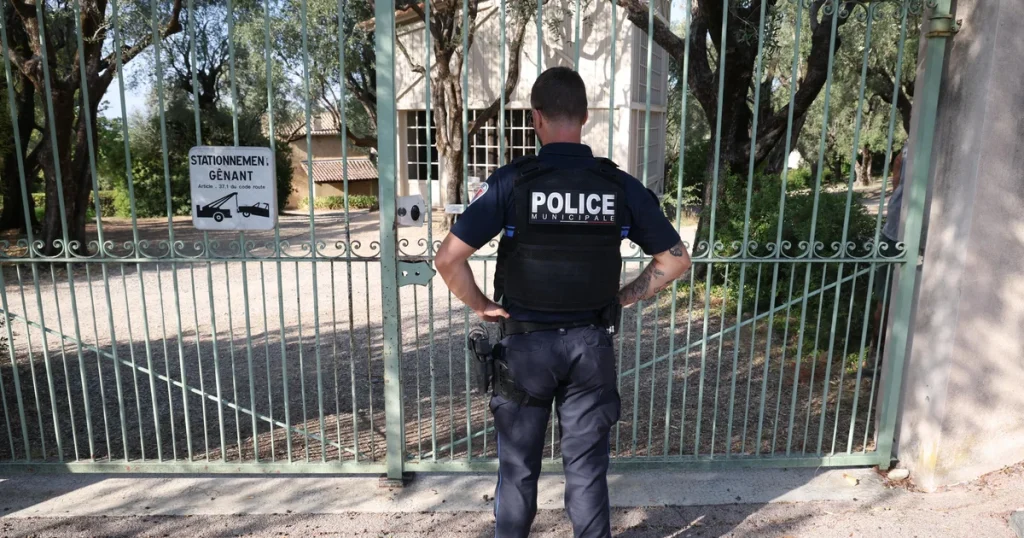
The alarm at the Renoir Museum in Cagnes-sur-Mer, a coastal commune nestled between Cannes and Nice, triggered at 5:48 a.m. local time. Municipal police arrived at the scene within five minutes, though the two suspects had already put distance between themselves and the building. Town-operated video surveillance cameras captured the pair as they exited, and footage showed them discarding one of the four paintings they had initially lifted before sprinting away.
Neither suspect has been identified publicly, and no arrests had been confirmed as of the mayor’s initial statement. Both municipal and national police forces were deployed to the site immediately after the alarm, and a formal investigation was underway. Authorities have not disclosed which specific Renoir canvases were taken, nor have they clarified whether the 9-million-euro valuation applies to all four works originally removed or only to the three the thieves ultimately carried off.
Mayor Masson’s Response
Bryan Masson, mayor of Cagnes-sur-Mer, addressed residents through a statement posted on his personal Facebook page. He framed the theft not merely as a criminal event but as an assault on the town’s cultural identity.
“Attacking the Renoir Museum is attacking a part of the history and heritage of #CagnesSurMer. These events are particularly serious.”
Masson went on to underscore the urgency of strengthening protective measures across the commune’s cultural sites.
“They also confirm the urgent need to implement the comprehensive plan to secure our museums and protect our works of art, a plan to which I have committed. We will dedicate all necessary resources to better protect this heritage, which belongs to all the residents of Cagnes.”
The mayor added that the perpetrators were being actively sought and that the investigation remained ongoing.
The Museum and Its Collection
The Renoir Museum occupies a former villa on the heights overlooking the Mediterranean, a setting that mirrors the sun-drenched landscapes Renoir himself painted throughout his career. The institution houses one of the largest public collections dedicated to the artist, holding works spanning his early academic training, his Impressionist period, and his later, more sculptural phase. Renoir, born in 1841 in France and deceased in 1919, is celebrated for portraits of women and children rendered with soft, flowing brushwork, as well as for scenes of leisure, dance, and the natural world. His canvases command extraordinary prices at auction, and even mid-career works routinely fetch figures in the millions of euros, which helps explain why a coordinated theft of multiple pieces could carry a ten-million-dollar tag.
Cagnes-sur-Mer, a town of roughly 50,000 residents, has long leveraged the Renoir connection as a pillar of its cultural tourism economy. The museum draws visitors from across Europe each season, and the theft lands at a moment when the community is actively courting international attention through arts programming and heritage initiatives. A loss of this magnitude therefore carries economic as well as emotional weight for local businesses, event organizers, and residents who see the museum as a civic landmark.
Security Implications for French Cultural Sites
High-profile art thefts in France, while less frequent than in some neighboring countries, have prompted periodic reviews of museum security protocols. The fact that two individuals were able to enter, select specific works, and exit within minutes—despite an alarm system and nearby police presence—raises questions about layered physical security, including reinforced display cases, motion sensors in gallery corridors, and coordinated response times between municipal and national units. Masson’s reference to a “comprehensive plan” suggests that Cagnes-sur-Mer had already been formulating upgrades to its cultural-site protections, and the incident appears to have accelerated implementation timelines.
National police involvement signals that the case may be treated with the seriousness reserved for organized art-crime operations, particularly if the thieves had prior knowledge of the collection’s layout, guard rotations, or alarm configurations. French authorities maintain dedicated units for cultural-property recovery, and works of Renoir’s stature are typically entered into international stolen-art databases within hours of a confirmed theft, increasing the likelihood that the canvases will surface at auction houses, private sales, or secondary markets if they have not already been recovered.
What Happens Next
Residents of Cagnes-sur-Mer and visitors to the Côte d’Azur are being asked to watch for any unusual activity near the museum district and to report sightings to local police. The investigation is expected to draw on the town’s surveillance archive, witness interviews, and forensic examination of the gallery floor where the discarded painting was recovered. Until the remaining three works are located, the museum’s curatorial team will assess the condition of the recovered canvas and determine whether any display adjustments are warranted while the case remains open.
For a town whose identity is inextricably linked to one of Impressionism’s most beloved painters, the theft is a reminder that heritage protection demands constant vigilance—and that the canvases Renoir left behind belong not to a single institution but to every resident who walks the streets of Cagnes-sur-Mer.
Related Reading
Frequently Asked Questions
What is 3 Renoirs worth roughly 10 million?
3 Renoirs worth roughly 10 million is the main topic of this guide. The article explains the context, practical details, and next steps readers should understand.
Why does 3 Renoirs worth roughly 10 million matter?
3 Renoirs worth roughly 10 million matters because readers are looking for a useful answer, not just a short summary. Good content should match search intent and help them decide what to do next.