
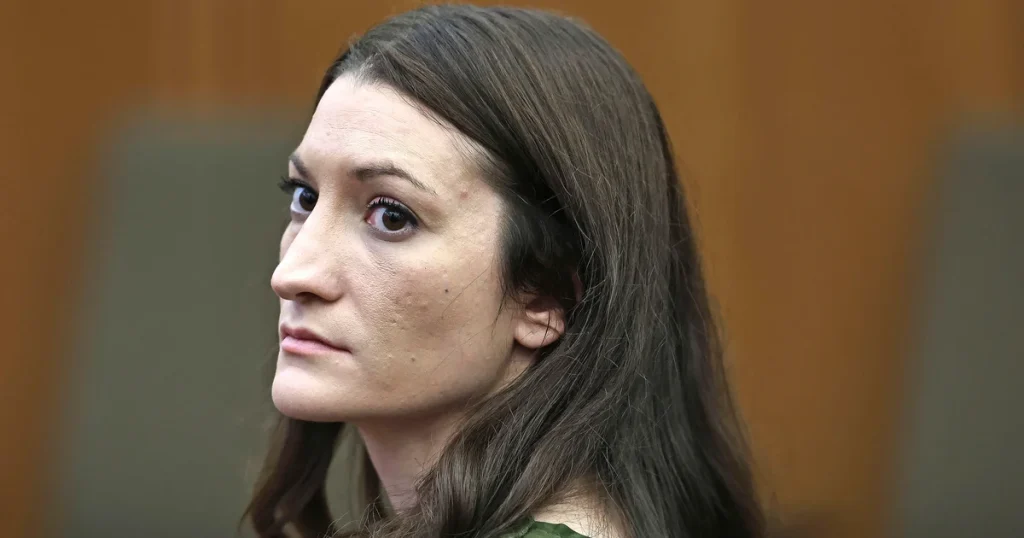
Inside the Hung Jury: A Juror’s Account of the Lindsay Clancy Trial’s Final Days
Wertynews.com – The high-stakes Massachusetts murder trial of Lindsay Clancy, accused of killing her three young children, concluded on Friday without a verdict. An 11-to-1 split among the twelve jurors left the panel unable to reach unanimity, and the judge declared a mistrial. In the aftermath, one member of that jury — identified only as juror number five — offered a rare, unfiltered window into the deliberation room, explaining why the weight of reasonable doubt ultimately prevented a guilty finding.
The woman, who requested anonymity, told a local television reporter that the prosecution’s case, while compelling in parts, never crossed the threshold of certainty required for a conviction. Her words captured the central tension that consumed the jury room over the course of its deliberations.
“At the end of the day, there was so much doubt. The prosecution didn’t have a figurative smoking gun. There was not a single moment throughout the presentation of that case where you could say ‘Yup, 100% I’m certain she did it’ or that she didn’t do it. We had too much gray area.”
The Dynamics of a Divided Room
According to a note the foreperson delivered to the judge, the jury fractured along a single line: eleven jurors leaning toward guilt, one juror holding firm for acquittal. The speaking juror described a deliberation process in which the majority repeatedly attempted to persuade the lone holdout, yet the impasse never resolved.
“The majority of people, it doesn’t matter what side they were on, were very firm in their stance and their belief from the beginning. The stand-alone juror was not the only one that was unwilling to see things from the other side. So, I’m going to kind of defend that individual in a sense. There were some big personalities in that room. But at the end of the day, it just came down to an inability to move past your convictions.”
She emphasized that the deadlock was not simply a matter of one stubborn voice against eleven. Multiple jurors, she noted, harbored reservations that prevented them from fully embracing either outcome, even if they ultimately voted for conviction.
A Juror Who Believed, Yet Could Not Convict
Perhaps the most striking element of her account was her own internal conflict. Juror number five acknowledged that, from the opening of deliberations, she personally believed Clancy bore criminal responsibility for the deaths of her three children. She did not walk into the jury room hoping for acquittal.
“And maybe I still believe that in a certain way. I think that this is a woman who was not mentally healthy. She was someone who was in the throes of a significant mental health crisis. I really just felt like she was so deep in it that she couldn’t see her way out.”
Yet personal belief, she explained, could not substitute for the legal standard. The instruction on reasonable doubt, she argued, is not a suggestion but a constitutional safeguard. When Clancy’s defense attorney moved to have the holdout juror excused — arguing that juror was refusing to apply the law correctly — the speaking juror sided with the constitutional principle rather than the desired outcome.
“At the end of the day, to not follow that reasonable doubt and to acknowledge that it’s there, you morally and legally cannot convict somebody for that. And that was therefore a violation of her constitutional rights. Essentially, that is what we were there as a jury to do is to uphold that Constitution and give someone a fair trial of their peers. And I don’t necessarily think she was getting that with that juror. It’s not simply because of the fact that he had an opposing view or this person felt like she was guilty. It was the inability to back that up with any logic.”
The 911 Call That Stayed
Among the many pieces of testimony presented over the course of the trial, one moment left an indelible mark on the juror. Patrick Clancy, Lindsay’s ex-husband, placed a 911 call from the scene where the children were found. The recording was played in open court but was not broadcast to the public during the proceedings. For the jurors, it was an unmediated, raw encounter with grief.
“I will never be the same after that 911 call. After the trial, I saw all the conspiracy theories about how Patrick did it and that he somehow convinced Lindsay that she had done it when it was really him. All I could think was that if these people could have heard that visceral, blood-curdling scream, I don’t think I could name a single actor or actress that could have performed that the way he did, and not that he performed it, but I will never be the same after that. It was horrifying. Just to imagine living through that and being the person to find your children in that scenario, it shakes you.”
The juror’s reaction underscores how the trial operated on two levels simultaneously: the legal question of guilt or innocence, and the deeply human experience of hearing a parent’s voice collapse in real time. For those who sat in the jury box, the distinction between evidence and trauma blurred in ways that no televised broadcast could replicate.
What Comes Next
The mistrial leaves the case in legal limbo. Prosecutors have not yet announced whether they will seek a second trial. Under Massachusetts law, the state retains the right to retry a case after a hung jury, though practical considerations — witness availability, public fatigue, and the passage of time — often factor into that decision. Clancy’s defense team, meanwhile, will be watching closely for any indication of a retrial, knowing that a second jury will hear the same evidence with the knowledge that the first panel could not agree.
For the community that followed the proceedings with intense attention, the juror’s account adds a layer of complexity to the narrative. It suggests that the failure to convict was not born of indifference or sympathy for the defendant, but of a genuine, legally grounded inability to eliminate reasonable doubt — even among jurors who privately believed the accused was responsible. In a case that divided public opinion almost as sharply as it divided the jury room, that distinction may matter more than the verdict itself.
Related Reading
Frequently Asked Questions
What is Lindsay Clancy juror speaks after mistrial?
Lindsay Clancy juror speaks after mistrial is the main topic of this guide. The article explains the context, practical details, and next steps readers should understand.
Why does Lindsay Clancy juror speaks after mistrial matter?
Lindsay Clancy juror speaks after mistrial matters because readers are looking for a useful answer, not just a short summary. Good content should match search intent and help them decide what to do next.