
Sweden faces political uncertainty after razor-thin election
Wertynews.com – Sweden faces political uncertainty as far-right support slipped in an exceptionally close election, leaving neither major political bloc with a clear path to a stable government. With 95% of ballots counted on Monday, the four-party left-leaning opposition held a narrow three-seat advantage in Sweden’s 349-seat parliament.
The result was not yet final, as remaining ballots were expected to be counted by Wednesday. Even if the opposition’s lead holds, the small margin means coalition negotiations could be difficult and lengthy.
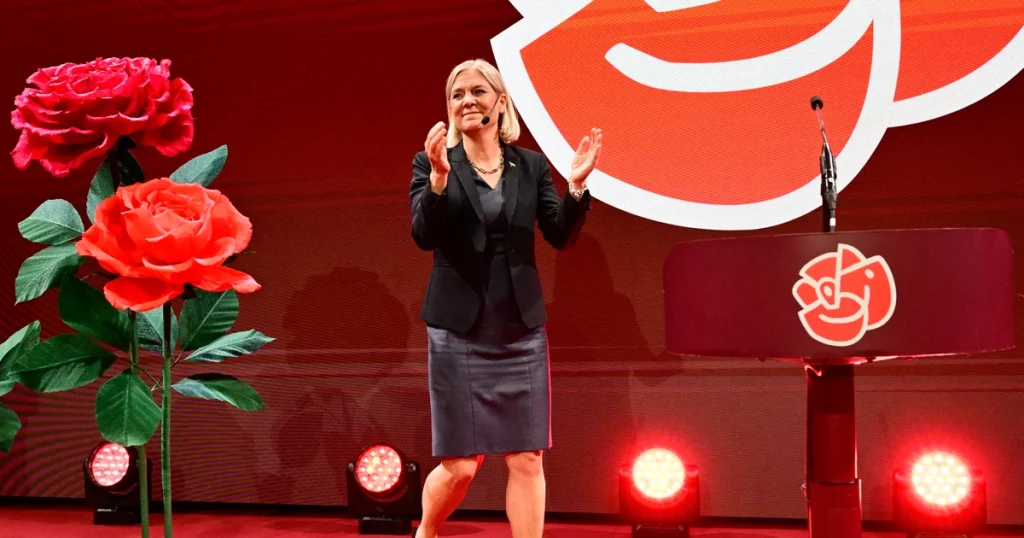
Social Democratic leader Magdalena Andersson said she would examine whether she could form a government with the opposition parties. Outgoing Prime Minister Ulf Kristersson said he would also explore possible alliances after his conservative-led governing side lost its apparent advantage.
Coalition talks could decide Sweden’s next government
A parliamentary vote for a new prime minister cannot be held before Sept. 29. Sweden is accustomed to complicated post-election talks: the government formation process took 37 days after the 2022 election and 134 days after the 2018 vote.
Andersson’s potential partners include the Greens, the Left Party and the Center Party. However, the parties disagree on important questions, including which parties should be included in a future government.
The Center Party has said it will not support a cabinet that includes the Left Party. The Left Party has said it will not back a government if it is excluded from influence. Those competing demands could make a left-leaning coalition difficult to assemble, despite its narrow parliamentary edge.
Andersson, who has defended Sweden’s welfare-state model, will need to balance the priorities of smaller parties seeking concessions in exchange for their support. The final agreement may determine whether the opposition can govern together or must rely on looser parliamentary cooperation.
Far-right cooperation remains a major obstacle
Kristersson’s conservative coalition has governed with outside support from the anti-immigration Sweden Democrats. Although the party lost some vote share, its role remains central to the political calculations facing the right.
Kristersson may seek support from the Center Party to build a non-socialist majority. But the Center Party, which was part of the right-wing bloc until 2019, has opposed cooperation with the far right.
“I will therefore, even if tonight’s result stands, examine whether there are any possibilities within this non-socialist parliamentary majority to find some workable government constellation,” Kristersson told supporters on election night.
Annika Freden, an associate professor of political science at Lund University, said an approach to the Center Party was expected but was unlikely to create an alliance because of its resistance to working alongside the far right.
Political analyst Mats Knutson of public broadcaster SVT described the situation as a likely stalemate. He said parties may need to rethink their “red lines,” while a snap election could eventually become possible if negotiations fail.
Why Sweden faces political uncertainty as far-right support changes
Sweden faces political uncertainty as far-right support remains politically significant despite its reduced vote share. The election did not produce an easy majority for either side, meaning smaller parties could hold substantial influence over the next government.
Sweden’s political system often depends on negotiation when no bloc wins decisively. Freden said parties have a strong incentive to reach an agreement instead of returning quickly to the polls.
“In Sweden we have a culture of negotiation, and there is a strong reluctance to call a snap election,” Freden said.
For voters, the final seat count is only part of the story. Parties that remain outside the cabinet may still shape policy by providing the votes a minority government needs to survive in parliament.
Construction worker Mikko Duvaldt, 48, said the country had become more polarized and that both camps faced a challenging task.
“The situation is really tight, and it’s been more and more polarized in Sweden the last years,” Duvaldt said. “It’s going to be a tough situation for each side to form a government.”
Frequently asked questions
Why is Sweden’s election result so important?
The result is important because neither political bloc appears to have a comfortable governing majority. A small number of seats could determine which parties can form a government and how much influence smaller parties receive.
When can Sweden choose a new prime minister?
A parliamentary vote on a new prime minister cannot take place before Sept. 29. Negotiations may take weeks, depending on whether parties can agree on policy and coalition terms.
Could Sweden hold another election?
A snap election is possible if government negotiations break down, but Swedish parties generally prefer negotiated agreements and have shown reluctance to send voters back to the polls.