
Federal Judge Blocks New Effort to Add Trump’s Name at Kennedy Center
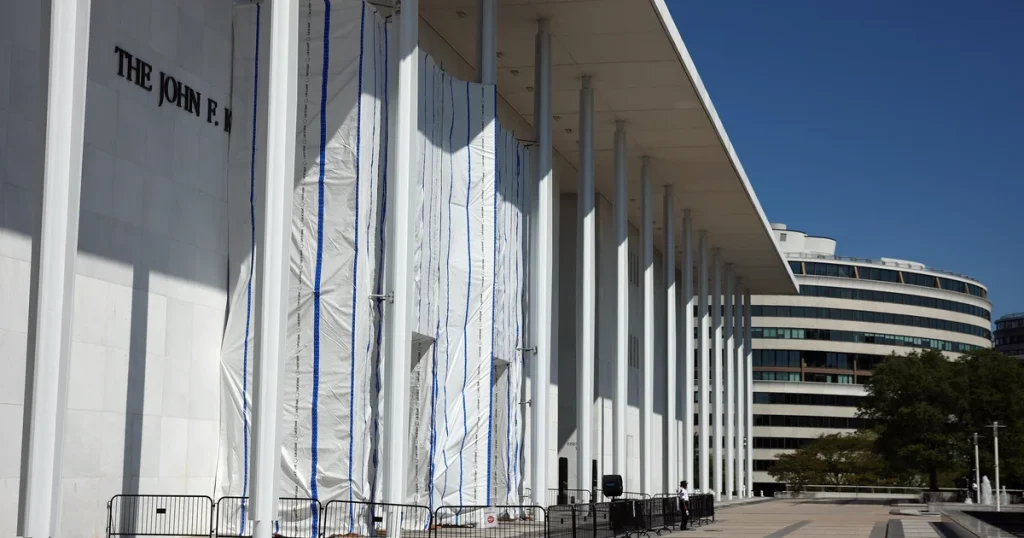
Wertynews.com – A federal judge has again stopped the board overseeing the John F. Kennedy Center for the Performing Arts from placing President Trump’s name on the institution’s building or changing the name of its campus.
U.S. District Judge Christopher Cooper issued the ruling Tuesday after reviewing a proposed board resolution that would have added a reference to Trump on the main building and rechristened the surrounding campus as the “President Donald J. Trump Plaza.” The decision follows an earlier legal dispute involving changes made at the Kennedy Center during Trump’s administration.
The case was brought by Rep. Joyce Beatty, an Ohio Democrat who serves on the Kennedy Center’s board. Beatty sued last year over changes involving the institution and later challenged the board’s recent attempts to honor Trump through the building and campus names.
Her legal team sought emergency court action, arguing that the board could not take those steps under federal law. Cooper agreed, concluding that the proposed action conflicted with both an existing court order and a law enacted by Congress.
“Defendants are hereby enjoined from inscribing ‘renovated and restored by Donald J. Trump’ on the main building or renaming the campus the ‘President Donald J. Trump Plaza,’” Cooper wrote in his 22-page opinion.
What the injunction prevents
The injunction bars the Kennedy Center board from adding the proposed inscription to the main building. It also prevents the campus from being renamed for Trump. The ruling does not merely delay those plans while the dispute continues; it makes clear that the board lacks authority to install the proposed memorials without congressional approval.
Cooper emphasized that the Kennedy Center’s governing board cannot independently place memorials recognizing a president, another individual, or any other subject at the site if Congress has not authorized the action.
“Simply put, Defendants cannot install memorials for President Trump or anyone or anything else at the Kennedy Center without Congress’s blessing. The board resolution bucks a federal court order and a statute Congress enacted.”
The judge’s language places the dispute in a broader legal framework. The question was not simply whether board members supported the proposed recognition of Trump. Instead, the ruling turned on the limits of the board’s authority and on congressional control over changes involving the federally established performing arts center.
A dispute over authority and a national institution
The Kennedy Center is a prominent national venue for the performing arts, carrying the name of President John F. Kennedy. Because it was created through federal law and has a statutory structure, decisions affecting its identity, memorials, and official naming can raise questions beyond the ordinary governance choices of a private arts organization.
In this case, Beatty argued that the board’s move to recognize Trump through the building and campus names ran afoul of federal requirements. Cooper’s ruling accepted the central legal argument that congressional authorization was necessary before such memorials could be added.
The decision is also notable because it refers to a prior court order. Cooper found that the board’s proposed resolution was inconsistent with that earlier judicial action as well as with the governing statute. That combination gave the court a basis to issue immediate relief sought by Beatty and her legal team.
For visitors and the public, the practical outcome is straightforward: the Kennedy Center’s main building cannot bear the proposed “renovated and restored by Donald J. Trump” wording, and the campus cannot be renamed the “President Donald J. Trump Plaza” under the board’s resolution.
Why congressional approval matters
Congress has a direct role in the legal framework that governs the Kennedy Center. Cooper’s order underscores that a board resolution alone cannot override limits established by federal statute or prior court action. Even if trustees support a proposed recognition, their vote does not substitute for the authorization required by law.
The ruling therefore draws a distinction between ordinary board management and decisions that alter the public identity or commemorative features of a federally governed institution. Naming, inscriptions, and memorials can carry legal significance when Congress has specified how the institution must be administered.
The court’s intervention also preserves the current status of the building and campus while the dispute remains active. The order prevents a physical inscription or formal renaming from taking effect, avoiding changes that could be difficult to reverse after installation.
Case remains a developing story
Cooper’s 22-page opinion marks another court setback for the effort to add Trump’s name to the Kennedy Center property. It also represents a legal victory for Beatty, whose challenge focused on whether the board could proceed without congressional consent.
The underlying disagreement reflects competing views about the reach of the Kennedy Center board’s power. But the judge’s conclusion was unambiguous: the proposed memorial measures cannot move ahead on the board’s authority alone.
Further developments could clarify whether any additional legal steps will be taken by the parties or whether supporters of the proposal pursue action through Congress. For now, the federal court order leaves the Kennedy Center’s building and campus names unchanged.
Related Reading
Frequently Asked Questions
What is Judge rules Kennedy Center board cannot?
Judge rules Kennedy Center board cannot is the main topic of this guide. The article explains the context, practical details, and next steps readers should understand.
Why does Judge rules Kennedy Center board cannot matter?
Judge rules Kennedy Center board cannot matters because readers are looking for a useful answer, not just a short summary. Good content should match search intent and help them decide what to do next.