
Passersby Left Shocked After Burning Cross Spotted in Grant Park
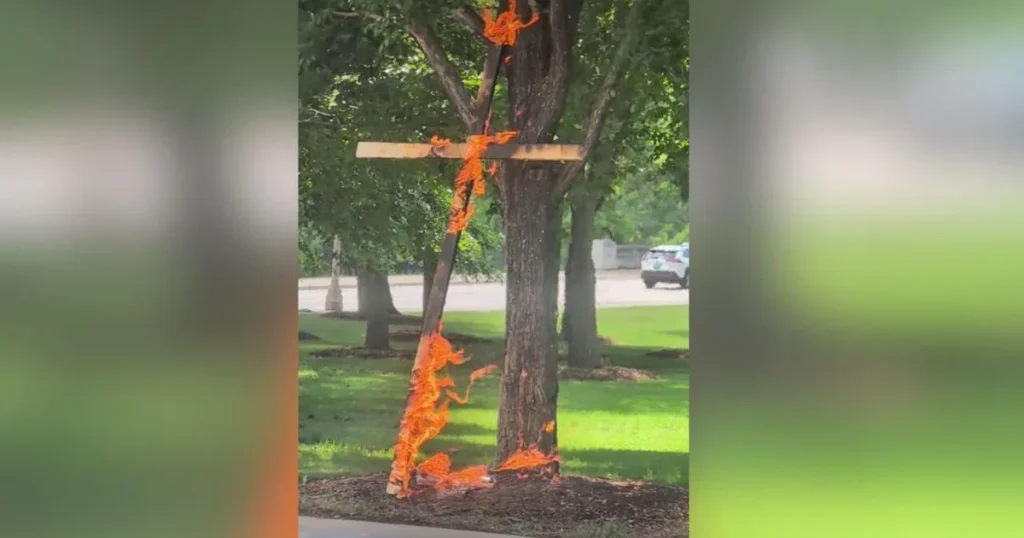
Wertynews.com – A burning cross, a symbol steeped in historical significance, was spotted in Grant Park on Tuesday, causing a stir among onlookers who were left passersby left shocked after burning in the heart of Chicago. The incident, which unfolded during the afternoon, sparked immediate curiosity and concern, with the cross’s presence raising questions about its purpose and the emotions it evoked in the public. While the Chicago Fire Department arrived swiftly to douse the flames, the event’s impact lingered far beyond the moment it was extinguished, leaving many to ponder its deeper meaning.
The Scene in Grant Park
As the sun began to set over the city, the flames from the burning cross became visible to those traveling along Columbus Drive. The sight of the cross, partially engulfed in fire, drew attention from both drivers and pedestrians, creating a sense of urgency and disbelief. Witnesses described the scene as alarming, with the cross leaning against a tree trunk, which was charred, and nearby foliage caught in the flames. Despite the intensity of the fire, it did not spread further, and the cross was quickly contained, though its presence had already left a mark on the community.
The act of burning a cross in a public area, such as Grant Park, is often associated with racial tensions and symbolic acts of protest or intimidation. This event, however, appeared to be more of a spontaneous occurrence, as no one was immediately identified as the culprit. The cross, which was placed in a noticeable location, served as a reminder of past struggles, resonating with those who had lived through similar experiences in history.
Community Reactions and Historical Context
Keinika Carlton, a local resident, and her daughter Alyna were among those who witnessed the incident. “It’s very hurting. Even in schools, they make it seem like things like that were so long ago, and we’re making so much progress. But clearly, we’re not,” Alyna remarked, capturing the sentiment of many who saw the cross burn. Keinika, reflecting on her ancestors’ experiences, felt a profound connection to the event. “My grandmothers and great-grandmothers lived through the same struggles in the South. Seeing this now felt like a direct echo of that past,” she explained, highlighting the relevance of the cross in today’s social climate.
Other onlookers expressed a mix of emotions, from shock to anger, as they grappled with the implications of the act. The cross, though a simple object, became a powerful symbol, evoking memories of the Jim Crow era and the ongoing fight for equality. Social media platforms buzzed with reactions, with many users sharing photos and videos of the event, amplifying its visibility and prompting discussions about racial dynamics in modern society.
Investigation and Ongoing Inquiry
Chicago police, responding to the scene shortly before 2:30 p.m., worked diligently to investigate the incident. Their efforts spanned roughly three hours, during which they examined the area, gathered evidence, and interviewed witnesses. Despite the thorough investigation, details about the motive behind the act remained unclear. Authorities have not yet confirmed whether the cross was placed intentionally or if it was a result of an accidental fire sparked by materials from the surroundings.
As the investigation continues, questions about the cross’s significance and the individuals involved persist. Was it a deliberate statement against racial progress, or did it serve as a random act of vandalism? The cross, now a smoldering reminder of the past, has become a focal point for community discourse. Local leaders and historians have called for further analysis, emphasizing the need to connect the event to broader social issues and movements.
While the Chicago Fire Department managed to extinguish the flames without any major damage, the event’s emotional impact remains. For those who saw the cross burn, it was a moment that transcended the physical act, sparking conversations about resilience, history, and the enduring presence of racial tensions in urban settings. The cross, now a symbol of both past and present, continues to resonate with the community as they reflect on its meaning and the messages it conveys.