
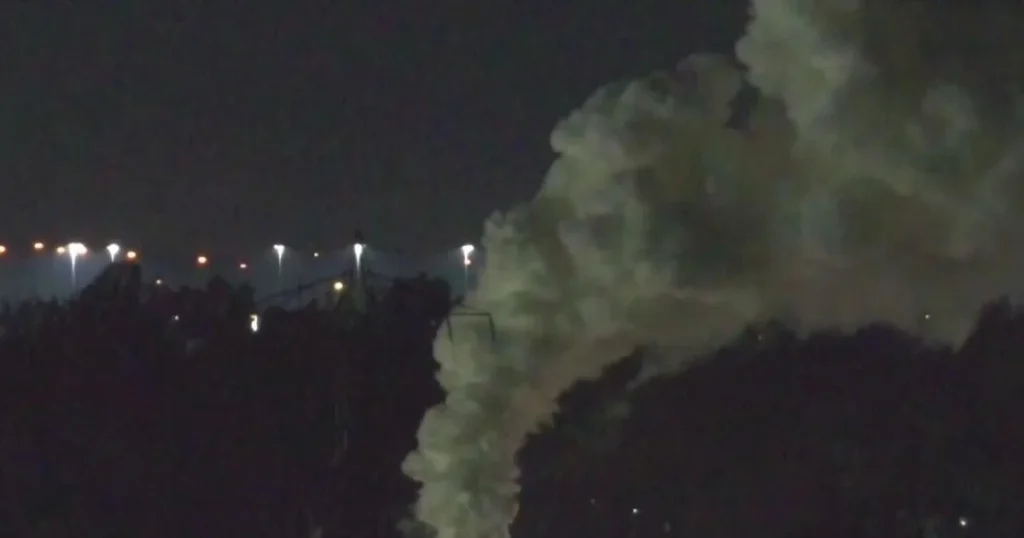
Toledo chemical release prompts evacuation and shelter-in-place precautions
Wertynews.com – Residents and workers in parts of Toledo, Ohio, faced emergency hazardous-materials restrictions after a large chemical release at the MC Tank terminal sent a plume of smoke into the area. The incident led authorities to establish an evacuation area around the facility and issue wider instructions for people to remain indoors.
No injuries had been reported as emergency crews responded. The release involved glycidyl methacrylate, an industrial chemical used in products including plastics, paints and coatings. The company said equipment connected to its operations was involved in the incident.
Two emergency zones were established
Toledo Fire and Rescue ordered people within a one-mile radius of 1266 Progress Ave. to leave the area because of the hazardous-materials release. The evacuation direction was issued at 10:48 p.m. Tuesday.
A larger shelter-in-place zone was later put in effect for locations within three miles of the same address. That order was issued at 4:24 a.m. Wednesday, extending protective measures to residents and businesses beyond the immediate evacuation perimeter.
The two types of instructions serve different purposes. An evacuation order calls for people in the closest affected area to move away from the potential hazard. A shelter-in-place order asks people farther from the scene to reduce possible exposure by staying inside while responders assess conditions and manage the release.
Guidance for people told to remain indoors
People inside the three-mile shelter-in-place area were instructed to stay indoors and close all windows and exterior doors. They were also told to turn off ventilation systems that bring outside air into buildings and to keep pets indoors.
These steps are intended to limit the amount of outdoor air entering homes, workplaces and other enclosed spaces while smoke or chemical vapors may be present nearby. Residents should follow instructions from local emergency officials, particularly if the size of the affected area or the recommended precautions change.
People who were outside when the order was issued should avoid lingering outdoors and move into a building if they can safely do so. Closing windows and doors, avoiding the use of outdoor-air ventilation and bringing animals inside are among the specific measures identified for the shelter-in-place zone.
Where evacuees can go
Those required to leave the one-mile evacuation area were directed to available temporary shelter options. Shoreland Elementary School was designated as a temporary shelter location.
Support was also available at the Meijer parking lot off East Alexis, where Red Cross personnel and TARTA buses were stationed to provide shelter as needed. These locations give evacuees a place to go while emergency operations continue and officials determine when it is safe for people to return.
Anyone leaving an evacuation area may need to account for family members, pets, needed medications and essential personal items if time and safety permit. However, the priority during an active hazardous-materials event is to comply with evacuation instructions promptly and avoid returning until authorities say the area is safe.
What is known about the chemical involved
The City of Toledo confirmed that glycidyl methacrylate was the chemical involved. It is an industrial material used to improve the performance of certain plastics, paints and coatings.
The visible smoke plume and the emergency restrictions prompted a precautionary response while the situation was addressed. Public safety measures in a chemical incident can depend on conditions at the site, the direction and movement of smoke, and the need to protect people in nearby neighborhoods or workplaces.
Residents in either emergency zone should rely on official alerts for instructions tailored to their location. A person inside the one-mile zone may be asked to evacuate, while someone elsewhere within the three-mile area may be told to remain inside. Following the direction assigned to a specific area helps emergency responders manage traffic, maintain access to the site and reduce unnecessary exposure.
Schools closed during the response
Toledo public schools were closed Wednesday as the response continued. The closure reflected the broader disruption caused by the chemical release and the protective actions put in place around 1266 Progress Ave.
For families, employees and others affected by the closure or emergency orders, the immediate focus remains on safety guidance. People should monitor official local notifications for updates about shelter arrangements, school operations, evacuation boundaries and any decision to lift or modify the restrictions.
The incident underscores how quickly an industrial emergency can affect surrounding communities. In this case, the response included both a mandatory evacuation close to the terminal and a broader instruction to shelter indoors, along with temporary locations for people displaced from their homes or workplaces.
Related Reading
Frequently Asked Questions
What is Chemical leak in Toledo forces hazardous?
Chemical leak in Toledo forces hazardous is the main topic of this guide. The article explains the context, practical details, and next steps readers should understand.
Why does Chemical leak in Toledo forces hazardous matter?
Chemical leak in Toledo forces hazardous matters because readers are looking for a useful answer, not just a short summary. Good content should match search intent and help them decide what to do next.