
Why the 2026 Midterms Could Carry Outsized Weight
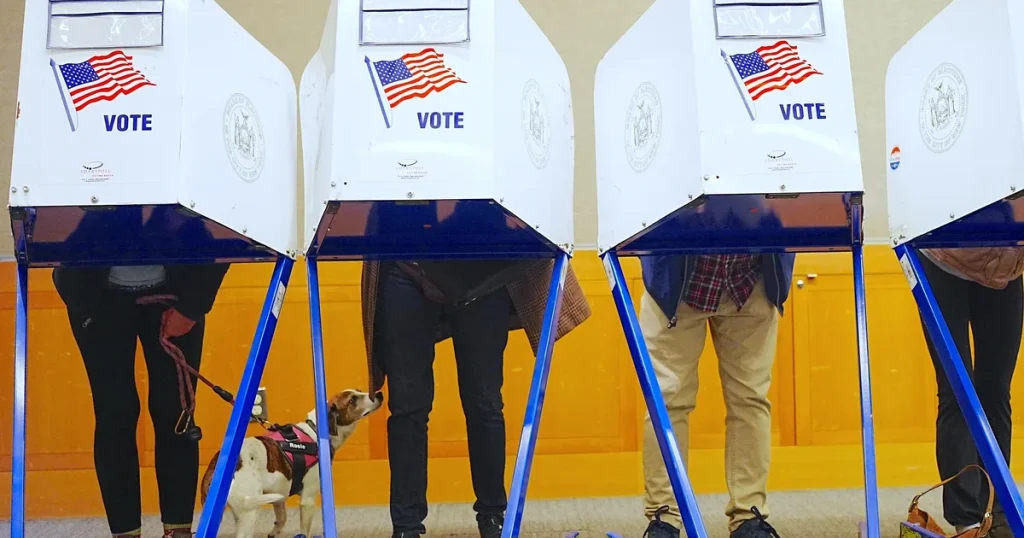
Wertynews.com – Americans are already casting early ballots for the 2026 midterm elections, with Election Day set for Tuesday, Nov. 3. The races will decide every seat in the U.S. House of Representatives, Senate contests in 35 states, governor’s races in 36 states and more than 150 ballot measures across 40 states.
The outcome will affect the balance of power in Washington as well as decisions closer to home. Voters will help choose officials who can influence issues ranging from funding for the Iran War and potential AI regulation to schools, taxes, health care costs and local courts.
For Brody Saner, a college student in Kansas, voting is a responsibility tied to the ability to seek change.
“If there’s something you’re not happy with, go out and vote. Do your part to change it.”
A vote shapes more than national politics
At the federal level, the central question is whether Republicans or Democrats will control the House and Senate during the final two years of President Donald Trump’s term. Congressional control can determine whether the White House faces a meaningful legislative check or finds greater support for its agenda.
But many of the practical effects of an election emerge below the national spotlight. State and local officials have major roles in setting tax policy, approving education funding, overseeing public services and appointing or selecting judges. Ballot initiatives can also put specific policy questions directly before voters.
Kansas voter Tracy Preisser described voting as a basic form of political participation.
“Your vote is your voice.”
That voice can still feel muted to people dissatisfied with both major parties. A CBS News/YouGov poll found that most voters did not believe either party had a plan that would leave them better off, financially. Some voters say that frustration makes them question whether participating is worthwhile.
Kansas farmer Mandy Sieren expressed that distrust bluntly.
“I just don’t trust anybody at this point enough to vote for them, Republican [or] Democrat. I think they’re all crooked.”
Donald Green, a Columbia University political scientist who has studied voting for three decades, argues that dissatisfaction does not eliminate the need for a choice. Voters, he says, still need to evaluate the candidates and make an informed decision between the available options.
Midterms often amplify the impact of each ballot
Participation is usually lower in midterm years than in presidential elections, which can make individual votes more consequential. In the 2022 midterms, 46% of eligible voters cast a ballot. The 2024 presidential election drew 65% of eligible voters.
When fewer people vote, a relatively small number of ballots can alter the result. Recent congressional contests illustrate how narrow those margins can be. Republican Rep. Lauren Boebert retained her Colorado seat in 2022 by 546 votes. Democrat Adam Gray won California’s 13th Congressional District in 2024 by 187 votes. In Iowa, Republican Mariannette Miller-Meeks won a 2020 House contest by only six votes.
Those examples are reminders that turnout is not merely a statistical detail. In tightly divided districts, a neighborhood, campus, workplace or community that votes at a higher rate can help decide who represents it.
Green emphasizes that elected officials watch participation patterns closely. Groups that vote consistently are more likely to command candidates’ attention, while communities with lower turnout can find their priorities pushed aside. Older voters generally participate at higher rates than younger or lower-income voters, a pattern that can affect which concerns receive the strongest political focus.
Congressional Control Is on the Line
Midterm elections frequently reshape the political environment halfway through a presidency. The president’s party has lost seats in 37 of the past 41 midterm elections, making these contests a recurring test of public sentiment and governing power.
In 2026, both chambers of Congress are within reach. Republicans currently hold a narrow House majority, while Democrats need a net gain of three seats to take control. In the Senate, Democrats would need four net gains to flip the chamber.
The party that controls Congress will have substantial influence over the legislative agenda. That includes whether additional Iran War funding advances, whether lawmakers pursue rules for artificial intelligence and how many other proposals receive hearings, votes or approval.
Governors’ races add another major layer to the election. More than 30 states will choose governors, including competitive contests stretching from Georgia to Ohio. Governors can shape how state laws are carried out, set budget priorities and steer responses to economic, education and public-health concerns.
What voters can do before Election Day
For voters weighing whether to participate, the midterms offer several places to look beyond the candidates at the top of the ballot. House, Senate, governor, state legislative, judicial and local races may all affect different parts of daily life. Ballot measures may also require voters to decide on a defined policy proposal rather than simply choose between candidates.
Reviewing a sample ballot, confirming registration information and understanding local voting options can make the process less daunting. Early voting is already underway in many parts of the country, giving eligible voters an opportunity to cast a ballot before Nov. 3.
Midterm elections may not command the same attention as presidential contests, but their consequences can be immediate and lasting. With close margins in Congress, statewide offices at stake and hundreds of ballot measures on the docket, turnout in 2026 could help determine both the direction of national policy and the decisions made in communities across the country.
Related Reading
Frequently Asked Questions
What is Why is voting important Beyond the basics?
Why is voting important Beyond the basics is the main topic of this guide. The article explains the context, practical details, and next steps readers should understand.
Why does Why is voting important Beyond the basics matter?
Why is voting important Beyond the basics matters because readers are looking for a useful answer, not just a short summary. Good content should match search intent and help them decide what to do next.