
Capturing the Emotional Journey of Healing Justice | 60 Minutes
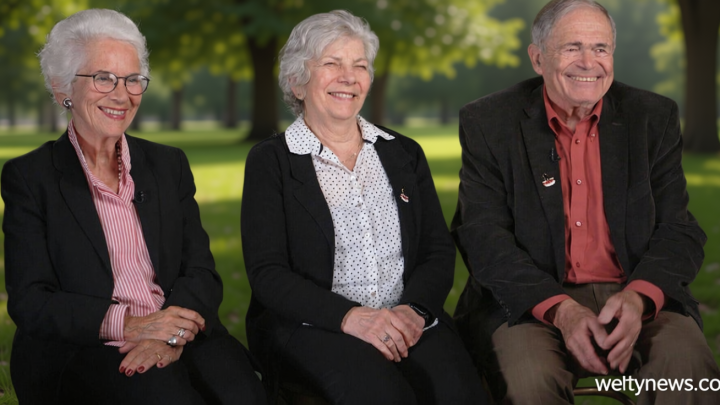
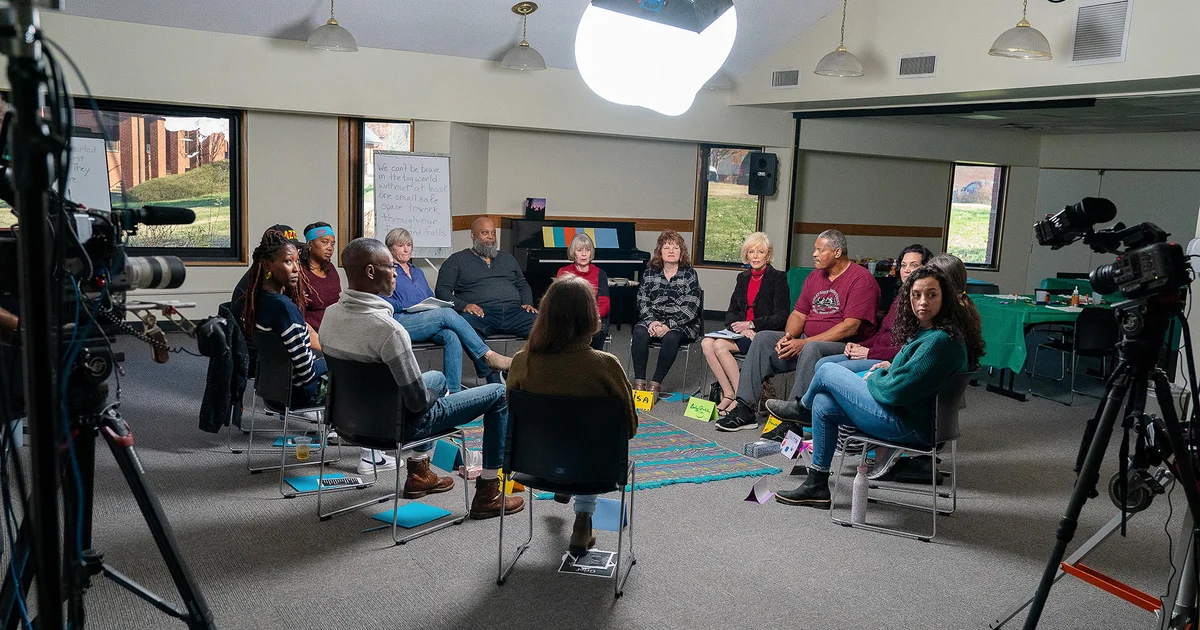
Wertynews.com – On this week’s episode of 60 Minutes, correspondent Lesley Stahl and the show’s team explored Healing Justice, a nonprofit initiative that unites individuals affected by systemic failures in the legal system. These participants include survivors of sexual assault, people wrongfully convicted of crimes, and families of victims—each with their own distinct stories—coming together for a three-day immersive experience aimed at emotional recovery.
The program employs creative methods such as writing exercises, group discussions, and art therapy to foster open dialogue about trauma. It seeks to help attendees process their pain, gain clarity on their emotions, and build connections with others who share similar struggles. Stahl reflected on the transformative potential of such gatherings, noting how they can spark meaningful change, even if the full impact isn’t immediately visible.
“They arrive carrying a range of emotions—bitterness, guilt, sadness—etched by their experiences. It’s hard to know whether one weekend can change you that much. But the beginning of a change certainly happens,” Stahl said during an interview with 60 Minutes Overtime.
With participants’ consent, the organization allowed 60 Minutes to document the process over three days. Stahl and producer Shari Finkelstein shared insights about their earlier coverage of the program’s founder, Jennifer Thompson, and the innovative storytelling approach they used to highlight the program’s mission.
Eyewitness: A Personal Story of Misidentification
Jennifer Thompson, the founder of Healing Justice, is a rape survivor who once faced a wrongful conviction. In 2009, Stahl and Finkelstein profiled Thompson’s experience in a segment titled “Eyewitness,” which exposed flaws in how victims are identified during criminal investigations.
Thompson’s story began on July 28, 1984, when she was a 22-year-old college student. She had fallen asleep early, only to wake up to a violent intrusion. A man shattered the light bulb near her back door, severed the phone line, and then attacked her. “I remember turning my head and saying, ‘Who’s there? Who is it?’ And I saw the top of someone’s head sliding beside my mattress,” she recounted to Stahl.
During the assault, Thompson meticulously observed the attacker’s features, hoping they would help police find the perpetrator. Three days later, she was shown a photo lineup and confidently selected Ronald Cotton as her rapist. When confronted with a live lineup, she identified him again. “What was said to me afterwards was, ‘That’s the same person you picked out in the photo lineup’… I thought, ‘Bingo. I did it right,'” Thompson shared.
Despite her certainty, Cotton was sentenced to life in prison plus 50 years. Eleven years later, DNA evidence proved his innocence, revealing Bobby Poole as the true assailant. Thompson was heartbroken upon realizing Cotton had spent a decade for a crime he didn’t commit. Yet, she still saw his face in her dreams, a lingering reminder of the system’s flaws.
“The minute he forgave me, it’s like my heart physically started to heal,” Thompson told Stahl.
Shari Finkelstein, a 60 Minutes producer, explained how misidentification can snowball. Studies show that when the real perpetrator isn’t in a lineup, victims often choose the person who most resembles their memory. In Thompson’s case, Bobby Poole wasn’t included in either the photo or physical lineup. Finkelstein noted that this mirrors her own experience in a simulated crime scene test, where she selected a suspect who looked like the attacker but wasn’t the actual perpetrator.
“She did what many crime survivors do—picking the person who matched her memory as well as it could. But it wasn’t the same guy. And that’s exactly what happened in Jennifer’s case,” Finkelstein said in an interview with 60 Minutes Overtime.
Through their reporting, Stahl and Finkelstein highlighted how Healing Justice provides a space for those wronged by the justice system to reclaim their emotional narratives and find solace in shared experiences.