
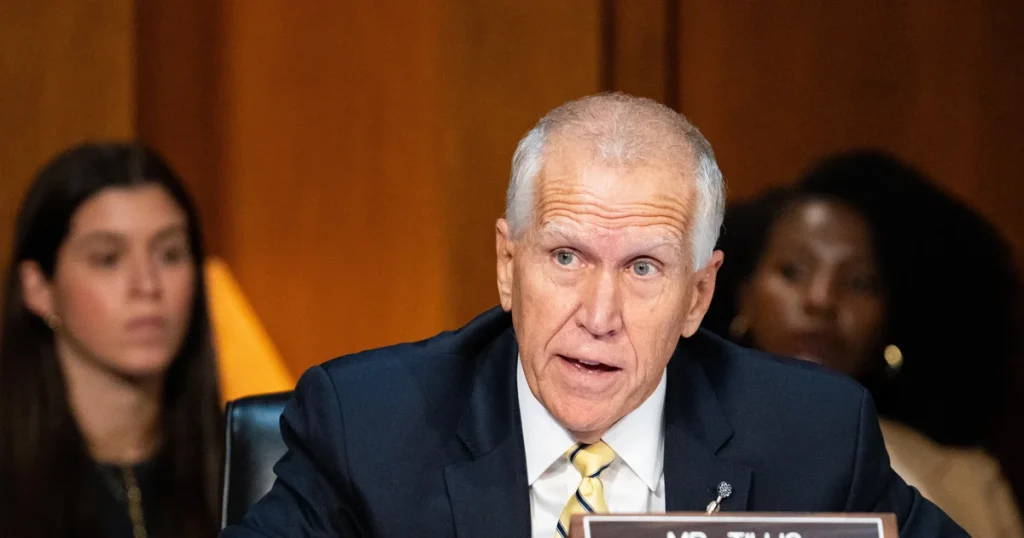
Tillis Conditions Support for Blanche Nomination on Epstein Survivor Meeting
Wertynews.com – Republican Senator Thom Tillis of North Carolina has made it clear that he will not support Todd Blanche’s nomination for attorney general unless the nominee agrees to meet with survivors of the late convicted sex offender Jeffrey Epstein. This condition was reiterated during the second day of Blanche’s confirmation hearing, where the senator emphasized the importance of direct engagement with the victims to assess the nominee’s commitment to addressing the Epstein case. Tillis’s stance underscores growing scrutiny over Blanche’s alignment with victims’ interests and his potential role in shaping future legal policies.
Epstein Survivors’ Testimony and Privacy Concerns
During the confirmation hearing, five survivors provided testimonies that highlighted their experiences with Epstein’s abuse and their hopes for a justice system that prioritizes their voices. Dani Bensky, one of the survivors, revealed that her name was inadvertently disclosed in Justice Department documents released last December, which listed over 350 victims. This leak raised significant concerns about privacy and transparency, prompting Bensky to reach out to both former Attorney General Pam Bondi and Blanche for a meeting. However, she reported receiving no response from either.
“We contacted the Justice Department to request a meeting, but they never responded or set a time to speak with us,” Bensky stated in her written testimony. “This delay has left us feeling unheard and concerned about the nominee’s priorities.”
Blanche’s Commitment and Tillis’s Timeline
Todd Blanche, the nominee, pledged to meet with Epstein survivors immediately if possible, as confirmed by Tillis. The senator, who is not seeking re-election, noted that his support for Blanche hinges on this meeting occurring before the confirmation process moves forward. Tillis indicated that the timeline for a final vote remains at least two weeks away, giving Blanche an opportunity to demonstrate his dedication to victims’ advocacy. “I expect the meeting to happen before I commit to advancing his nomination,” Tillis said, reinforcing his conditional approval.
“Mr. Blanche expressed willingness to meet with victims today,” Tillis remarked. “If he can do that now, there’s no reason he can’t do so before the committee’s next action.”
Trump Settlement and Legal Scrutiny
Blanche’s nomination has also drawn attention to a $10 billion civil settlement with former President Donald Trump. The agreement, which was part of a legal dispute over leaked tax documents, included a $1.8 billion “anti-weaponization” fund and immunity for Trump, his sons, and associated companies from audits related to previously filed tax returns. Critics argue that the settlement’s terms could influence Blanche’s approach to handling similar cases as attorney general. Blanche himself stated that the anti-weaponization program is no longer active, though the immunity provision remains in place.
Committee Dynamics and Political Shifts
The Judiciary Committee’s confirmation process is currently split 11-10 following the recent passing of Senator Lindsey Graham, which shifted the balance of power. This division means Blanche’s nomination depends heavily on securing votes from key senators like Tillis and John Cornyn of Texas. Cornyn, who lost his Senate primary to Ken Paxton—a Trump-backed candidate—has voiced concerns over the Trump settlement, calling its scope “too broad” and potentially compromising the Justice Department’s independence.
“The settlement with Trump has raised questions about the nominee’s ability to act impartially,” Cornyn remarked. “It’s critical that Blanche proves his dedication to victims first.”
Implications for Legal Policy and Public Trust
Tillis’s requirement for a meeting with Epstein survivors reflects broader concerns about public trust in the legal system and the nominee’s willingness to engage with those directly affected by past misconduct. The senator’s condition highlights the importance of accountability and transparency, especially in cases involving high-profile figures. As the hearing progresses, the focus will likely remain on Blanche’s ability to reconcile his past actions with his current promises. Analysts suggest that Tillis’s decision could serve as a pivotal moment in shaping the Justice Department’s priorities for the next administration.
Next Steps and Potential Outcomes
With the confirmation hearing in full swing, the next steps will determine whether Blanche secures the necessary support to become attorney general. Tillis has stressed that the meeting with survivors is non-negotiable, stating that “supporting Blanche without this step would be a compromise of our commitment to justice.” If the meeting takes place and Blanche addresses the survivors’ concerns satisfactorily, Tillis may approve the nomination. However, if the meeting is delayed or the survivors feel their voices are not adequately considered, the senator’s stance could shift. The outcome of this process will have lasting implications for the legal landscape and the fight for accountability in high-profile cases.