
Powerful Earthquake Hits Mexico-Guatemala Border, Triggering Temporary Tsunami Alert
Wertynews.com – A powerful earthquake struck the Mexico-Guatemala border on Friday, rattling the region and prompting a brief tsunami alert. The seismic event, which was felt across a wide area, including Mexico City and El Salvador, had no immediate reports of major damage or fatalities in either country. However, two people were injured in southern Mexico, highlighting the potential for widespread impact despite the initial assessments. This incident underscores the vulnerability of the region to natural disasters and the importance of preparedness.
Magnitude and Epicenter Details
According to the United States Geological Survey (USGS), the quake measured 7.3 on the Richter scale, with its epicenter located 30 miles southwest of Aquiles Serdan in Chiapas. The tremor was preceded by a smaller earthquake with an epicenter further out at sea, which may have contributed to the initial sense of urgency. USGS officials recorded at least 10 aftershocks, ranging from 4.9 to 6.0 in magnitude, which continued to affect the area in the hours following the main event. The seismic activity was centered near the coastal regions of Mexico and Guatemala, where the risk of tsunamis is higher due to proximity to the ocean.
The powerful earthquake that hit Mexico Guatemala was part of a series of tremors that have been occurring in the region over recent months. Seismologists note that the area is tectonically active, lying along the boundary of the Cocos and Caribbean plates, which frequently generate strong earthquakes. While the 7.3-magnitude quake was significant, it did not reach the threshold that would activate the tsunami warning system permanently. The temporary alert served as a precautionary measure, reminding residents of the region’s susceptibility to such events.
Community Impact and Responses
In Tuxtla Gutiérrez, the state capital of Chiapas, the earthquake caused panic among those in tall buildings. Araceli Sánchez, a government employee in a 15-story structure, described the experience as “horrible” and shared how people descended emergency stairs in a coordinated manner. Similarly, in Guatemala City, the prolonged shaking during the morning rush hour unsettled residents, with some reporting feelings of fear and uncertainty. The National Coordinator for Disaster Reduction stated that there was no immediate damage, but social media footage revealed landslides, particularly on roads heading west, which could disrupt transportation and communication.
The powerful earthquake that hit Mexico Guatemala also had a human toll, with two individuals sustaining injuries. In one instance, a Haitian migrant woman in her 30s suffered a nervous breakdown and leaped from an apartment building, approximately 13 feet high, before being hospitalized with fractures. While her condition is stable, the incident highlights the psychological impact of such events on vulnerable populations. Local authorities in Mexico City noted that certain buildings experienced noticeable shaking, though the alert system remained silent as the initial energy did not surpass activation thresholds.
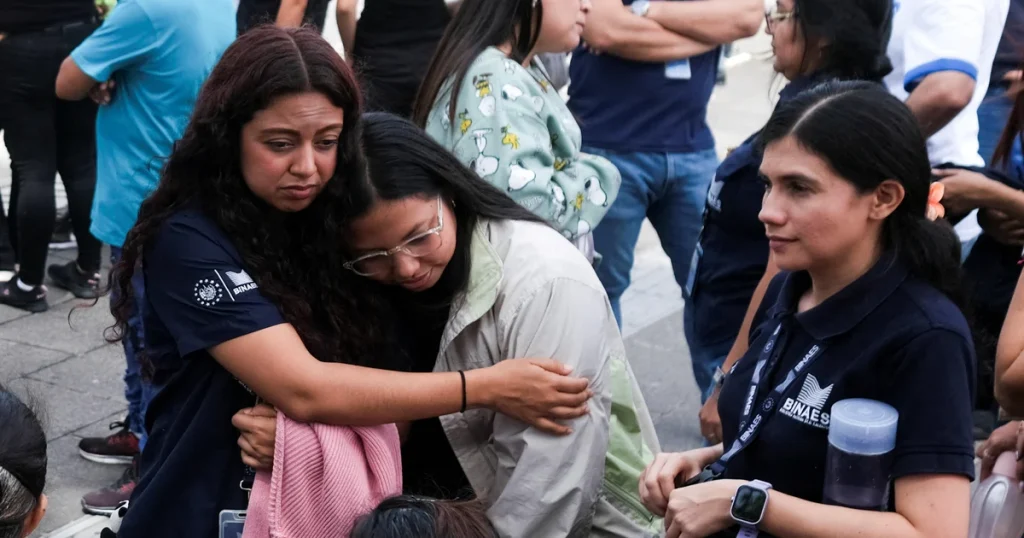
Residents across both nations took proactive measures to ensure safety. In Tuxtla Gutiérrez, many people evacuated to open spaces, while in Guatemala City, families gathered in communal areas to assess the situation. The Mexican government’s Civil Protection agency, under the leadership of Demetrio Martínez, emphasized the importance of remaining cautious even after the initial tremors subsided. The earthquake’s reach extended beyond the immediate epicenter, affecting communities in Mexico and Guatemala, with the powerful earthquake that hit Mexico Guatemala serving as a reminder of the region’s seismic risks.
The powerful earthquake that hit Mexico Guatemala was not only a natural event but also a moment of resilience and community response. While the tremor caused temporary disruptions, the absence of major casualties and damage was a relief for officials and residents alike. The Mexican president, Claudia Sheinbaum, stated that preliminary assessments indicated no significant damage, though further monitoring is essential to ensure long-term stability. The U.S. Tsunami Warning System initially issued an alert for waves within 186 miles of the epicenter but later confirmed the threat had passed, reducing anxiety for coastal populations.
The earthquake’s impact extended to the educational sector, with the Ministry of Education in Guatemala halting in-person classes in San Marcos, Quetzaltenango, Suchitepéquez, and Retalhuleu—areas near the quake’s epicenter. Schools in Mexico also took precautions, with some temporarily closing to allow for safety checks. These measures reflect the proactive steps taken by governments to minimize risks, even in the absence of direct structural damage. The powerful earthquake that hit Mexico Guatemala has prompted renewed discussions about infrastructure resilience and emergency response protocols in the region.
“The powerful earthquake that hit Mexico Guatemala was a stark reminder of nature’s unpredictability,” said a local official in Chiapas. “While the immediate damage was minimal, the response from residents was swift and organized, which is crucial in preventing larger crises.”