
Trump’s Claim: China Collected 220 Million U.S. Voter Files – But It’s Easily Accessible
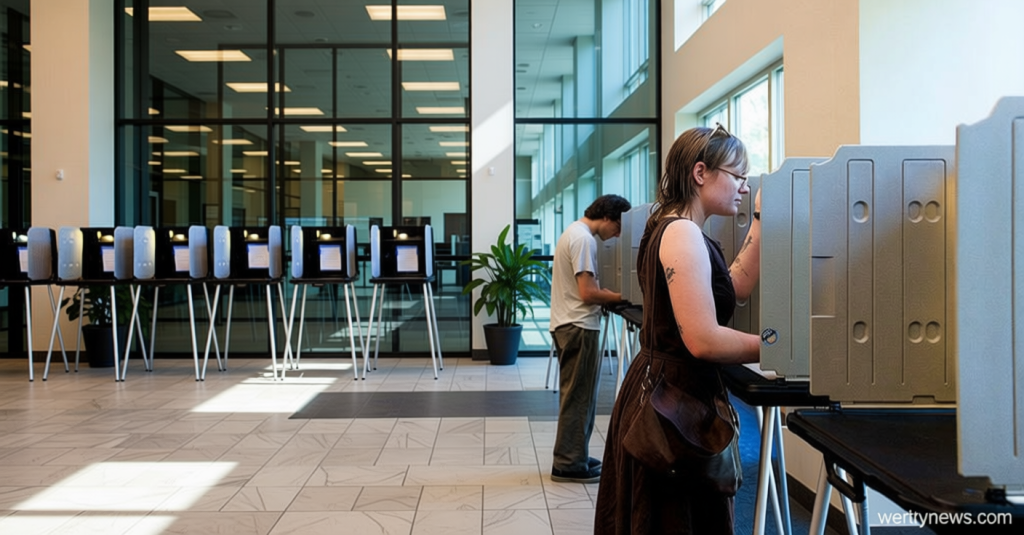
Wertynews.com – President Donald Trump asserted that China had accessed 220 million U.S. voter registration files, calling it “the largest compromise of election data in history.” While the claim raised concerns about election security, experts say the data is not as exclusive as it sounds. In fact, voter information is often available through straightforward public methods in most states, making it easier for foreign actors to obtain than Trump’s remarks suggest.
How Voter Data Is Shared Across U.S. States
Access to voter registration records varies widely depending on state policies. Some states have open systems that allow individuals to request data with minimal effort, while others impose stricter requirements. For instance, 20 states and Washington, D.C., provide voter files through public platforms, enabling anyone to download them for research or political purposes. These states include Arizona, Georgia, and Nevada, where data is often available via government websites or public records portals.
Meanwhile, 15 states require users to justify their need for the information, such as by providing a political affiliation or a specific research objective. These states may also ask for proof of residency or a signed agreement to access the files. Ten states, like California and New York, limit access to local election offices, where records are reviewed on a case-by-case basis. The final five states, including Hawaii and Alaska, restrict voter-file access primarily to registered candidates, political parties, and news organizations. This diversity in access methods highlights the ease with which voter data can be obtained.
“China has the names, addresses, phone numbers, political party preferences and other sensitive data that would be needed to register to vote and engage in other nefarious activities,” Trump stated during a campaign event. Yet, this information alone isn’t enough to manipulate voter registrations.
The data available in public records typically includes basic details such as names, addresses, and party affiliations. More sensitive information, like Social Security numbers, is often kept confidential or shared with specific entities. However, even without Social Security numbers, many states allow individuals to verify their identities using alternative methods, such as a driver’s license or a signed form. These measures are designed to prevent unauthorized use of the data, but they also demonstrate that the information is not entirely secure.
According to David Becker, executive director of the Center for Election Innovation and Research, the 220 million figure likely refers to the number of voter records accessible through public databases. While China may have obtained this data through hacking or other means, it could also have been acquired legally. For example, commercial vendors like the National Change of Address database sell voter information to political groups and campaign teams. These vendors aggregate data from public sources, making it easier for foreign entities to compile extensive lists of potential voters.
Experts emphasize that the accessibility of voter files is not a new phenomenon. The 2002 Help America Vote Act mandated states to modernize their voting systems and improve data transparency, which has led to increased availability of voter information. This means that while China may have accessed the data, similar access is possible for domestic political actors. The real question is whether the data was used for nefarious purposes or simply for targeted outreach.
Despite the controversy, the ease of obtaining voter data underscores a broader trend in election security. Many states prioritize transparency over strict privacy, which can leave sensitive information vulnerable to misuse. While the 220 million files represent a significant dataset, they are not unique to China. The same information is available to anyone with the means to request it, including foreign governments, political operatives, or private companies. This accessibility raises important questions about how voter data is protected and who has the authority to access it.