
Fed Maintains Current Rate Level Amid Growing Inflation Concerns
Wertynews.com – Central bank leaders decided Wednesday to keep their primary interest rate at its current position, signaling confidence that price pressures will gradually subside even as energy expenses climb because of ongoing conflict in Iran. This represents the fifth straight meeting where monetary policymakers have maintained rates within the 3.5% to 3.75% corridor. The most recent adjustment occurred back in December 2025, when the central bank lowered its benchmark by a quarter percentage point.
Despite the consensus to maintain the status quo, three participants on the twelve-member Federal Open Market Committee broke ranks with the majority. According to market observers, this level of internal disagreement indicates certain officials feel compelled to address rising prices immediately rather than wait.
“The Fed appears to be running out of patience with above-target inflation, despite recent data coming in cold,” Kay Haigh, global head and CIO of fixed income and liquidity solutions at Goldman Sachs Asset Management, said in an email following the decision. “The committee’s growing hawkish sentiment, shown by the three dissents against today’s hold, has also likely been exacerbated by the recent flare-up in hostilities in the Middle East.”
The officials who voted against holding rates were Beth Hammack, who leads the Cleveland Federal Reserve Bank; Neel Kashkari, head of the Minneapolis institution; and Lorie K. Logan, who oversees operations at the Dallas Federal Reserve Bank.
Animated Debate Among Policymakers
Warsh described the internal discussion as lively and substantive during his post-meeting remarks. He noted that participants engaged in what he called a “good family fight,” with the central disagreement centering on approaches to reducing consumer prices.
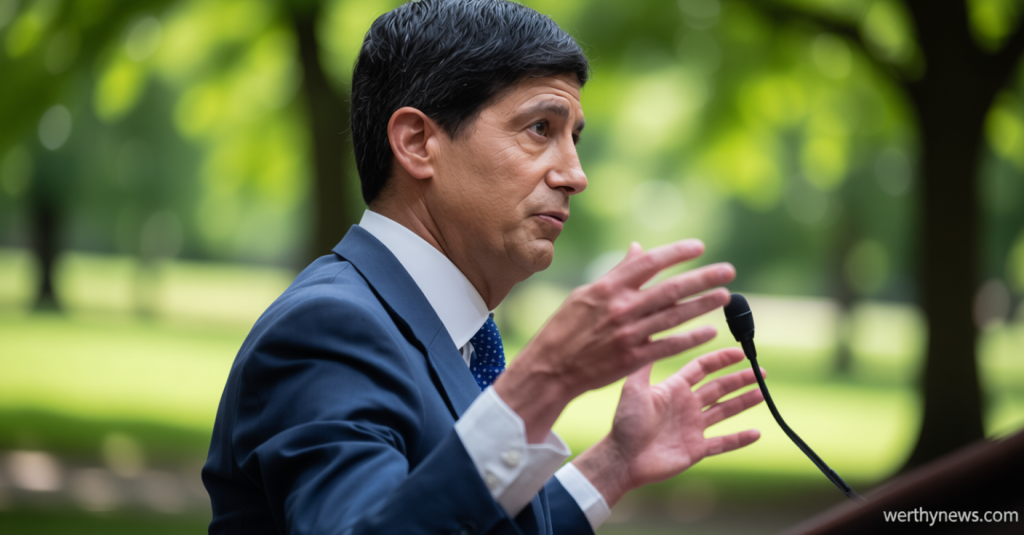
“I asked for a good family fight, and I got one,” Warsh said during a press conference after the Fed’s announcement. He described an animated discussion among officials, noting that the main point of division was over the best way to lower prices. “There was nothing inertial about that discussion,” he said.
The central bank’s official statement acknowledged that economic expansion continues at a healthy pace despite Middle Eastern uncertainty, while emphasizing that price increases remain persistent across various sectors.
“Inflation remains elevated relative to the Committee’s 2% goal, in part reflecting supply shocks that have driven price increases in certain sectors, including energy,” the FOMC said in its policy statement.
Market participants and economists had largely anticipated the decision to maintain rates following June’s consumer price index report, which indicated moderating inflation trends.
Supply Shocks and Policy Considerations
Traditional economic theory suggests that central banks should avoid tightening monetary policy during temporary supply disruptions, as these price increases typically dissipate once the initial shock passes.
“When you have a supply shock like the Iran War, the textbook says don’t raise rates unless inflation expectations are rising because the inflation will not become entrenched and it’ll fade once the shock is over,” Mark Zandi, chief economist at Moody’s Analytics, told CBS News prior to the Fed’s latest rate decision. “I think that argument still wins the day.”
Warsh Leaves Markets Uncertain
During his media briefing, Warsh reaffirmed the committee’s dedication to achieving price stability, emphasizing that officials would not hesitate to implement measures if necessary. However, he provided minimal guidance regarding future policy direction.
“If inflation continues to be elevated through the forecast period, interest rates could well be part of that solution,” he told reporters. “But I wouldn’t say it’s in isolation.”
Warsh has advocated for more restrained communication from the central bank, contrasting with the approach of previous leadership. This shift has prompted some market participants to worry that reduced guidance might increase volatility.
“I understand the desire for rolling forecasts and commentary from this committee, but for our part, we need to observe market reaction to developments, direct and unfiltered,” Warsh said.
Market Reaction and Future Outlook
Equity markets initially climbed following the announcement before retreating sharply by day’s end. The S&P 500 declined 113 points, representing a 1.5% drop, to finish at 7,316. The Dow Jones Industrial Average experienced a steeper fall of 1,153 points, or 2.2%, while the Nasdaq Composite dropped 1.7%.
Traders initially welcomed the decision to avoid raising borrowing costs, but enthusiasm diminished after Warsh’s limited commentary on future policy moves.
The central bank retains the option to increase rates later this year if inflation, which has consistently exceeded the 2% annual target, begins climbing again. Energy costs have risen this month amid escalating Middle Eastern tensions, with gasoline prices surpassing $4 per gallon nationally and crude oil briefly exceeding $100 per barrel globally.
“The probability of a rate hike is rising, in
“`