
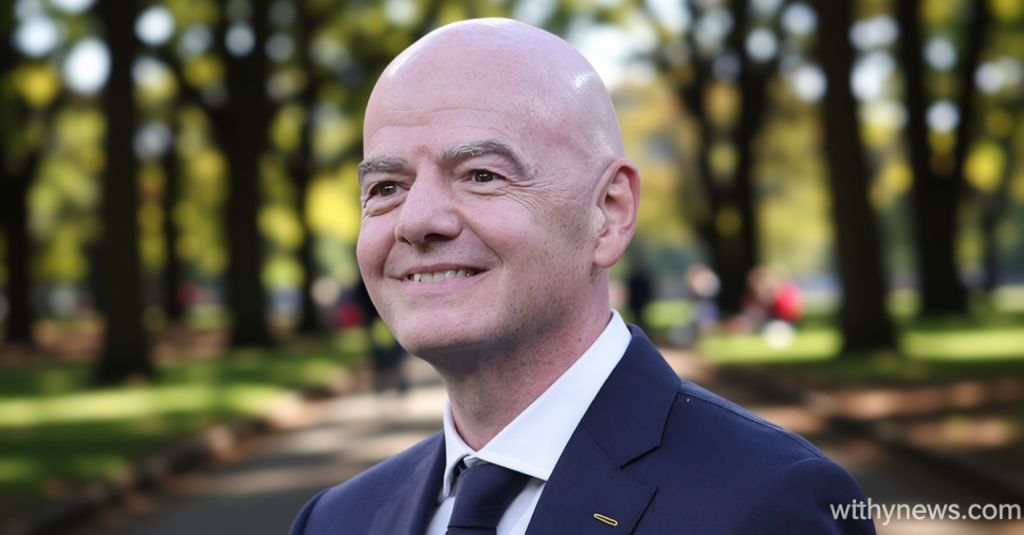
European Football Leaders Move to Replace Infantino After Investment Proposal Collapse
Wertynews.com – The battle to remove Gianni Infantino from his position as FIFA president gained significant momentum this weekend following the withdrawal of his controversial private equity scheme. What began as a defensive maneuver to protect the organization’s financial future has evolved into a coordinated effort to potentially end the Swiss official’s ten-year tenure at the helm of world football.
European soccer’s governing body, UEFA, declared that trust in the current administration has evaporated. President Aleksander Čeferin, who has spearheaded opposition to Infantino throughout this turbulent period, emphasized that no alternative should be dismissed. The organization’s statement extended beyond mere disappointment, calling for accountability from those responsible for what they described as secretive arrangements implemented without proper consultation.
The Failed $20 Billion Spinoff
Infantino’s vision involved transforming FIFA’s commercial operations—including both men’s and women’s World Cup tournaments—into a separate entity valued at twenty billion dollars. Under this arrangement, private investors would acquire a twenty percent stake in the newly formed subsidiary. The primary backer, identified by FIFA as an investment company based in New York, was established by Joshua Kushner, nephew of Jared Kushner, son-in-law of former U.S. President Donald Trump.
“We cannot keep going on like this with secret schemes on fast-track timescales, cooked up by faceless individuals and of dubious benefit to the game,” UEFA stated in its forceful response. “We must identify those responsible and hold them to account.”
The proposal encountered mounting resistance beginning Tuesday, when it was first unveiled. Opposition came not only from European nations but also from North American and Asian football associations. UEFA’s fifty-five member countries had already committed to a boycott of all FIFA competitions, including the World Cup, by Thursday.
Internal Rebellion Accelerates Change
Compounding the external pressure was a significant uprising within FIFA’s own ranks. Carlos Cordeiro, Infantino’s senior adviser and a former Goldman Sachs executive who served on the White House Task Force for the World Cup, stepped down on Friday. His departure came with a public call for other senior officials to voice their concerns openly.
“It is the project of one person,” wrote Kevin Lamour, FIFA’s chief operating officer and a longtime colleague of Infantino. “Not only must this project not go ahead … but the time has now come for football political leaders to ask themselves the right questions and make the right decisions.”
Lamour, who worked alongside Infantino at both FIFA and UEFA, revealed that staff members had been misled about the lack of transparency surrounding the investment sale over recent months. He concluded that the initiative could no longer proceed.
A Pattern of Ambitious but Reckless Proposals
This episode marks at least the third occasion in recent years when Infantino has introduced an ambitious plan that many observers considered premature or risky. In 2018, he advanced a confidential offer worth twenty-five billion dollars from Japan’s SoftBank to launch new competitions, threatening existing continental tournaments for clubs and national teams. Two years later, he suggested holding World Cup tournaments every two years rather than every four—an idea that drew criticism from the International Olympic Committee, where he serves as an elected member.
Both earlier initiatives ultimately failed and were abandoned by FIFA. Nevertheless, Infantino secured unopposed reelection in both 2019 and 2023, suggesting his political base remained intact despite periodic controversies.
What Comes Next for FIFA
The current crisis presents a different scenario. The deadline for candidates to register for the upcoming presidential election falls on November 18, precisely four months before voting takes place in Rabat, Morocco, where FIFA maintains its African headquarters. According to FIFA’s governing documents, Infantino remains eligible for one additional four-year term.
Had the spinoff venture succeeded, it would have potentially created a commissioner-style position for Infantino extending beyond 2031, offering compensation substantially higher than his existing annual salary plus a bonus package exceeding six million dollars.
Securing a majority in a contested election requires one hundred and six votes. While continental blocs do not always vote as unified units, the combined support of Europe’s fifty-five members, Asia’s forty-six, and CONCACAF’s thirty-five would likely provide a reliable foundation for challenging Infantino’s leadership.