
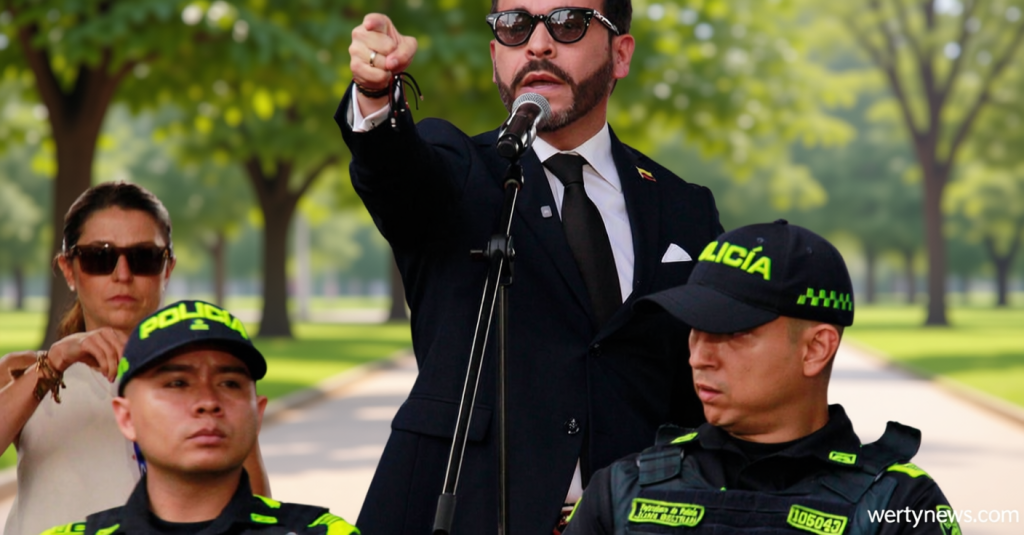
Explosion Near Colombian Police Facility Leaves Eleven Wounded
Wertynews.com – A devastating truck bomb detonated on Saturday in the northern Colombian city of Cucuta, resulting in injuries to at least eleven individuals. This bombing next to police station occurred just six days prior to Abelardo de la Espriella’s scheduled inauguration as the nation’s next president. Witnesses from AFP observed the burning vehicle alongside damaged building fronts, with military personnel, law enforcement officers, and local citizens converging on the site to assist the wounded.
Official Confirmation of Casualties
Local authorities verified the casualty count following the powerful detonation. George Quintero, who serves as the security secretary for Norte de Santander department, provided comprehensive details to the press. “At this time, we have eight police officers and three civilians who have been injured,” he stated. The official further characterized the event as “an atrocious, violent act” while noting that “what happened is regrettable.”
Political Response and Security Measures
President-elect de la Espriella issued a strong condemnation of the bombing next to police station. He emphasized that “terrorism will not intimidate Colombia” in his statement. In response to the attack, officials announced a bounty exceeding $32,000 for anyone providing information that leads to the apprehension of those responsible. This substantial reward reflects the government’s commitment to identifying the perpetrators quickly.
The right-wing leader is scheduled to assume power on August 7 in Cali, a southwestern city. He will replace Gustavo Petro, marking the first time a leftist has held Colombia’s presidency. With backing from President Donald Trump, the millionaire attorney pledged to strengthen efforts against guerrilla factions and drug trafficking networks that have driven the nation through its most severe violence surge in ten years.
International Relations and Policy Shifts
As the world’s top cocaine producer, Colombia faces ongoing challenges in combating drug-related crime. De la Espriella intends to establish a military partnership with both Israel and the United States to help achieve his goals. Meanwhile, outgoing President Petro continues his final days in office during a visit to Cuba, where he met with Miguel Diaz-Canel to discuss Washington’s “policy of strangulation” toward the island nation.
The transition represents a significant political change after four years of left-wing governance. Petro’s administration attempted unsuccessful peace talks with armed groups while promoting a new approach to drug enforcement—positions that contrast with Trump’s policies. The outgoing president also addressed Trump administration actions against Caribbean vessels suspected of carrying drugs.
Inauguration Preparations
Traditionally, presidential ceremonies occur at the Congress building in Bogota. However, de la Espriella requested that this year’s event take place in Cali instead, a region frequently experiencing conflicts between guerrilla forces and drug cartels. The ceremony will feature one of the most extensive security operations ever planned, with approximately 11,000 soldiers and police officers conducting land, sea, and air operations.
Initially, the president-elect wanted to be sworn in at a military base in Cauca, a department heavily affected by conflict. Petro declined to approve that arrangement. Throughout the election campaign, political violence intensified, including bombings, drone attacks carrying explosives, and assaults on security personnel.
De la Espriella has frequently claimed that an assassination plot exists against him. Guerrilla organizations have also issued warnings to the incoming president, who plans to terminate the peace negotiations that Petro initiated with various armed groups.
Notably, in 2025, Miguel Uribe Turbay—a right-wing senator and presidential candidate—was shot during an event in Bogota and subsequently passed away. The bombing next to police station serves as a stark reminder of the ongoing security challenges Colombia faces as it transitions to new leadership. De la Espriella’s administration will need to balance security concerns with his policy objectives as he prepares to take office.