
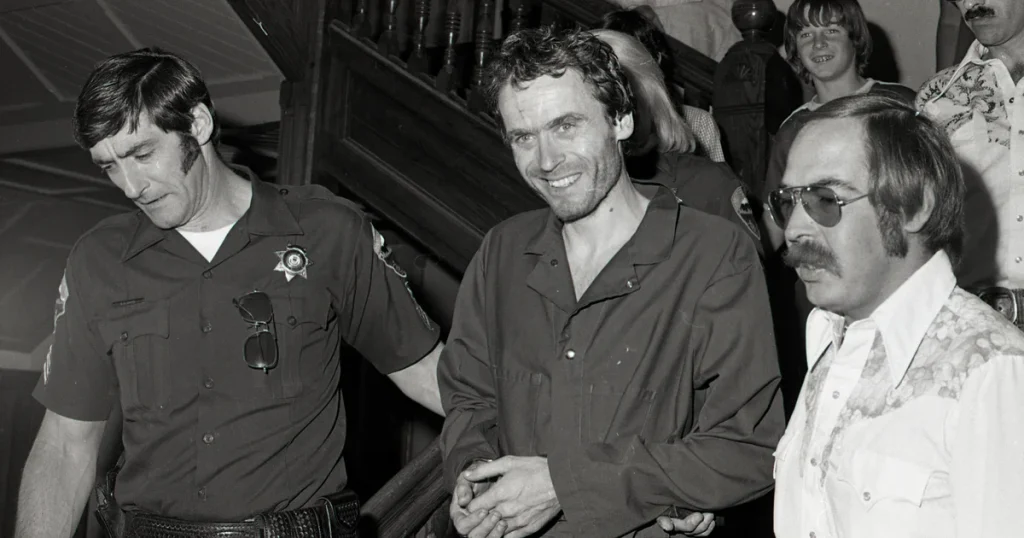
DNA Evidence Closes Longstanding Utah Murder Case Linked to Ted Bundy
Wertynews.com – More than five decades after a hunter discovered the body of 17-year-old Melissa Ann Smith, Utah investigators say DNA testing has established that serial killer Ted Bundy was responsible for her 1974 murder.
Summit County Attorney Margaret Olson announced that investigators now consider Smith’s killing solved. Bundy, who was executed in Florida in 1989, had long been suspected in a number of unsolved disappearances and murders from the 1970s. Improvements in forensic science have continued to identify new connections to cases that remained unresolved for years.
Smith’s death had been treated as a cold case, but Olson said the evidence now supports a clear conclusion. In addition to the genetic evidence, investigators found that the circumstances aligned with Bundy’s known methods, access and behavior during that period.
“Pattern, motive, means and opportunity,” Olson said in describing the factors that linked Bundy to Smith’s death.
A crucial forensic connection
The breakthrough came through evidence connected to Laura Aime, another Utah victim whose case was resolved in Utah County in April. Investigators identified a closely matching DNA profile associated with Bundy in material collected during Smith’s autopsy.
Utah County Sgt. Mike Reynolds said the similarity between the profiles provided the key forensic link needed to close Smith’s case. The result also illustrates why authorities preserve physical evidence, even when the technology needed to fully examine it does not yet exist.
“This case demonstrates the importance of preserving evidence,” Salt Lake County Sheriff Rosie Rivera said.
Officials have contacted Smith’s surviving relatives, although none of her next of kin still live in the region. For families connected to old homicide investigations, a formal identification can answer a central question even when it cannot undo the loss or account for every detail of the crime.
“With every case closure, may we stomp the memory of Ted Bundy out,” Reynolds said.
Smith disappeared during Bundy’s move to Utah
Bundy’s criminal activity in Utah followed a series of disappearances involving young women in Washington state. By 1974, authorities in Washington were already examining cases involving missing women, many of them college students, when Bundy relocated to Salt Lake City in September of that year.
After arriving in Utah, Bundy killed victims in Utah, Idaho and Colorado. Historian Linda Sillitoe identified 16-year-old Salt Lake County cheerleader Nancy Wilcox as one of the earliest suspected Utah victims. Wilcox vanished on Oct. 2, 1974.
Later that same month, Smith, a high school senior, disappeared. Deer hunters eventually found her body. She had been beaten to death, Sillitoe said. At the time, investigators did not have the DNA tools available today to make the link now established through preserved evidence.
The new finding adds Smith’s name to the confirmed cases tied to Bundy, one of the most notorious serial killers in U.S. history. Authorities have linked him to the deaths of at least 30 women and girls across several states during the 1970s. Other victims escaped attacks or survived with serious injuries.
Bundy’s DNA remains an investigative resource
A major resource for later investigations emerged in 2011, when a vial of Bundy’s blood was found in Florida. The sample had been collected in 1978 after his arrest in connection with the killing of a 12-year-old girl. Authorities developed a complete DNA profile from the blood and entered it into the FBI’s national database.
That profile has given investigators a way to compare physical evidence from unresolved cases with Bundy’s genetic markers. The Melissa Smith investigation demonstrates how evidence collected decades ago can take on new significance when it is reevaluated with modern methods.
Bundy was put to death in Florida’s electric chair for the 1978 murders of two women at Florida State University’s Chi Omega sorority house. His crimes, committed in locations ranging from parks to sorority residences, created widespread fear in the communities where he operated.
His arrest drew extraordinary public attention, partly because many people viewed him as charismatic and conventionally attractive. That public image contrasted sharply with the violence attributed to him and became part of the lasting public discussion surrounding his crimes.
In the days before his execution, Bundy made several confessions, including admissions involving crimes not previously known to police. Some of those statements have never been independently verified. The distinction remains important: a confession, suspicion or historical theory does not always meet the evidentiary standard needed to formally close a case.
Why old evidence still matters
Smith’s case underscores the practical value of retaining evidence from unsolved crimes. Advances in DNA analysis can allow investigators to revisit samples that once produced no usable result, compare them against later-developed profiles and connect cases across jurisdictions.
For Utah authorities, the conclusion brings an official resolution to a murder that had remained open since 1974. It also serves as a reminder that cold cases are not necessarily permanent dead ends. When evidence is preserved and reviewed, a decades-old investigation can still provide answers for families and communities.
Related Reading
Frequently Asked Questions
What is Serial killer Ted Bundy linked to another?
Serial killer Ted Bundy linked to another is the main topic of this guide. The article explains the context, practical details, and next steps readers should understand.
Why does Serial killer Ted Bundy linked to another matter?
Serial killer Ted Bundy linked to another matters because readers are looking for a useful answer, not just a short summary. Good content should match search intent and help them decide what to do next.