
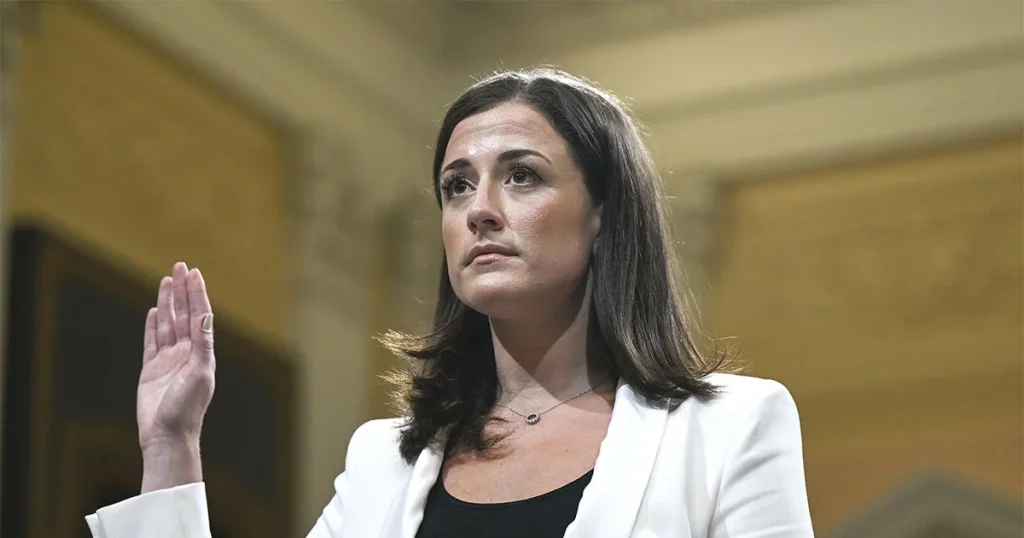
Grand Jury Declines to Indict Cassidy Hutchinson Over Jan. 6 Testimony
Wertynews.com – A federal grand jury declines to indict former White House aide Cassidy Hutchinson in connection with her testimony about the January 6, 2021, attack on the U.S. Capitol. The decision means prosecutors did not obtain the approval needed to bring criminal charges against Hutchinson.
Four people briefed on the proceedings said prosecutors had sought an indictment related to Hutchinson’s testimony. The specific legal theory, evidence presented to jurors, and reasons behind the panel’s decision have not been publicly disclosed.
The Justice Department had not responded to a request for comment when the development became public. As grand jury proceedings are generally confidential, limited information is available about what occurred behind closed doors.
Hutchinson’s Role in the January 6 Investigation
Hutchinson served as a White House aide during Donald Trump’s administration and later became a prominent witness in congressional examinations of January 6. Her testimony addressed events inside and around the White House as Congress prepared to certify the 2020 presidential election results.
On January 6, a crowd breached the Capitol, interrupting the electoral vote certification and forcing lawmakers, staff, and others to evacuate. Congress returned after the building was secured and completed the certification process.
Her account drew national attention because it concerned a critical period before and during the Capitol attack. Federal investigators, lawmakers, and courts have continued to examine actions taken by people involved in the events surrounding that day.
What the Grand Jury Decision Means
In the federal criminal system, a grand jury decides whether prosecutors have presented sufficient evidence to establish probable cause for a charge. An indictment is a formal accusation, not a conviction or a determination of guilt.
Because the grand jury declines to indict Hutchinson, no criminal case resulted from the presentation described by people familiar with the matter. The outcome does not provide a public accounting of the evidence, the jurors’ discussions, or any potential unresolved questions.
Grand juries operate in private, a process intended to protect investigations and participants. That confidentiality also means the public may not immediately learn why jurors declined to approve proposed charges.
January 6 Remains a Major Legal Focus
The Capitol attack continues to influence legal and political debate in the United States. Federal authorities have brought numerous cases tied to the breach, involving a broad range of alleged conduct.
Separately, investigators and congressional lawmakers have examined the actions of officials, advisers, and others in the lead-up to and during January 6. Hutchinson’s position as a former White House aide made her testimony part of that broader effort to understand the events.
The decision that a grand jury declines to indict her is another development in the continuing aftermath of the attack, although many details about the proceeding remain private.
What Could Happen Next?
There was no indication in the available information that Hutchinson had been charged. Future developments, if any, would depend on decisions by federal authorities and disclosures through official statements or court filings.
For now, the central outcome is clear: prosecutors did not secure an indictment from the federal grand jury. Questions about the testimony under review and the evidence considered by jurors remain unanswered publicly.
FAQ
What does it mean when a grand jury declines to indict?
It means jurors did not approve the proposed criminal charges. In federal cases, prosecutors generally need a grand jury indictment before pursuing felony charges in court.
Does the decision mean Cassidy Hutchinson was found innocent?
No. A declined indictment is not a verdict. It means no formal criminal charge emerged from that grand jury presentation.
Why are grand jury proceedings confidential?
Grand jury secrecy is intended to protect investigations, witnesses, and people who may be discussed but never charged. It can also limit the amount of information immediately available to the public.