
Western Water Crisis Deepens as Colorado River reservoirs hit record lows
Wertynews.com – A mounting water emergency across the American West has stalled as competing interests among regional states struggle to find common ground. With negotiations repeatedly failing, the Colorado River reservoirs hit record low levels, creating urgency for immediate action. Lake Mead and Lake Powell, the nation’s two most critical water storage facilities, have simultaneously reached their lowest points in recorded history. This unprecedented situation threatens millions of residents and agricultural operations throughout seven states that depend on this vital water source.
The Colorado River serves as both a lifeline and a boundary between two distinct regions. The upper basin encompasses Colorado, Wyoming, Utah, and New Mexico, while the lower basin includes California, Arizona, and Nevada. Kelly Shannon McNeill, managing director of LA Waterkeeper, explained to CBS News that California and neighboring lower basin states have already reduced their Colorado River consumption by approximately 20 percent since 2015. Meanwhile, upper basin states have taken an entirely different approach, increasing their water usage and arguing that additional reductions would be economically devastating.
Political Challenges Shape Future Water Policy
According to McNeill, the current standoff ultimately comes down to political determination rather than scientific necessity. “This is really about political will,” she emphasized, noting that states must overcome their differences before the situation becomes irreversible. The Trump administration has stepped in with potential major reductions that could reshape water distribution across the entire Southwest. California, Arizona, and Nevada have collectively proposed reducing their usage by roughly 1.6 million acre-feet annually—equivalent to approximately 500 billion gallons—for the next two years. Federal officials controlling water flows are now considering implementing cuts nearly double that proposed amount.
“I would urge those people living in those states to contact their elected representatives and their negotiators at the table, and really urge them to come to the table and come up with some sort of agreement,” McNeill stated, highlighting the importance of public engagement in resolving the crisis.
The proposed reductions would create significant challenges for multiple sectors. Urban areas would face increased water costs as municipalities scramble to secure alternative supplies. Outdoor water restrictions would likely become more stringent, affecting homeowners and businesses alike. Agricultural operations, which consume the majority of the river’s total supply, would experience the most dramatic changes to their irrigation schedules and crop selection strategies.
Climate Change and Population Growth Accelerate the Crisis
The Colorado River’s water originates primarily as snowfall in the Rocky Mountains, but rising temperatures have reduced both snowpack accumulation and spring snowmelt volumes. This climatic shift has compounded existing water shortages, creating a compounding effect that threatens long-term sustainability. Additionally, rapid population growth throughout the Southwest has intensified demand for water resources, pushing the system closer to its breaking point.
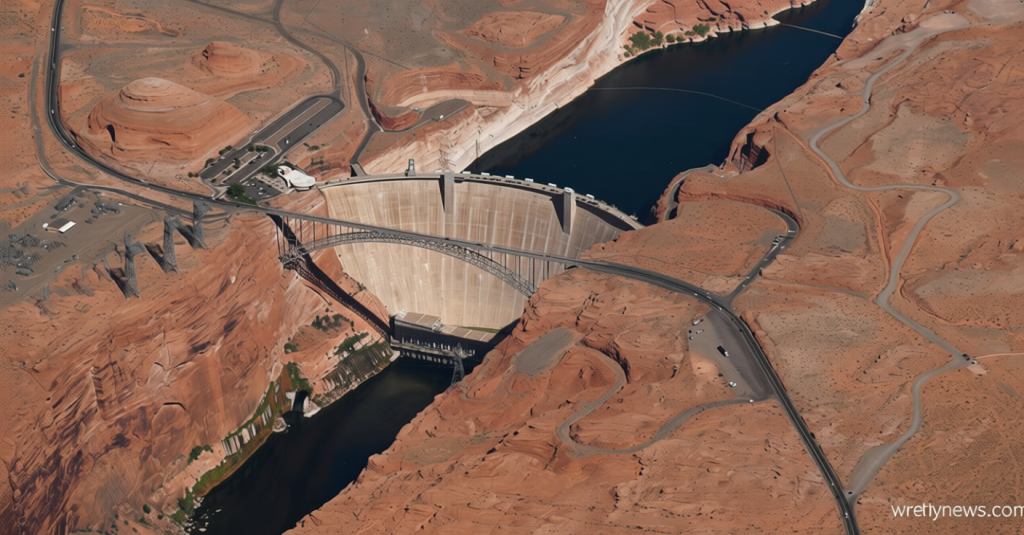
One critical threshold looms for Lake Powell. If water levels drop just 33 additional feet, the reservoir will fall below the minimum elevation required to generate hydroelectric power. This would prevent water from flowing through the dam into the Colorado River, potentially disrupting water delivery to downstream communities. With both Lake Mead and Lake Powell currently holding less than 30 percent of their total capacity, experts warn that decision-makers cannot afford to delay meaningful action. The Colorado River reservoirs hit record lows not merely as a statistical milestone, but as a clear signal that the region must fundamentally rethink how it manages its most precious resource.