
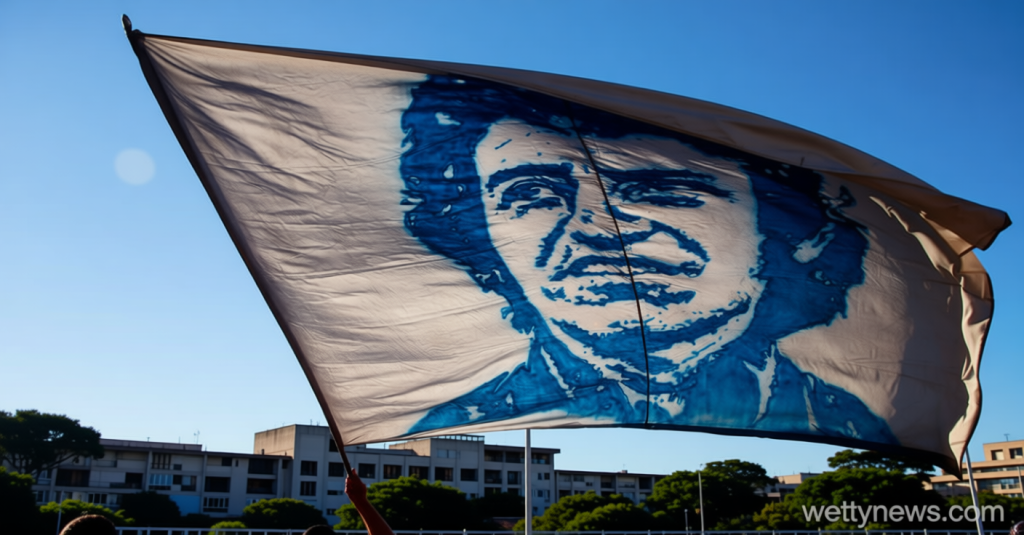
Nelson Haase Captured: Fugitive in 1973 Torture and Murder of Victor Jara Found in Chile
Major Development in Chilean Justice Case
Wertynews.com – Chilean authorities have successfully apprehended the fugitive in 1973 torture and murder case, capturing Nelson Haase Mazzei, an 80-year-old retired military officer who had been evading justice since receiving his prison sentence for the brutal killing of celebrated folk singer Victor Jara. The Justice Department announced the arrest in a formal statement released on Sunday, revealing that Haase was discovered in the Los Lagos region, located approximately 590 miles south of Santiago in southern Chile.
This breakthrough comes after Haase escaped custody following his 25-year prison sentence, which was handed down on August 28, 2023, just weeks before the 50th anniversary of both the military coup and Jara’s tragic assassination. According to the official Justice Department statement: “An order has been issued for the imprisonment of retired military officer Nelson Haase Mazzei.” The capture marks a significant moment in Chile’s ongoing efforts to achieve justice for victims of the military dictatorship.
Remembering Victor Jara’s Legacy
Victor Jara, who was only 40 years old when he lost his life, became one of Chile’s most cherished cultural icons and a symbol of resistance against oppression. The talented musician composed numerous beloved songs throughout his career, including the internationally recognized “El derecho de vivir en paz,” which translates to “The Right to Live in Peace.” Jara stood as a prominent leader within New Chilean Song, a vibrant cultural and social movement that flourished throughout the 1960s and gave voice to the struggles of ordinary Chileans.
“Victor Jara, a popular folk musician, was among the most famous victims” of the military regime’s violence at Chile Stadium.
The tragic events unfolded on September 16, 1973—five days following General Augusto Pinochet’s violent overthrow of democratically elected President Salvador Allende. Jara was captured and subjected to unimaginable brutality. Court records from 2023 documented that he “was subjected to physical torture, the most severe blows being those he received to his face and hands.” In a particularly cruel act, the singer’s hands were broken before he was ultimately shot 44 times, leaving his body with the unmistakable marks of his tormentors.
Chile Stadium: From Sports Venue to Site of Atrocities
The Chile Stadium played a central and heartbreaking role in the events surrounding Jara’s death and the broader persecution of political opponents. ICE explained in a detailed statement: “On Sept. 11, 1973, General Augusto Pinochet led a violent coup against Salvador Allende, the democratically elected president of Chile. In the following weeks, many people were detained and tortured in Chile Stadium, an indoor sports facility that the military commandeered as a de facto detention center. Many disappeared or were executed. Victor Jara, a popular folk musician, was among the most famous victims.”
In recognition of Jara’s enduring legacy and the significance of his martyrdom, the stadium was officially renamed in his honor in 2003, transforming the site of his suffering into a place of remembrance and tribute. The renaming ceremony marked an important step in Chile’s journey toward acknowledging and honoring the victims of the dictatorship.
Accountability and Ongoing Justice
The August 2023 sentencing brought long-awaited accountability to seven retired military officers responsible for Jara’s murder. Prison terms ranged from eight to 25 years, reflecting the severity of their crimes. While Haase fled to avoid his sentence, four of the other convicted men remain incarcerated in Chilean prisons. One, General Hernan Chacon, aged 85, took his own life when officers arrived to arrest him in 2023. Another convicted officer, Pedro Barrientos, was apprehended by ICE during a routine traffic stop in Florida that same year, demonstrating the international reach of Chile’s pursuit of justice.
The murder of Victor Jara stands as one of the most egregious crimes committed during Chile’s military dictatorship, which spanned from 1973 to 1990. The regime’s systematic violence claimed 3,200 lives, encompassing both those who were killed and those who vanished without trace, forever changing the course of Chilean history. The capture of the fugitive in 1973 torture and murder case represents another crucial step toward complete justice for all victims of this dark period in Chile’s past.