
Cornell Faculty Weigh Confidence in Leadership Amid Scrutiny of Sexual Assault Response
Wertynews.com – Cornell University faculty members are confronting urgent questions about campus leadership, sexual assault reporting and academic freedom as they consider a resolution expressing no confidence in the administration.
The debate intensified during a closed Faculty Senate meeting on Wednesday, where President Michael Kotlikoff faced pointed questions about the university’s response to sexual misconduct allegations. The discussion comes nearly two years after a student said she was gang-raped at a fraternity house in 2024.
Faculty members are now weighing whether university leaders have demonstrated the ability to address allegations of sexual violence in a manner that earns the community’s trust. A further Faculty Senate meeting is scheduled for Oct. 28, followed by roughly a week for members to cast their votes on the no-confidence resolution.
Independent review faces questions over scope
Earlier this month, Cornell announced that former Deputy U.S. Attorney General Sally Yates would lead what the university described as a comprehensive, independent examination of its handling of sexual misconduct complaints. The review includes the 2024 fraternity-house allegation.
The exact reach of that examination became a central issue during Wednesday’s meeting. One faculty participant pressed Kotlikoff to clarify which forms of alleged assaults would be reviewed and how far investigators could look into past incidents.
“President Kotlikoff, can you name all of the different kinds of assaults, both sexual and otherwise, on men, women and children that the outside investigators will be examining, and how far will they go back in time in their investigations?”
Kotlikoff responded that the review is directed by Cornell’s board rather than by his office. He described its assignment as broad and said the administration would cooperate with any requests from the outside investigators.
“That is a board review. I don’t dictate that review. It’s an open review. It does have a very broad mandate. I don’t know how far back they’re going to go, frankly, but I will say that we’re open to anything they ask,” Kotlikoff said.
The question of scope matters because faculty members have said the 2024 allegation may not stand alone. Some professors said students and former students have privately described their own experiences with sexual assault, but were afraid to make formal reports. Those accounts have added pressure for an inquiry that can examine whether larger institutional concerns exist beyond one case.
New plan calls for outside investigative expertise
On Tuesday, Kotlikoff announced major changes to Cornell’s approach, including an arrangement with New York State Police that would bring independent specialists into investigations of sexual assault allegations.
The proposal signals an effort to add outside expertise to a process that faculty members are closely scrutinizing. Sexual assault cases often raise difficult questions about reporting, evidence, student support, confidentiality and institutional accountability. For universities, the handling of such complaints can affect whether students believe they can safely come forward.
The planned state-police partnership and the Yates review are distinct elements of Cornell’s response, but both have become part of the larger conversation over whether leadership has moved quickly and transparently enough. Faculty members must decide whether the announced reforms answer those concerns or whether a formal vote of no confidence is warranted.
Academic freedom also emerges as a concern
The meeting did not focus solely on sexual assault allegations. Video from the session also captured an exchange over academic freedom and the treatment of student speech.
One speaker accused the administration of limiting expression by faculty and students during recent years.
“We’ve seen this administration suppress our academic freedom, as well as our students’ voices over the past few years,” the speaker said.
Kotlikoff challenged the assertion and asked for an example of academic speech that had been restricted.
“What academic speech has been restricted?” Kotlikoff asked.
The faculty participant replied by referring to discipline involving student expression since 2023.
“Since 2023, the administration has punished over 80 students for nonviolent speech,” the speaker replied.
That exchange illustrated the broader stakes surrounding the confidence vote. The resolution is not simply a judgment about a single investigation; it reflects faculty concern over leadership, institutional culture, student voice and the university’s responsibilities during moments of crisis.
A closed meeting with consequences beyond the room
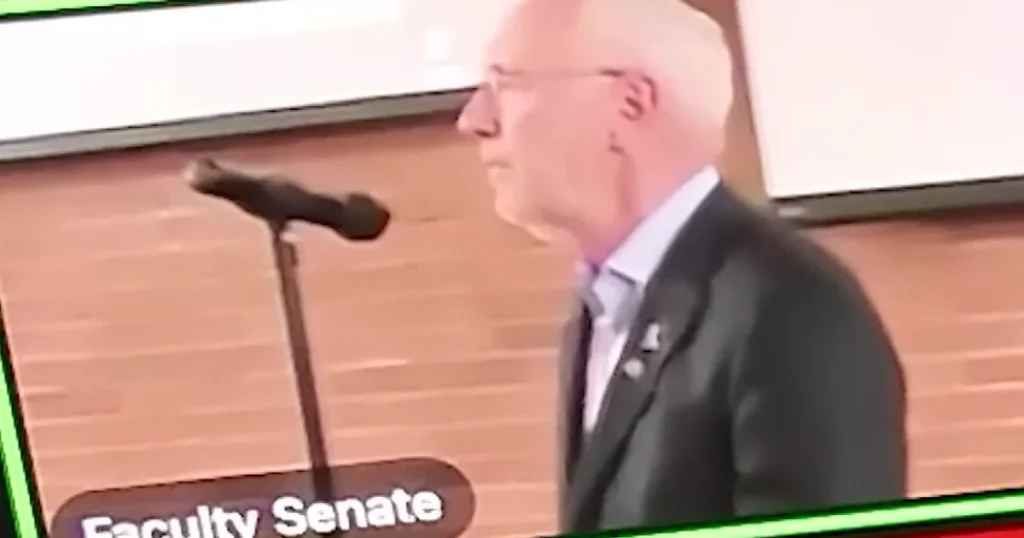
University officials said reporters and cameras were excluded from Wednesday’s meeting because recording could discourage open debate. Video obtained from inside the session nonetheless provided a window into the intensity of the discussion and the questions faculty members are asking before the upcoming vote.
For students, employees and alumni, the process will likely be watched as a measure of whether Cornell can rebuild confidence while addressing serious allegations fairly. The independent review may provide answers about the university’s past actions, while the proposed use of external investigative experts could shape how future complaints are handled.
All seven men accused in the 2024 case have denied the allegations. The matter remains a major focus of campus debate as faculty prepare for their next meeting and a decision on whether to formally withdraw confidence from Cornell’s administration.
Related Reading
Frequently Asked Questions
What is Exclusive video offers insight into Cornell?
Exclusive video offers insight into Cornell is the main topic of this guide. The article explains the context, practical details, and next steps readers should understand.
Why does Exclusive video offers insight into Cornell matter?
Exclusive video offers insight into Cornell matters because readers are looking for a useful answer, not just a short summary. Good content should match search intent and help them decide what to do next.