
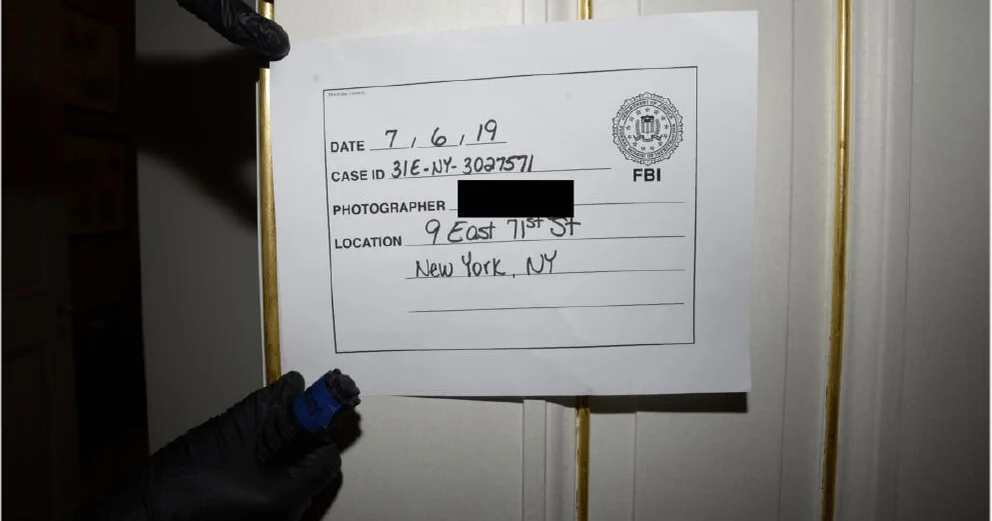
Questions Mount Over Classified Material in Epstein Records
Wertynews.com – Documents included in the federal government’s release of records connected to Jeffrey Epstein indicate that some of the material gathered by the Justice Department was classified, despite repeated assurances that no Epstein-related files were being withheld or edited for national-security reasons.
The documents do not explain what the classified information contains, why it received that designation, or whether it was ultimately released. But they add a new layer of uncertainty to the public debate over the scope of the government’s Epstein files disclosure, which has already drawn congressional scrutiny and legal challenges.
The Justice Department has said it collected roughly 6 million pages during its review and made more than 3 million pages public after examining material for duplicates, attorney-client privilege and relevance to Epstein. The remaining records have become a central point of contention, particularly where the department’s explanations do not fully identify what was excluded.
Records Point to Classified Items
An eight-page timeline from the FBI’s New York office outlines efforts in 2025 to locate and transfer a large volume of Epstein-related material to Justice Department headquarters in Washington.
One entry dated March 25, 2025, records the delivery of “16 Epstein items to ODAG,” using the abbreviation for the Office of the Deputy Attorney General. Two listed items are especially notable: “Epstein Transparency Project – Classified Material” and “CDs with classified materials (x2).”
The Epstein Transparency Project was the Justice Department’s review process for deciding which records could be released, withheld or redacted. The available documents do not reveal the subject matter of the classified material. Compact discs could each contain hundreds of megabytes of information, leaving open the possibility that the items held a substantial amount of data.
A separate email from the same date also refers to classified records. It was sent by the chief of the National Security Classification Operations Unit, an FBI office responsible for reviewing documents that may require classification or declassification.
The email included an attachment titled “Epstein – Classified Document Memo.docx.” Its text states that three documents had been identified as still classified. One is described as an FBI document that “is classified when see-through.” Details about the other two records are obscured by redactions, as is the identity of the recipient.
It remains unclear whether the email and the FBI transfer list concern the same documents or separate sets of classified information. Federal law permits classification only when information requires protection for national-security purposes, making the unanswered questions about the records significant.
Prior Statements From Justice Department Leadership
Attorney General Todd Blanche has consistently said the nonpublic Epstein material does not include secret national-security information. When releases began last winter, he emphasized that the Epstein Files Transparency Act permits material to be withheld when national security or foreign-policy interests require it, while maintaining that the department had not relied on that authority.
“No files are being withheld or redacted on that basis.”
Blanche, who served as deputy attorney general at the time, also rejected the notion that the department possessed a hidden collection of especially sensitive Epstein documents.
“There’s not some tranche of super-secret documents about Jeffrey Epstein that we’re withholding, we’re actually not withholding anything based upon [national defense information].”
The references to classified material do not, on their own, establish that records were withheld from public release for national-security reasons. They do show, however, that classified information was present within the larger body of material obtained by the Justice Department. That distinction is likely to remain important as lawmakers and courts press for a fuller accounting of the documents that were not released.
How Page Numbers Expose Gaps
Another point of focus is the numerical system used to organize the released files. Pages carry an “EFTA” identifier in the lower-right corner, followed by a number. The initials refer to the Epstein Files Transparency Act, while the sequential numbers function as Bates numbers, a common legal method for tracking individual pages across enormous collections of records.
The released sequence runs from 1 through 2,858,498, representing roughly the number of pages made available through that collection. When court records and previously released investigative materials are included, the Justice Department has placed the overall public total above 3 million pages.
Numbering alone cannot disclose the content of pages that are absent. It can, however, reveal discontinuities in a document run. Those gaps have fueled questions about whether the department’s public descriptions sufficiently explain why certain records did not appear in the release.
Some missing pages appear to come from Epstein’s financial records, which were obtained as evidence during a federal prosecution. Financial materials can be important because they may help show the movement of funds, business relationships, travel-related spending or other activity relevant to an investigation. The missing entries do not establish what information they contain, but their absence has increased interest in the government’s review process.
Older Case Codes Add Context
Many pages in the Epstein collection also display earlier identification codes alongside their EFTA numbers. Those older markings suggest the documents had already been used in federal legal proceedings or assembled in response to prior subpoenas.
For example, some pages include Bates labels from the criminal case against Ghislaine Maxwell. Such labels were used to organize material provided to Maxwell’s defense team before litigation. Their presence in the Epstein files illustrates how records from connected investigations can overlap, while still leaving questions about which documents were newly gathered, previously disclosed or withheld during the Justice Department’s more recent review.
The emerging picture is not a complete answer to what remains outside the public record. Instead, it highlights the limits of the available release: internal tracking documents confirm that classified material was identified, while gaps in page numbering show that portions of the broader collection are missing from the published files.
For readers trying to assess the significance, the key issue is not simply whether classified documents existed. The more consequential question is whether the Justice Department can clearly explain what happened to those records, whether any remain protected, and how that process aligns with public assurances about the release. Until those questions are resolved, the debate over the Epstein files is likely to continue.
Related Reading
Frequently Asked Questions
What is Classified material missing from Epstein files?
Classified material missing from Epstein files is the main topic of this guide. The article explains the context, practical details, and next steps readers should understand.
Why does Classified material missing from Epstein files matter?
Classified material missing from Epstein files matters because readers are looking for a useful answer, not just a short summary. Good content should match search intent and help them decide what to do next.