Elon Musk May Have Broken Election Law in Wisconsin
Wertynews.com – Elon Musk may have broken election laws by offering $1 million checks to voters, according to a ruling by the Wisconsin Elections Commission. The commission, which consists of three Republicans and three Democrats, has decided to forward two complaints against Musk to the Brown County District Attorney’s office. Communications Director Emilee Miklas confirmed the move to CBS News, highlighting the ongoing investigation into Musk’s campaign tactics.
The Case Against Musk’s Political Donations
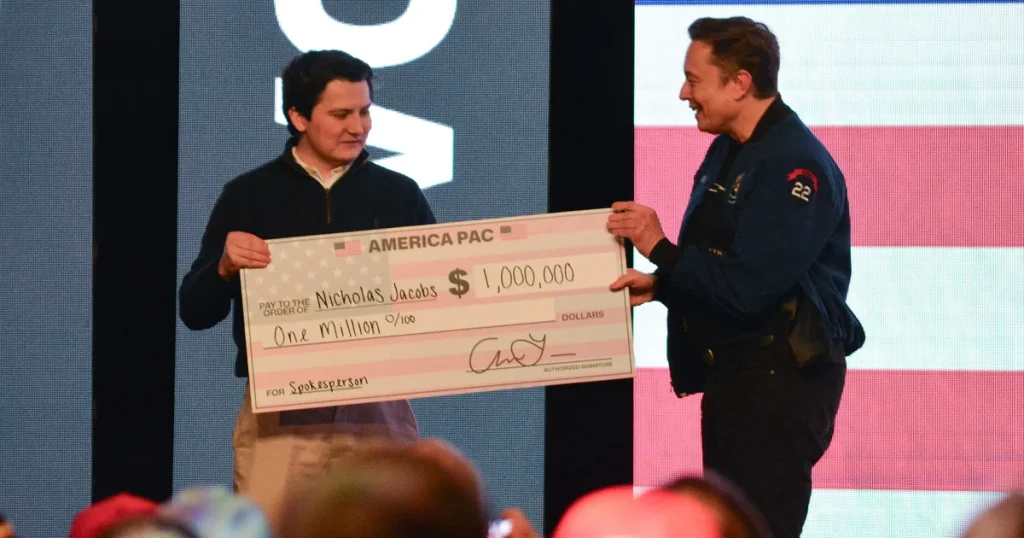
The controversy stems from Musk’s America PAC, which distributed $1 million novelty checks to voters during Wisconsin’s April 2025 judicial election. These checks were given to individuals who signed petitions opposing “activist judges,” a term used to describe judges perceived as favoring progressive policies. The payments were part of Musk’s broader support for President Trump’s 2024 campaign, which included targeting key voter demographics in Wisconsin. While GOP-endorsed candidate Schimel lost to Democratic Judge Susan Crawford, the financial incentives remain under scrutiny as potential violations of state election law.
“The commission identified probable cause that Musk’s actions could constitute election law violations,” Miklas stated, emphasizing that the complaints were deemed significant enough to warrant legal action. This marks the first major referral of Musk’s campaign activities to a district attorney, signaling a potential shift in how political donations are regulated during elections.
Musk’s team defended the practice, claiming the novelty checks were a form of free speech and not meant to sway votes directly. However, the state attorney general, Josh Kaul, had previously argued that the payments created an incentive for voters to support specific candidates, thereby constituting election bribery. The legal debate centers on whether the $1 million checks qualify as “bribery” under Wisconsin’s statutes or are simply a marketing strategy to engage voters.
Broader Implications and State-Level Legal Battles
The case has sparked discussions about the boundaries of campaign financing and the role of political action committees in influencing elections. Critics argue that the practice of offering cash incentives to voters could lead to a situation where political donations disproportionately affect election outcomes. In contrast, Musk’s legal team contends that the checks were transparent and voluntary, with no evidence of coercion or fraud.
Similar allegations have extended to other states, where Musk’s campaign activities are being examined for potential violations. In Pennsylvania, the Philadelphia District Attorney, Larry Krasner, accused Musk of breaching election and lottery laws by distributing $1 million checks to voters during the 2024 presidential election. Although the judge allowed the payments to continue, the legal debate over their constitutionality remains unresolved. In Arizona, a federal lawsuit claims Musk engaged in fraud by suggesting winners of daily giveaways were selected randomly, a claim that has been partially accepted by a Texas magistrate judge.
With the Wisconsin case set to proceed, the broader implications for campaign finance law are under consideration. If Musk is found guilty, it could set a precedent for how states interpret the line between political advertising and direct voter influence. The outcome may also impact future elections, particularly those in states with similar legislation, as candidates and PACs navigate the legal landscape of campaign donations.