
What to Know About Trump’s Claim of 250K Non-Citizen Voters in 4 States
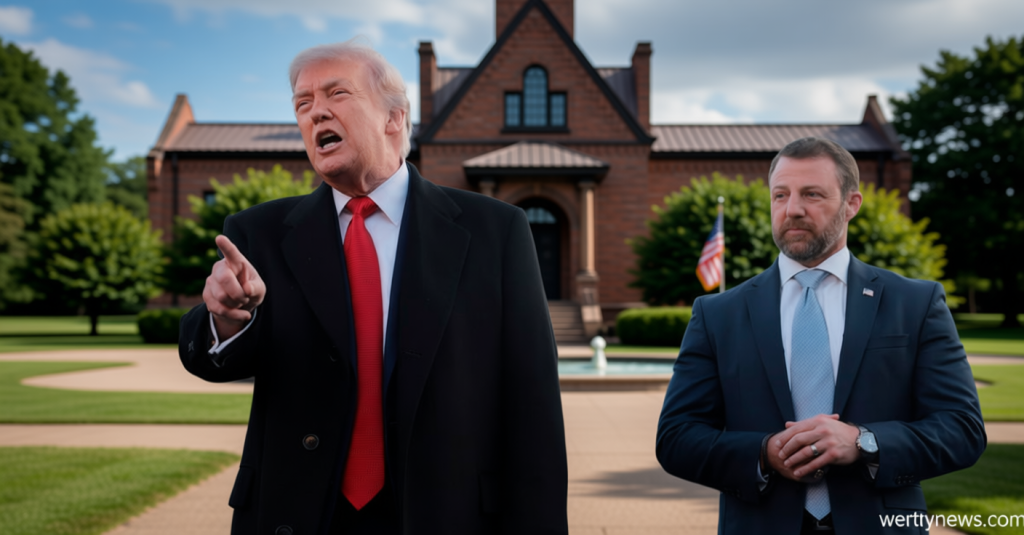
Wertynews.com – What to know about the Trump administration’s assertion that nearly 250,000 non-citizens are registered to vote in four key states has sparked widespread discussion. During a recent press briefing, Homeland Security Secretary Markwayne Mullin echoed President Trump’s claim, stating that these individuals are concentrated in California, Nevada, New Jersey, and Pennsylvania. The figure, which emerged after Trump’s speech on election security, aims to highlight concerns about voter integrity, though the administration has not provided concrete evidence or detailed methodology to back its claim. Understanding the implications of this figure is critical for assessing its validity and the broader impact on electoral processes.
Methodology Behind the Estimate
The 250,000 number is based on a review of voter registration data by the Trump administration, which found a discrepancy when comparing state records with a centralized federal database. According to Mullin, the data was cross-referenced with commercial databases that track voter information, but these sources are known for potential inaccuracies. Critics argue that such databases may not be reliable, as they can include duplicate entries, errors in address matching, or misclassified voters. This lack of transparency has raised questions about whether the estimate is a factual claim or a strategic narrative to bolster support for stricter voting rules.
CBS News’ Findings and Expert Concerns
CBS News investigated the administration’s claim and found that the figure may overstate the number of non-citizen voters. A White House representative acknowledged that the data was derived from third-party sources, which are not always rigorously verified. David Becker, founder of the Center for Election Innovation and Research, emphasized that these databases often include voters who are eligible to cast ballots, such as legal permanent residents or individuals with valid documentation. He warned that removing such voters could lead to unintended consequences, including the disenfranchisement of millions of lawful residents who are not classified as non-citizens.
“The data includes a ton of people who are absolutely eligible voters, and states would be breaking the law if they removed those voters from the rolls,” Becker explained.
Confirmed Cases vs. Allegations
While the 250,000 estimate has drawn attention, confirmed cases of non-citizen voting remain rare. The Center for Election Innovation and Research reported that only a small fraction of voters in the U.S. are non-citizens, with most being legal residents who have completed the necessary documentation. For example, in the 2020 election, only about 28,000 non-citizens were found to have voted, according to a review of state records. This suggests that the administration’s claim may exaggerate the scale of the issue, even as it continues to frame the problem as a threat to election integrity.
Trump’s Broader Electoral Strategy
Trump’s focus on non-citizen voters is part of a larger campaign to tighten voting regulations. His SAVE America Act proposes requiring photo ID for voting and in-person verification of citizenship, measures designed to reduce fraud. Additionally, he has pushed for stricter mail-in ballot policies, arguing that they increase the risk of unauthorized voting. These efforts align with his ongoing emphasis on election security, which has become a central theme in his political messaging, particularly after the 2020 election. However, opponents argue that these policies may disproportionately affect minority voters and low-income communities.
Impact on Voter Participation
Despite the administration’s claims, the proportion of non-citizen voters in the overall electorate is relatively small. For instance, in 2020, over 209 million voters cast ballots, with less than 1% being non-citizens. Even if the 250,000 figure is accurate, it represents a minor share of the total voting population. This raises the question of whether the claim is a tool to justify more aggressive voter suppression tactics or a genuine effort to address concerns about fraud. The debate underscores the importance of fact-checking and transparency in electoral processes, especially when the focus keyword is used repeatedly in the context of what to know about the Trump administration’s stance.