
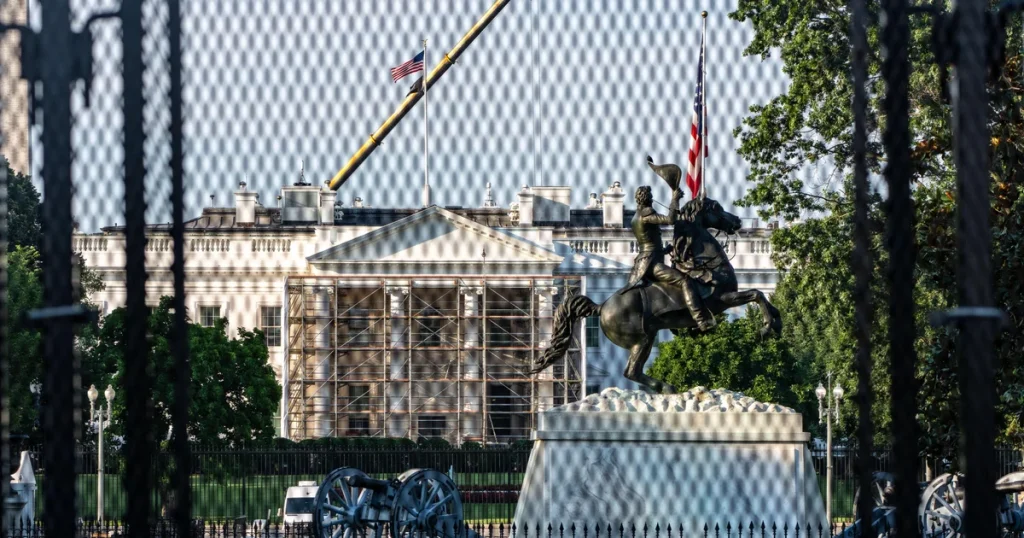
White House Considers Adding Permanent Fencing on Pennsylvania Avenue to Bolster Security
Wertynews.com – The White House is considering adding permanent fencing along Pennsylvania Avenue to enhance security measures surrounding the presidential complex. According to officials, this initiative would streamline the process of securing the area for special events and reduce the need for recurring temporary barriers, which have become a regular feature during high-profile gatherings. The plan is still in its preliminary stages, but it has sparked discussions among government agencies and security experts about its potential impact on both safety and the visual character of the historic street.
Rationale Behind the Proposal
Officials cited the need for long-term security solutions as the primary driver for the plan. Pennsylvania Avenue, a major thoroughfare in Washington, D.C., has historically been a target for potential threats due to its proximity to the White House and the frequent movement of high-profile individuals along its path. The proposed fencing would create a continuous barrier from the 15th to the 17th Streets, NW, effectively enclosing the critical stretch near the North Portico. This would provide a more consistent layer of protection while also allowing for quick adjustments during emergencies or large events.
Cost and Practicality Considerations
One of the key benefits of the permanent fencing plan is its potential to cut down on recurring security expenses. Temporary barriers, often installed during events like presidential visits or international summits, require significant logistical effort and financial investment each time. By opting for a permanent solution, the White House administration could save millions in maintenance and deployment costs. However, the exact budget allocated for the project remains undisclosed. Additionally, the fencing would be designed to blend with existing infrastructure, ensuring it does not detract from the iconic aesthetics of the area.
Security Concerns and Recent Incidents
The decision to add permanent fencing comes in the wake of heightened security alerts following a shooting incident near the 17th Street entrance in late May. While the attack was not directly linked to the White House, it underscored the vulnerability of the area and the need for more robust defenses. The Secret Service, which has been in charge of the security strategy, has emphasized that the fencing would complement other measures, such as surveillance systems and personnel patrols. The plan has also been discussed in meetings with the Department of Homeland Security to align with broader national security protocols.
Public Reaction and Political Implications
Reactions to the plan have been mixed, with some citizens supporting the move as a necessary step to ensure safety, while others worry it may alter the open and accessible nature of the White House grounds. The administration is also navigating political considerations, as the proposal could be seen as a symbol of enhanced vigilance or a shift toward a more fortified image. In response to media inquiries, a White House spokesperson stated, “The White House is considering adding this fencing to reinforce security without compromising the public’s ability to engage with the presidential complex.” This statement aims to reassure constituents that the plan balances safety with transparency.
Implementation Timeline and Contractor Engagement
As of now, the White House is in the process of finalizing the details of the fencing project. While no contractors have been officially contracted, the plan is being reviewed by multiple agencies to determine its feasibility. The fencing would be constructed in phases to minimize disruption to traffic and pedestrians, with initial work likely to begin after a thorough assessment of the security needs. This phased approach also allows for adjustments based on feedback from the public and security professionals, ensuring the design meets both practical and aesthetic standards.
“The White House is considering adding this fencing as part of a comprehensive strategy to address evolving security threats,” explained a senior official in a recent briefing. “The goal is to create a more resilient perimeter while maintaining the functionality of the avenue for daily use.” The official added that the plan would be subject to further analysis, including potential environmental impact assessments and cost-benefit studies, before final approval is given. This detailed evaluation reflects the administration’s commitment to ensuring the project aligns with both immediate and long-term security objectives.