Roman Space Telescope, NASA’s next “great observatory,” launches into space

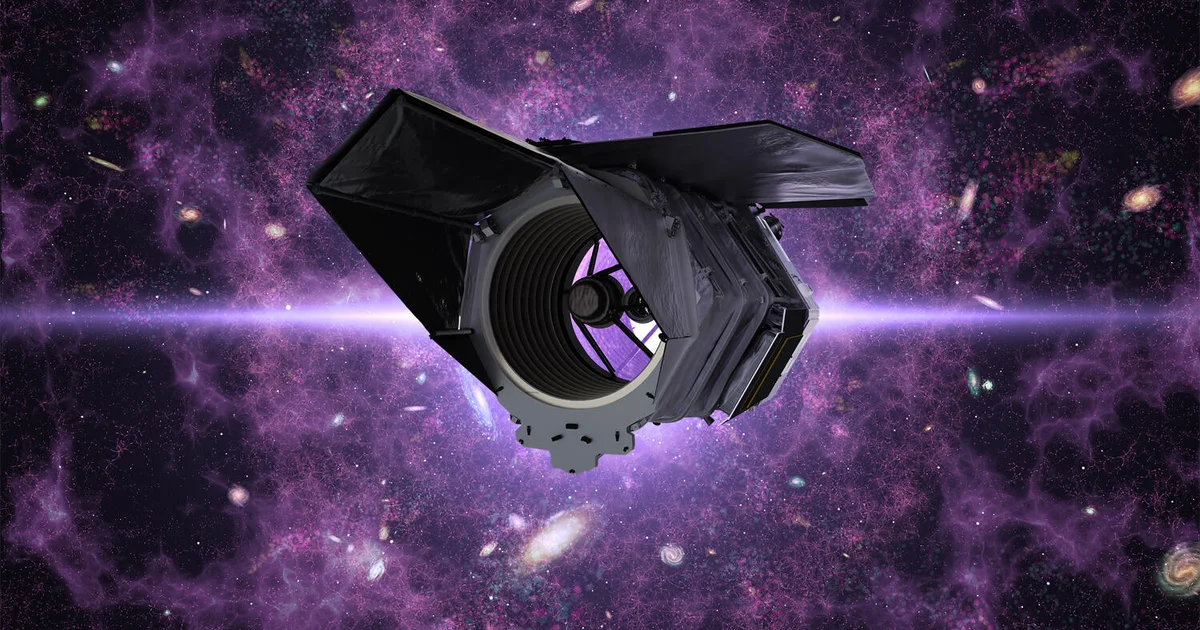
Table of Contents
NASA’s Roman Space Telescope Begins a $4.3 Billion Mission to Map the Cosmos at Unprecedented Speed
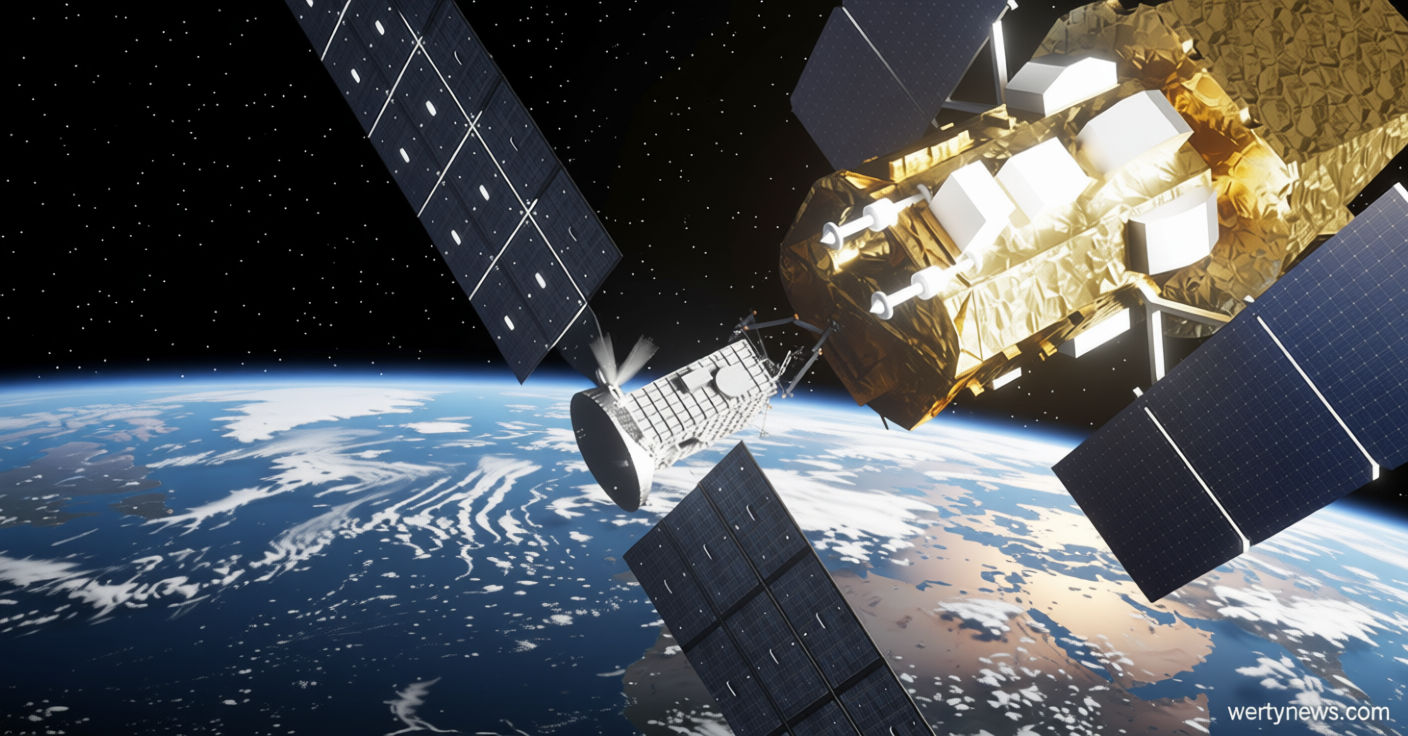
Wertynews.com – Sunday morning at 7:26 a.m. EDT, a triple-core SpaceX Falcon Heavy rocket lifted off from Kennedy Space Center carrying a payload that will reshape how astronomers observe the universe. Atop the vehicle rode the Nancy Grace Roman Space Telescope — a 42-foot-long, 18,000-pound observatory built around a donated Hubble-class mirror originally manufactured for a classified spy satellite. The spacecraft now embarks on a five-year primary mission valued at $4.3 billion, designed to capture wide-field, ultra-high-resolution imagery of the cosmos at a pace no prior NASA mission has approached.
A Camera That Outpaces Everything Before It
The instrument suite aboard Roman centers on a 300-megapixel wide-field camera paired with advanced detectors. To grasp the scale of a single full-resolution frame, officials note that the image would span roughly 45 city blocks or encompass the entire face of El Capitan in Yosemite National Park. Displaying that picture at full fidelity would demand approximately half a million 4K televisions arranged side by side.
The data throughput is equally staggering. Over its three decades of operation, the Hubble Space Telescope has downlinked roughly 172 terabytes of scientific information. Roman, by contrast, is projected to transmit 2,500 terabytes during its primary mission alone — a volume equivalent to what Hubble accumulated over an entire century, compressed into a single month of Roman operations. In practical terms, the new observatory scans broad regions of the sky about 1,000 times faster than its predecessor.
“The speed at which we’ll be scanning the sky, delivering vast amounts of data and returning results will be at an unprecedented rate, never done before,” said Niki Fox, NASA’s associate administrator for science.
Fox, who has described the telescope as “a sheer powerhouse” and “literally a speed machine,” emphasized that the instrument’s combination of sensitivity and cadence represents a qualitative leap rather than a mere incremental upgrade.
Why the Mission Matters: Dark Matter, Dark Energy, and the Hubble Tension
The flood of high-cadence observations is expected to illuminate three intertwined puzzles in modern cosmology. First, Roman will probe the distribution and gravitational influence of dark matter — the invisible substance that pervades the universe, binds galaxies into coherent structures, and accounts for the majority of cosmic mass while simultaneously acting as a brake on the expansion of space itself. Second, the telescope will gather statistically significant measurements of dark energy, the repulsive force believed to have existed since the Big Bang but only became dynamically dominant roughly five billion years ago as the universe expanded and thinned. Since that epoch, the rate of cosmic expansion has been accelerating.
Third, and perhaps most critically, Roman may help resolve what cosmologists call the “Hubble Tension.” When Hubble launched in 1990, estimates of the universe’s age spanned a wide range — anywhere from about 10 billion to 20 billion years. Hubble narrowed that window dramatically, pinning down the expansion rate (the Hubble Constant) and thereby the elapsed time since the Big Bang to within one percent: 13.8 billion years. Yet independent measurements derived from the cosmic microwave background — the faint 3-degree afterglow of the Big Bang’s immediate aftermath — yield a slightly different value for the constant. The discrepancy implies that some element of the standard cosmological model may be incomplete or incorrect.
“We’re seeing evidence that the Hubble constant, as inferred from very early times, is not consistent with the Hubble constant that we measure closer to now, which is telling us that the model that connects those two things might not be quite right,” explained Julie McEnery, the project scientist for Roman. “We have a slight tension in our expectations for how structure should grow and evolve.”
That “slight tension,” as McEnery phrases it, points toward a potentially serious gap in our understanding of how the universe evolved from its earliest moments to the present day. Roman’s ability to map structure formation across cosmic time at far greater speed and resolution than any prior instrument gives scientists a realistic chance of identifying where the current model breaks down.
“Roman will give the Earth a new atlas of the universe,” said NASA Administrator Jared Isaacman, adding that the data stream is expected to “accelerate the … discovery of potentially habitable planets outside our solar system.”
The Woman Behind the Name
The observatory carries the name of Nancy Grace Roman, NASA’s first chief astronomer, who spent decades championing the scientific value of space-based telescopes and played a pivotal role in the development of Hubble. Colleagues and historians frequently refer to her as “the mother of Hubble.” Her advocacy laid the institutional groundwork that made missions like Roman conceivable, and the agency chose to honor her legacy by attaching her name to what is now its most ambitious wide-field survey instrument.
Destination: Lagrange Point 2
Roman’s trajectory carries it toward Lagrange Point No. 2 (L2), a gravitational equilibrium region situated approximately one million miles from Earth on the side opposite the Sun. At L2, a spacecraft can remain in a quasi-stable position with minimal fuel expenditure, making it an ideal vantage point for long-duration astronomical surveys. The James Webb Space Telescope already occupies the same region for the same operational reason, and Roman will join it in what is becoming a small constellation of observatories parked at that gravitational eddy.
From that stable perch, Roman will begin systematic surveys of the sky within weeks of arrival, feeding a continuous stream of high-resolution data back to Earth. The implications extend well beyond cosmology: exoplanet characterization, transient-event detection, and the statistical mapping of galactic structure all benefit from the instrument’s combination of speed, sensitivity, and field of view. For the first time, astronomers will possess a tool capable of scanning the universe at a cadence that turns decades of accumulated knowledge into months of new discovery.
Related Reading
Frequently Asked Questions
What is Roman Space Telescope NASA s next?
Roman Space Telescope NASA s next is the main topic of this guide. The article explains the context, practical details, and next steps readers should understand.
Why does Roman Space Telescope NASA s next matter?
Roman Space Telescope NASA s next matters because readers are looking for a useful answer, not just a short summary. Good content should match search intent and help them decide what to do next.