
100 Million Under Flood Alerts as Polo Remnants Soak Central U.S.
Wertynews.com – About 100 million under flood alerts are facing a widespread threat of heavy rain as the remnants of former Hurricane Polo move inland from Mexico. The tropical moisture is expected to bring repeated downpours from the Southwest through the Plains and into parts of the Midwest.
Polo dissipated Tuesday night over northwestern Mexico and is no longer an organized tropical storm. But its remaining moisture and circulation are combining with other weather systems, raising the risk of flash flooding across a large part of the country through the week.
Heavy Rain Could Produce Dangerous Flooding
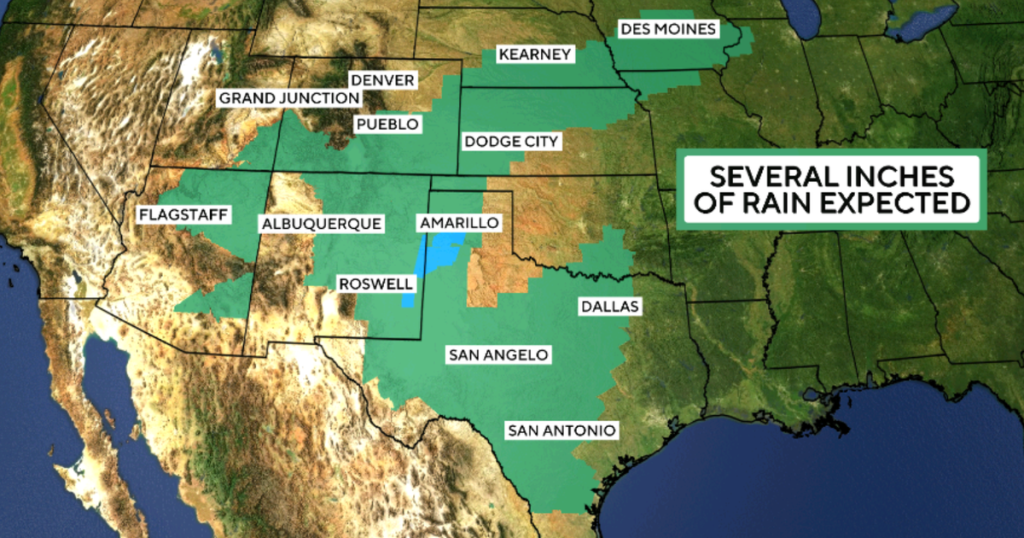
Rainfall totals of 4 to 6 inches are possible in parts of the Southern Plains and Midwest. Isolated areas of Texas could receive up to 9 inches, especially where storms repeatedly move over the same locations. Intense rainfall can quickly overwhelm drainage systems and turn low-lying roads into dangerous waterways.
Flood watches stretched more than 1,200 miles across the central United States on Wednesday. Alert areas included parts of Arizona, Colorado, Iowa, Kansas, Missouri, Nebraska, New Mexico, Oklahoma and Texas. Scattered flood warnings were also active, including flash-flood warnings in several Texas Panhandle counties.
Major cities within the broader risk area include Austin, Dallas, Oklahoma City, Tulsa, Omaha and Chicago. Conditions may differ sharply between neighborhoods and counties, so residents should follow local forecasts and emergency notifications rather than relying only on regional outlooks.
The Weather Prediction Center warned of a “significant flash flood threat across the Four Corners Region eastward into the Central Plains.”
New Mexico Faces Immediate Concerns
Southern New Mexico had already experienced dangerous flooding before Polo’s remnants advanced farther inland. Flooded roads stranded some motorists, illustrating how quickly conditions can deteriorate during heavy rain.
Tuesday’s storms also placed the McLeod Dam in Doña Ana County under severe pressure. A flash-flood emergency was issued amid concerns about the dam, while county officials ordered evacuations nearby. Pumps were brought in to move water downstream and reduce pressure on the structure.
More than 60 flash floods were reported across the Southwest from Monday through Tuesday night. In some locations, rain fell at rates near 4 inches per hour. Fast-moving water is particularly hazardous in desert and mountainous terrain, where runoff can surge through arroyos, washes and streets with little warning.
Polo’s Track Shifted the Main Threat Inland
Polo first made landfall in Baja California Sur as a hurricane, crossed the Gulf of California and made a second landfall in Sonora. Its winds had weakened to 35 mph by Tuesday night, when the system dissipated over northwestern Mexico.
The remnant moisture was expected to approach the El Paso area Wednesday morning and continue northeast. While coastal wind impacts had faded, the danger shifted to inland flooding from persistent tropical rainfall. Albuquerque was forecast to receive about 2 inches of rain, which can still cause dangerous runoff in a desert city if it falls rapidly.
Dallas and other parts of Texas could remain wet into Thursday, with some locations potentially receiving more than 7 inches. For communities among the 100 million under flood alerts, the greatest risks include flooded roads, rapidly rising creeks and runoff near drainage channels and dams.
FAQ: Flood Safety During Heavy Rain
What should I do if my area is under a flood watch?
A flood watch means conditions are favorable for flooding. Monitor local alerts, prepare to change travel plans, keep phones charged and avoid parking or walking near creeks, arroyos and low-water crossings.
What is the difference between a flood watch and a flash-flood warning?
A watch means flooding is possible, while a warning means flooding is happening or imminent. A flash-flood warning requires immediate action: move to higher ground and never drive through water covering a road.
Why can rain be so dangerous after a tropical storm weakens?
A storm does not need strong winds to cause severe impacts. Polo’s remnants can still carry deep tropical moisture, producing prolonged or intense rainfall far from where the system made landfall.