
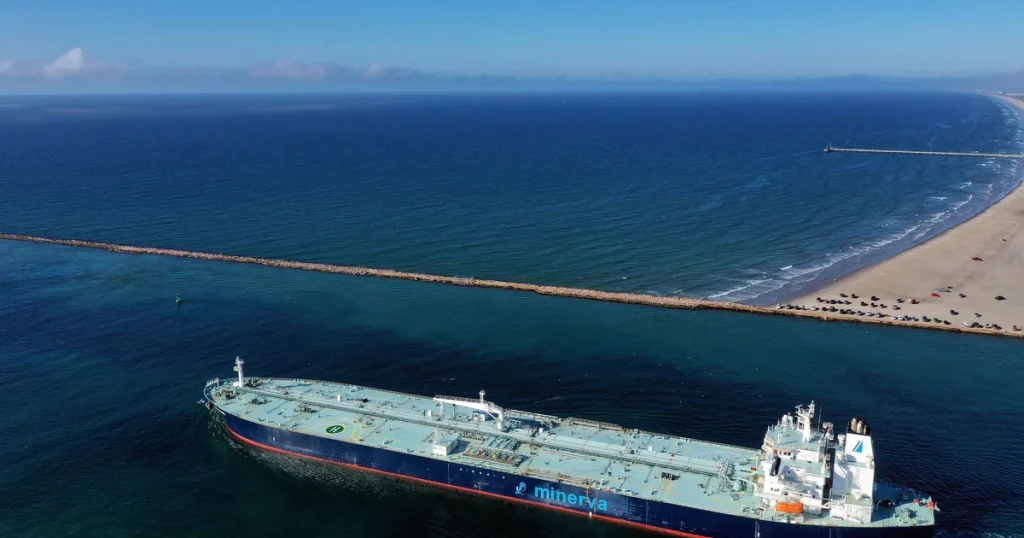
Coast Guard, FBI Board Texas-Bound Oil Tanker
Wertynews.com – Coast Guard FBI boarded Texas-bound tanker operations became the focus of a federal inquiry after a foreign-flagged crude oil vessel showed signs that its computer network may have been compromised during an Atlantic crossing. The ship was traveling toward Galveston, Texas, when authorities intervened.
The boarding occurred on Aug. 21 before the tanker reached port. Coast Guard law-enforcement personnel, a vessel inspector, members of the Coast Guard Cyber Protection Team and the FBI Cyber Action Team examined the vessel’s information-technology network and operational systems.
Investigators worked with the crew and the ship’s corporate managers to identify and address the suspected threat. The Coast Guard said there were no reported disruptions to the vessel’s operations, no instability, no physical danger to crew members and no environmental effects.
“Currently, there are no reports of operational disruptions, vessel instability, physical danger to crews, or environmental impacts,” the Coast Guard said.
VL Prosperity Linked to the Investigation
The Coast Guard did not publicly identify the tanker. However, reports from Iranian media indicated that it appeared to be the VL Prosperity, a Liberian-flagged very large crude carrier measuring 333 meters and capable of carrying about 2.3 million barrels of oil.
HMM Ocean Service Co., Ltd., a South Korea-based ship-management company, confirmed that the VL Prosperity was the vessel involved. The company said it maintains cybersecurity measures for ships under its management.
Public discussion intensified after the tanker passed through the Strait of Gibraltar, the waterway between Spain and Morocco. Iranian state media later circulated allegations that the vessel had experienced a significant cyberattack while crossing the Atlantic.
On Aug. 20, Iran’s Mehr News Agency reported that the ship was targeted on Aug. 7 while sailing from Egypt’s Sidi Kerir terminal to the United States. Citing an unnamed crew member, the report claimed the vessel lost communications for 30 hours and that systems connected to the engine room were affected.
U.S. authorities have not confirmed those allegations or attributed the suspected compromise to any government, group or individual. Their public statements said only that there were indications a foreign actor may have compromised the ship’s network.
Why Maritime Cybersecurity Matters
The Coast Guard FBI boarded Texas-bound tanker response highlights the importance of cybersecurity aboard modern commercial vessels. Ships rely on information systems for communications and administrative work, while operational technology supports functions such as propulsion, navigation, equipment monitoring and cargo handling.
A suspected network intrusion can require a close examination of both environments because connected systems may create wider operational risks. For a tanker transporting a large volume of crude oil, safe control of engines, steering, navigation and cargo equipment is especially important near busy shipping routes and ports.
Although officials reported no operational or environmental consequences in this case, the investigation demonstrates why federal agencies treat potential cyber threats at sea seriously. Sending technical teams aboard allows authorities to assess the vessel directly and help prevent a suspected digital incident from becoming a safety problem.
FAQ: Texas-Bound Tanker Cyber Investigation
Why did the Coast Guard and FBI board the tanker?
The teams boarded the vessel to investigate indications that its network may have been compromised and to inspect systems that support communications and ship operations.
Was the tanker damaged or unable to operate?
No. The Coast Guard said it had received no reports of operational disruptions, vessel instability, danger to the crew or environmental impacts.
Did authorities identify who was responsible?
No. U.S. officials had not publicly assigned responsibility for the suspected network compromise.