
Innocent Bystander Shot by Police: CBS News Reveals Dozens of Cases Across the Nation
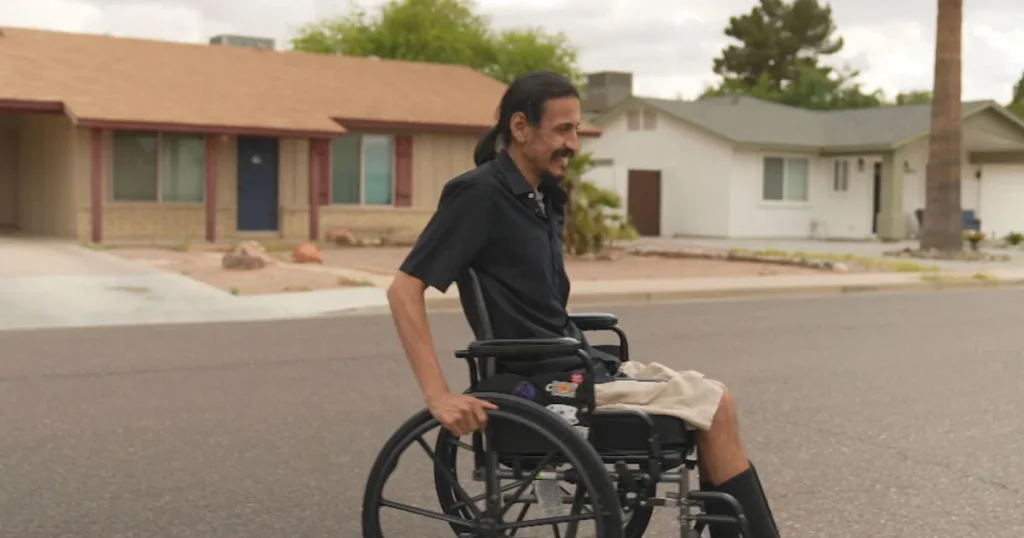
Wertynews.com – In a shocking incident in Chandler, Arizona, an innocent bystander shot by police found themselves at the center of a heated debate about law enforcement accountability. Mark Trujillo, who was standing outside his home, became a victim when officers mistook him for a suspect. A video from a Ring doorbell camera, combined with body camera footage, captured the moment when Trujillo raised his hands in surrender, only to be struck by gunfire. The incident highlights the growing concern over how often innocent bystanders are caught in the crossfire during police encounters.
“I remember raising my hand, but I warned them, ‘you’re gonna hit my house,’ and that’s when everything changed,” Trujillo shared with CBS News.
The tragedy unfolded in just five seconds. According to the Chandler Police Department, an officer misidentified Trujillo as the threat, leading to a fatal shot that severed his spinal cord. “We have an innocent,” one officer remarked in the bodycam video, underscoring the confusion in the moment. Trujillo’s family witnessed the event from inside, with the victim yelling for help while lying on the ground. This case is not isolated, as CBS News’ investigation reveals a pattern of similar incidents nationwide.
A Nationwide Pattern of Bystander Shootings
CBS News analyzed a wide range of sources, including police records, body camera footage, court documents, and news reports, and found over 50 cases of innocent bystanders shot by law enforcement since 2015. These incidents often occur in high-stress situations where officers are under pressure to make split-second decisions. Chaotic video clips from various locations across the U.S. depict how bystanders, whether armed or unarmed, can become accidental casualties of police actions.
Many of these cases remain unaddressed due to the lack of a centralized system for tracking such events. Law enforcement watchdog groups argue that the numbers could be even higher if all incidents were consistently recorded and reported. “The Department of Justice should be tracking these statistics,” said Benjamin Taylor, representing Trujillo, emphasizing the need for federal oversight in cases involving civilian casualties.
Lawsuits and Legal Challenges in Bystander Cases
For families of the injured or deceased, the aftermath of an innocent bystander shot by police often involves a long legal battle. Trujillo, for instance, filed a $50 million lawsuit against the Chandler Police Department and city, citing the extensive medical treatment and income loss he endured. However, legal defenses such as qualified immunity can make it difficult for victims to secure compensation or hold officers accountable.
CBS News reached out to the Chandler Police Department for comment, but a representative declined, stating that the incident is still under investigation. The debate over qualified immunity continues to shape how these cases are resolved. The Fraternal Order of Police supports the doctrine, arguing that it protects officers from excessive liability. “This doctrine is essential for officers to perform their duties without fear of excessive liability,” stated Patrick Yoes, the group’s president, in a letter to Congress.
Emotional and Financial Fallout on Families
Valentina Orellana-Peralta’s family in California experienced a similar crisis in 2021 when 14-year-old Valentina was shot by officers while in a changing room behind a wall at a Burlington Coat Factory store. Despite a wrongful death lawsuit, a Los Angeles jury found the LAPD not liable, leaving the family grappling with the emotional and financial consequences. “This was the most devastating loss of my career,” said Valentina’s father, expressing his anguish over the outcome.
The impact of such incidents extends beyond individual families, affecting public trust in law enforcement and raising questions about police training and decision-making. Many officers admit to feeling the weight of potential lawsuits, which can deter new recruits. “We know there are good officers, but when mistakes happen, they need accountability,” Taylor noted, highlighting the ongoing tension between duty and legal responsibility in policing.