
California Lawsuits Renew Fight Over Nazi-Looted Art
Wertynews.com – Lawsuits filed in California over Nazi-looted art are placing museums in Los Angeles County and at the Auschwitz memorial site at the center of renewed legal battles. The claims seek the return of paintings tied to Nazi-era theft and follow recent efforts to strengthen the ability of Holocaust survivors’ families and heirs to recover stolen cultural property.
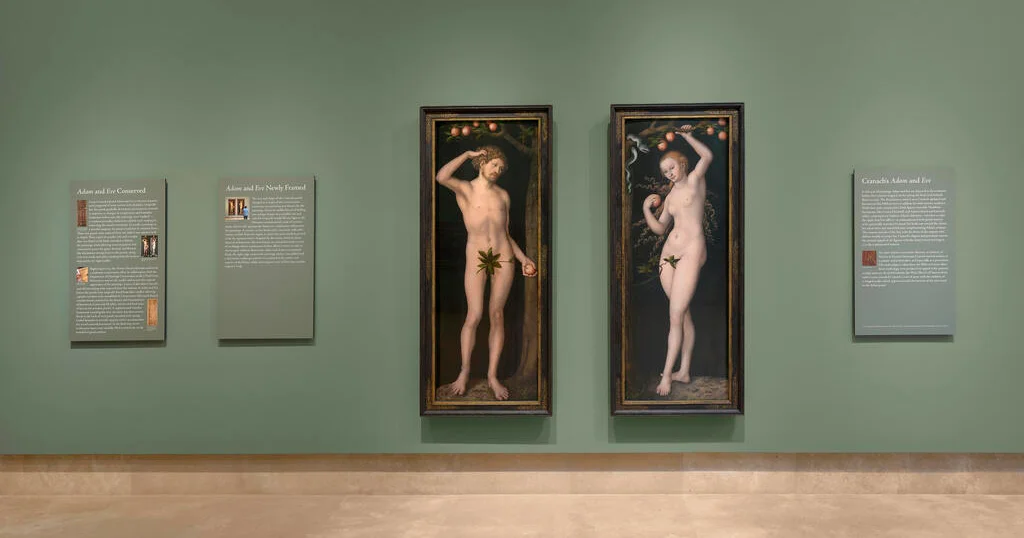
One lawsuit targets the Norton Simon Museum in Pasadena and seeks the return of Adam and Eve, two life-size oil-on-panel paintings created by Lucas Cranach the Elder in 1530. The case was filed in Los Angeles Superior Court by the Jewish Federation of Greater Los Angeles and its board chair, Daniel Gryczman.
A separate federal case filed in Los Angeles concerns watercolor portraits made by Dinah Gottliebova Babbitt while she was imprisoned at Auschwitz. Babbitt, who later worked as a California-based animator, was forced to paint fellow prisoners for Josef Mengele, the Nazi doctor known as the “Angel of Death.” Her daughters are seeking the return of the portraits.
Museums Defend Their Ownership Claims
Both institutions have said they hold legal title to the disputed works and intend to retain them for public display. Neither lawsuit assigns a financial value to the art.
These cases involve far more than the market value of historic paintings. For heirs and Jewish organizations, recovering art taken during Nazi persecution can represent an attempt to restore property, memory and dignity to families targeted during the Holocaust. Museums have argued that their collections preserve objects with major historical importance.
Between 1933 and 1945, the Nazi regime carried out what is widely considered the largest organized art theft in history. More than 600,000 artworks were taken across Europe from Jewish families, collectors and museums. Many pieces later passed through dealers, private owners and public institutions, complicating ownership records for descendants decades later.
The Cranach Works and Jacques Goudstikker’s Collection
The Norton Simon Museum claim stems from the collection of Jacques Goudstikker, a Dutch Jewish art dealer. Marei von Saher, his sole heir, assigned her rights involving the Cranach paintings to the Jewish Federation of Greater Los Angeles.
Hermann Göring, Adolf Hitler’s second-in-command, seized the paintings from Goudstikker’s collection. The works later passed through several owners before being sold in the 1960s to the Pasadena Museum of Modern Art, which later became the Norton Simon Museum.
Rabbi Noah Farkas, president and chief executive of the Jewish Federation of Los Angeles, said the organization expects to use most net proceeds from recovered art to support roughly 2,500 Holocaust survivors in the Los Angeles area.
“These are incredibly beautiful European masterpieces stolen from a Jewish family to enrich the Nazi party and fund the war and death machine against the people,” Farkas said.
“It’s our honor to take on this role on behalf of the community and use most of the proceeds to help these elderly survivors live out the last years of their lives in dignity, comfort and peace — something their family members were denied during the Holocaust.”
Von Saher said the federation’s involvement marked a meaningful step in the long-running effort to obtain justice for Holocaust survivors and victims of Nazi-era atrocities.
The Norton Simon Museum has cited earlier federal court rulings in its defense. In 2018, a federal court unanimously found that the museum had proper title to the Cranach paintings. The U.S. Supreme Court declined to hear the case in May 2019, leaving the lower-court rulings in place.
California Law and Holocaust-Era Art Claims
The lawsuits filed in California over disputed artwork come after legal changes intended to make recovery claims more viable. California Assembly Bill 2867, written by Democratic Assemblyman Jesse Gabriel and signed by Gov. Gavin Newsom in September 2024, requires California law to apply in lawsuits brought by California residents or their heirs seeking art taken during the Holocaust or other acts of persecution.
Gabriel, who represents the Woodland Hills area of Los Angeles and co-chairs the California Legislative Jewish Caucus, introduced the measure after a federal court allowed Spain’s state-owned Thyssen-Bornemisza National Museum in Madrid to retain a painting claimed by Holocaust survivors’ relatives.
FAQ: Nazi-Looted Art Cases in California
What do the new California lawsuits seek?
The cases seek the return of artwork alleged to have been taken during Nazi persecution, including Cranach paintings at the Norton Simon Museum and prisoner portraits connected to Auschwitz.
Who can bring a Holocaust-era art claim?
Claims may be brought by surviving owners, heirs or organizations that hold assigned rights connected to artwork taken during the Holocaust or related persecution.
Why are these cases difficult to resolve?
Many disputed works changed hands repeatedly after World War II. Courts must evaluate historical records, ownership laws, prior rulings and the circumstances under which the art was seized or transferred.