
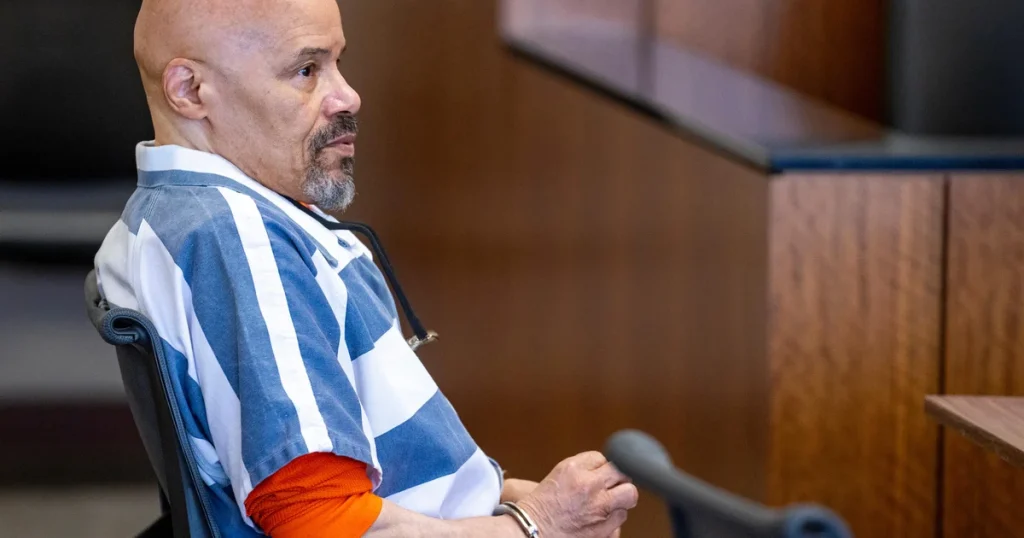
Utah Death Row Inmate Granted Bail After DNA Does Not Match
Wertynews.com – A man who spent decades on death row in Utah has been ordered released on bail after new DNA testing did not match him to key evidence in the 1985 killing of Eva Olesen. Douglas Stewart Carter, 71, will await a new trial as prosecutors continue reviewing the case.
Judge Derek Pullan ruled that Carter could leave custody after DNA results excluded him as a possible contributor to blood found on a doorknob and genetic material recovered from the handle of a knife. Olesen was stabbed and shot in her Provo home.
Bail Conditions and a New Trial
Pullan said the DNA findings further weaken the prosecution’s case, although he determined that the remaining evidence could still allow a jury to find Carter guilty. Carter must wear a GPS tracking device and may not contact Olesen’s family.
Carter’s attorney, Neal Hamilton, said Carter is expected to live in an extended-stay residence near relatives of his son. His son, who was adopted as an infant, learned about his father’s conviction only years later.
The man who spent decades on death row is also expected to need therapy as he adjusts to life outside prison. Hamilton said arranging housing is only one part of supporting Carter after his long incarceration.
“It’s not just as simple as, ‘Let’s let him go,’” Hamilton said. “He’s being released with 41 years of state-induced trauma and the effect it will have on him is very real.”
The bail order came after Utah County prosecutors withdrew their notice that they planned to again seek the death penalty. A retrial expected to last about two months had previously been scheduled for 2027.
DNA Results Renew Scrutiny of the Conviction
Prosecutors received the new DNA results on Sept. 22. Biological evidence from the crime scene had reportedly been searched twice against an FBI database containing Carter’s profile since 1995, without producing a match to him. It was not clear whether the testing identified another person.
Carter was convicted of killing Olesen in 1985 and was sentenced to death that year. Olesen, who was White, was the aunt of Provo’s police chief at the time. Carter, who is Black, has consistently said he did not kill her.
The case against the man who spent decades on death row centered on a signed confession and testimony from two people who claimed he had boasted about the killing. Prosecutors presented no physical evidence placing Carter inside Olesen’s home.
Confession and Witness Testimony Challenged
Investigators focused on Carter after suspecting Olesen was killed during a robbery. Carter, a Chicago native living with his mother in Utah, left the state by April 1985 and was arrested in Nashville, Tennessee, in June.
During questioning by a Provo detective, Carter signed a confession. He later said it was false and resulted from repeated police threats. Hamilton said Carter had been detained for two days with a friend and feared consequences for that friend if he did not confess.
“Doug said and has always said that the only reason he confessed was to save his friend,” Hamilton said.
Carter received another death sentence after a 1992 retrial, and Utah courts rejected many later appeals. In 2011, two witnesses from the first trial were located in Mexico and said they had been instructed to give false testimony and received money and gifts from police.
Frequently Asked Questions
Why was Carter granted bail? The court reconsidered bail after DNA testing did not match Carter to blood from a doorknob or material recovered from a knife handle.
Has the case been dismissed? No. The man who spent decades on death row remains subject to a new trial while prosecutors assess the evidence.
What restrictions apply to Carter’s release? He must wear GPS monitoring equipment and cannot contact members of Olesen’s family.