
Iran Conflict Strains U.S. Munitions Stockpiles and Defense Production
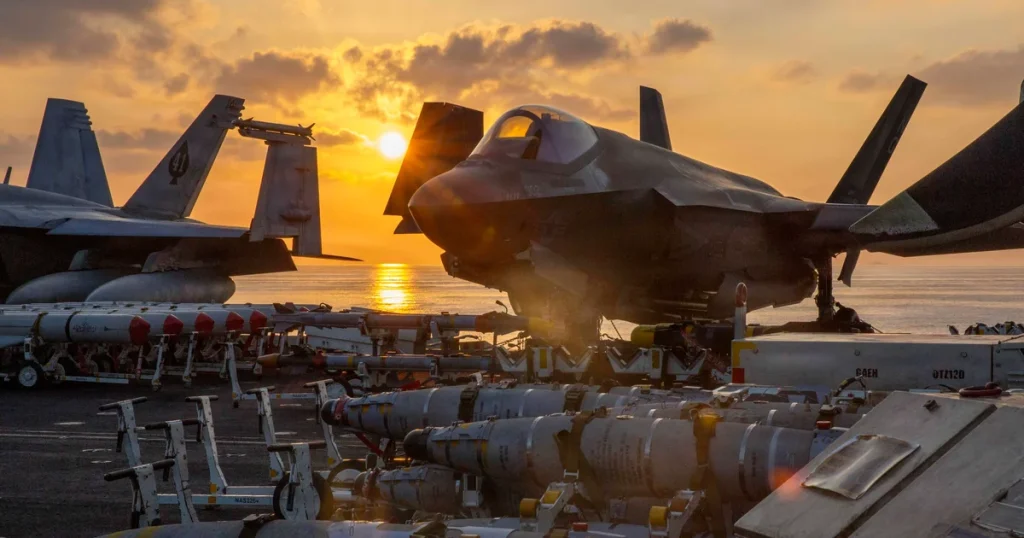
Wertynews.com – The Pentagon’s internal watchdog has identified ammunition shortages and resupply constraints tied to the high cost of the U.S. military campaign against Iran, highlighting the pressure that months of sustained combat have placed on American weapons inventories.
In a mandatory report delivered to Congress on Monday, the Defense Department inspector general estimated that Operation Epic Fury cost $33.4 billion between February 28 and June 30. Munitions accounted for $22.3 billion of that total, reflecting the scale of missiles, interceptors, bombs and other weapons used during the operation.
The inspector general warned that the campaign’s spending on munitions has created strategic inventory gaps while exposing limits in the industrial system responsible for replacing those supplies. The finding places new attention on the time needed to manufacture advanced weapons after they are used in a major conflict.
Heavy Early Strikes Added to Demand
U.S. Central Command said American forces hit more than 1,000 targets during the first 24 hours of fighting with Iran. That opening phase involved a much larger volume of attacks than those carried out in the more recent months of the war.
Modern air and missile campaigns can consume expensive weapons at an extraordinary pace. Precision-guided munitions and air-defense interceptors are designed for highly specific missions, but their production often depends on specialized components, skilled labor and long-running supply chains. Rebuilding stockpiles is therefore not simply a matter of increasing factory output overnight.
President Trump has repeatedly rejected concerns that the United States could run short of weapons during the six-month conflict. Only weeks ago, he said the country had “virtually unlimited” ammunition. In a Truth Social post on Monday, Mr. Trump again emphasized U.S. weapons production.
“More Exquisite and Elite Weapons than at any time in our History.”
The Pentagon has also disputed claims that U.S. munitions supplies are inadequate. At the same time, Defense Secretary Pete Hegseth has pressed defense companies to accelerate manufacturing, an indication of the urgency surrounding replenishment efforts.
Aircraft, Drones and Base Facilities Also Damaged
The costs of the conflict extend beyond ammunition. The inspector general’s review listed several losses and damaged assets: four F-15 aircraft were destroyed, one F-35 was damaged, seven KC-135 tanker aircraft sustained damage, and as many as 30 MQ-9 Reaper drones were destroyed.
Iranian attacks also struck U.S. facilities across the region. Hundreds of buildings and structures at American bases in Kuwait, Bahrain, Qatar, the United Arab Emirates, Saudi Arabia, Iraq, Oman and Jordan were damaged or destroyed during the conflict.
Those base-related losses were not included in the $33.4 billion estimate. The report said the ultimate expense remains uncertain because it is not yet known which facilities will be rebuilt or who will pay for the reconstruction. That unresolved question could substantially affect the eventual financial assessment of the war.
Other response costs are already becoming clearer. The government spent $79.2 million on conflict-related contingencies, including evacuation expenses for State Department personnel, their family members, U.S. citizens and eligible third-country nationals. Damage to U.S. diplomatic facilities in Iraq, Kuwait, Saudi Arabia and the UAE was estimated at roughly $184 million.
Patriot Production Illustrates the Challenge
The effort to replenish defenses is especially visible in the production of Patriot air-defense missiles. The latest version of the interceptor is intended to destroy incoming ballistic missiles, a mission that has gained renewed importance during the fighting.
Each Patriot missile costs about $4 million, and Lockheed Martin is currently making 750 annually at its Arkansas facility. Even with that level of output, a prolonged conflict can quickly absorb large quantities of interceptors, particularly when forces must defend multiple bases and population centers from incoming threats.
Tim Cahill, who leads Lockheed Martin’s missile division, characterized the industry’s response as an intense effort to remove obstacles and speed production.
“It’s just, move fast, figure it out, find what our obstacles are, break them down.”
That approach reflects the difficulty of expanding a defense-industrial base built around complex systems rather than mass-produced consumer goods. Missile manufacturing requires testing, certification, secure materials and coordination among many suppliers. Faster output can help, but it does not erase the delays involved in producing advanced weapons safely and reliably.
Concerns Reach Beyond the Current War
Mark Cancian of the Center for Strategic and International Studies said the United States appears able to sustain the fight against Iran, but cautioned that the larger concern is whether enough munitions would remain for another major conflict.
“For a war against Iran, the answer is yes. The problem is a war against China. We might be able to provide enough munitions for a month, but getting on to month two or month three or four, that’s a great challenge.”
The distinction is significant because U.S. military planning has long treated a potential confrontation involving China as a far larger test of logistics, industrial capacity and weapons reserves. A war that requires long-range strikes, missile defense and naval operations across a vast region could demand ammunition in volumes far beyond those used in shorter campaigns.
The inspector general’s findings do not settle the debate over whether the United States has enough weapons for its immediate needs. They do, however, show that the Iran war has imposed measurable costs on inventories, equipment and military infrastructure. The next challenge for Pentagon leaders and defense contractors will be restoring those supplies while maintaining readiness for other potential crises.
Related Reading
Frequently Asked Questions
What is Pentagon inspector general says Iran war has?
Pentagon inspector general says Iran war has is the main topic of this guide. The article explains the context, practical details, and next steps readers should understand.
Why does Pentagon inspector general says Iran war has matter?
Pentagon inspector general says Iran war has matters because readers are looking for a useful answer, not just a short summary. Good content should match search intent and help them decide what to do next.