
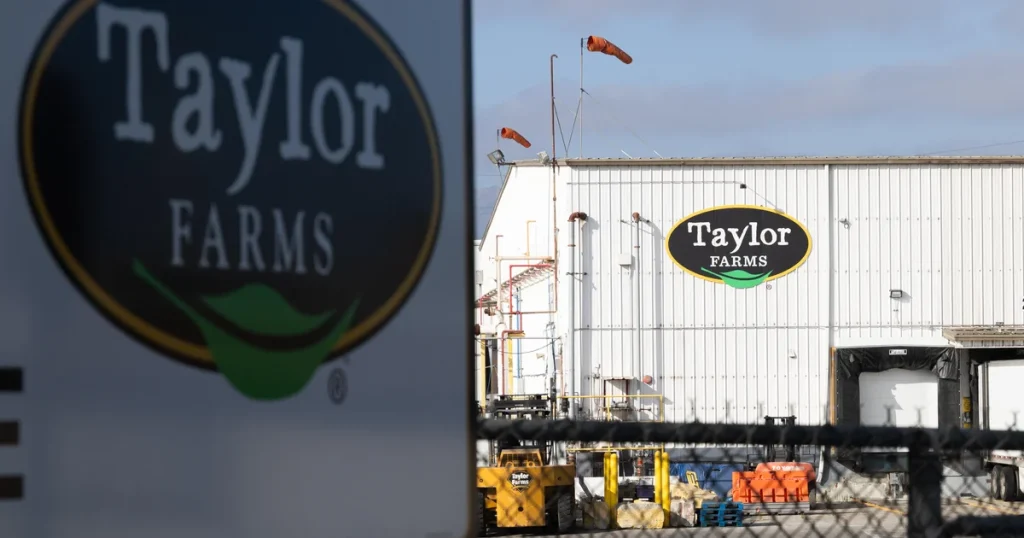
Taylor Farms Lettuce Sample That Tested Positive for Cyclospora Was a False Positive, FDA Says
Update on the Cyclospora Contamination Claim
Wertynews.com – The U.S. Food and Drug Administration (FDA) recently clarified that a Taylor Farms lettuce sample, which initially tested positive for Cyclospora, was not contaminated. After re-evaluating the findings, FDA laboratory experts confirmed the result was a false positive, meaning the sample did not contain the parasite responsible for cyclosporiasis. This development marks a significant shift in the ongoing investigation into the source of a multistate outbreak linked to contaminated produce.
“Cyclospora detection can be complex, and our review of the sample results shows that the positive finding was not indicative of actual contamination,” stated an FDA spokesperson. The agency emphasized that its rigorous testing process ensures accuracy, and this correction is part of its effort to provide clarity to consumers and businesses affected by the outbreak.
The Outbreak Timeline and Company Response
Taylor Farms had previously announced on Friday that it was removing iceberg lettuce from its supply chain in central Mexico after it was implicated in a major cyclosporiasis outbreak. The company’s decision came in response to growing concerns about potential contamination, which had led to the recall of several products. However, the FDA’s latest findings suggest that the initial concern may have been based on an error in testing, which could impact the scope of the recall and the company’s public relations strategy.
The Centers for Disease Control and Prevention (CDC) identified a specific type of lettuce as the source of the outbreak in early June, nearly a month after cases were first reported. This connection was made through extensive traceback investigations, which traced illnesses to Taco Bell locations across Indiana, Kentucky, Michigan, Ohio, and West Virginia. The CDC’s announcement led to widespread panic, prompting health officials to urge consumers to avoid certain lettuce products until further testing could confirm the risk.
Taco Bell confirmed on Friday that it had completed the removal of affected Taylor Farms lettuce from its restaurants, a move that was widely publicized. Meanwhile, Walmart took swift action by pulling four Marketside bagged iceberg lettuce salad products from shelves in over 25 states, stating there was no evidence linking these items to the current Cyclospora investigation. These actions highlight the urgency with which retailers and food companies are responding to potential contamination risks, even as the FDA reassures that the initial findings may have been incorrect.
Understanding Cyclospora and Its Impact
Cyclosporiasis is a gastrointestinal illness caused by the Cyclospora parasite, which is typically contracted through ingestion of contaminated food or water. Symptoms include prolonged, watery diarrhea, abdominal cramps, nausea, and fatigue, often appearing days or weeks after exposure. Outbreaks are common during late spring and summer, frequently tied to fresh produce such as bagged salads, cilantro, and green onions. The parasite is resilient and can survive in moist environments, making it a persistent challenge for food safety regulators.
The current outbreak, initially reported in May, has affected 34 states and resulted in over 1,600 confirmed cases. However, state health departments have reported higher numbers, such as Michigan’s 5,000 confirmed cases as of Friday. Despite the scale of the outbreak, no fatalities have been reported, which is a positive sign for public health officials. The FDA’s revised assessment of the Taylor Farms sample may help reduce consumer anxiety, but it also raises questions about the reliability of initial testing procedures and the need for more precise diagnostic methods.
Consumers who had purchased Taylor Farms lettuce from central Mexico were advised to monitor their health and report any symptoms. The company’s swift response to the initial positive test, including the removal of products and collaboration with health authorities, demonstrated its commitment to food safety. However, the discovery of a false positive could mean that the recall was unnecessary, potentially impacting sales and public trust in the brand. This case underscores the importance of transparency and thoroughness in food safety investigations, especially when the stakes are as high as public health.
The CDC’s identification of the lettuce as the outbreak source was a critical step in containing the spread of the illness. Investigators analyzed cases and traced the contamination back to a specific production batch, which led to the recall of products from Taylor Farms. While the FDA’s latest findings suggest that the sample was not contaminated, they have not ruled out the possibility of other sources contributing to the outbreak. This ambiguity has prompted continued monitoring of cases and further testing of additional samples to ensure no other contaminated products are overlooked.
For now, the false positive result provides some relief to Taylor Farms and its customers, but the broader implications for food safety remain significant. The incident highlights the challenges of detecting Cyclospora in fresh produce, which can be difficult due to its life cycle and resistance to standard testing methods. As the FDA continues to review the data, the focus will shift toward confirming whether other samples are truly positive or if the initial test was an isolated error. This will be crucial in determining the extent of the outbreak and the necessary measures to prevent future occurrences.