
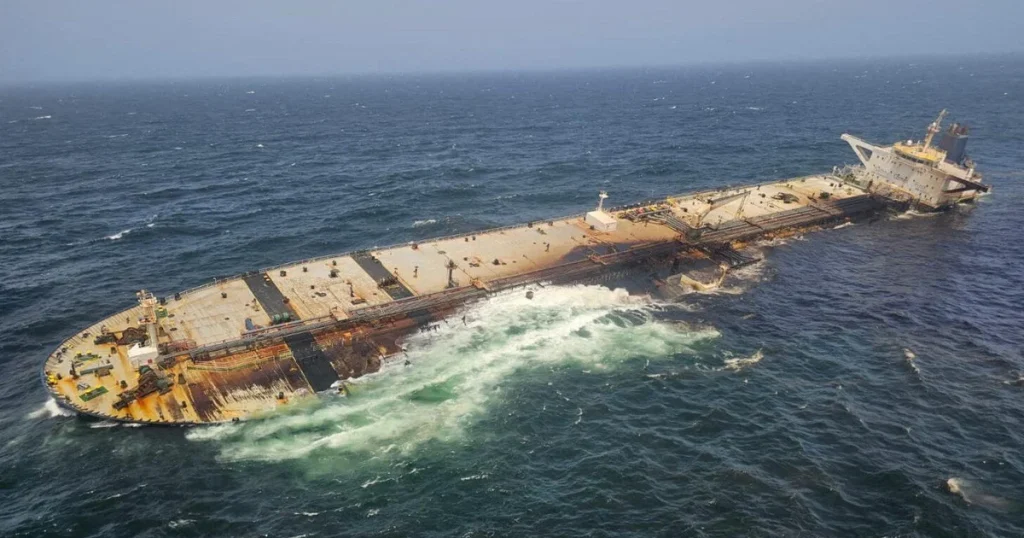
Abandoned Russian Tanker Leaking Oil Off Oman Coast: Environmental Crisis Unfolds
Wertynews.com – The situation is escalating rapidly as an abandoned Russian tanker leaking oil off the coast of Oman threatens to create one of the region’s worst environmental disasters in recent memory. The Caroline Bezengi, a massive vessel linked to Moscow’s shadow fleet that transports sanctioned petroleum around the world, experienced an unexplained explosion on June 8 while navigating through the Suez Canal toward the Gulf of Oman. John Amos, founder of the environmental monitoring organization SkyTruth, confirmed that the crew evacuated the ship before it eventually settled onto a rocky formation near an uninhabited island in the area.
Monitoring the Growing Oil Spill
Satellite imagery first captured evidence of petroleum escaping from the damaged vessel on June 30, marking the beginning of what could become a catastrophic spill. By August 7, Amos calculated that hundreds of thousands of gallons had already entered the ocean waters surrounding the island. With five out of six cargo compartments still full, the tanker potentially contained up to 40 million gallons of crude oil that could eventually leak into the marine ecosystem.
The ship’s owner has remained notably silent regarding the incident, and media coverage may not be sufficient to capture the full scope of the problem. Consequently, Oman now bears the primary responsibility for containment operations. According to Greenpeace, the Omani government has dispatched aircraft, underwater specialists, and technical teams to evaluate the situation and develop comprehensive mitigation strategies for addressing the ongoing leak.
Ambrey, a British firm specializing in maritime security and salvage operations, announced that recovery crews are traveling to the location to begin containment efforts. However, the team will encounter challenging conditions as they work. The company noted that extreme weather and rough seas are affecting the vessel’s stability as monsoon storms intensify across the region. Hanen Keskes, who leads regional campaigns for Greenpeace MENA, explained that determining the complete scope of contamination will likely wait until salvage operations conclude and weather conditions improve.
Ecological and Economic Stakes for the Region
The environmental consequences of this disaster could be severe for the region. The Gulf of Oman and adjacent Arabian Sea harbor protected species including sharks, sea turtles, and a distinctive group of humpback whales that migrate through these waters annually. These waters received marine reserve status recently, heightening concerns about potential damage to this ecologically significant area.
Russia depends on numerous older vessels within its shadow fleet to transport oil despite international sanctions. These ships frequently utilize complex ownership arrangements and often lack substantial insurance policies, creating significant uncertainty about who will ultimately fund cleanup and salvage costs if the situation worsens.
Once the oil hits the water, you’ve already lost,
Amos observed, noting that response teams typically manage to recover only about 20 percent of spilled petroleum under the best circumstances. This statistic highlights the urgency of the current situation and the challenges facing Omani authorities.
The financial implications mirror historical precedents that the region has witnessed. When the Exxon Valdez ran aground near Alaska in 1989, releasing at least 11 million gallons of crude oil, Exxon ultimately spent roughly $2.1 billion—equivalent to approximately $5.8 billion in current currency. A similar scenario could unfold if the Caroline Bezengi ruptures completely, potentially devastating local fisheries and tourism industries that depend on healthy marine ecosystems.
Frequently Asked Questions
What is the shadow fleet and how does it relate to this incident? The shadow fleet consists of older vessels that transport Russian oil despite international sanctions. These ships often use complex ownership structures and may lack adequate insurance coverage, making incidents like the Caroline Bezengi particularly problematic for host nations.
How much oil is currently leaking from the tanker? Satellite monitoring indicates that hundreds of thousands of gallons have already entered the ocean as of early August, with the potential for up to 40 million gallons to eventually spill if the vessel ruptures completely.
What response efforts are underway? Oman has deployed aircraft, underwater specialists, and technical teams. Ambrey, a British maritime firm, is sending recovery crews to assist with containment and salvage operations despite challenging weather conditions.
Which marine species are at risk? The Gulf of Oman and Arabian Sea protect sharks, sea turtles, and humpback whales. These species could face significant threats if the oil spill expands beyond current containment efforts.