
Colombia’s Earthquake Recovery Intensifies as Rescue Efforts Continue
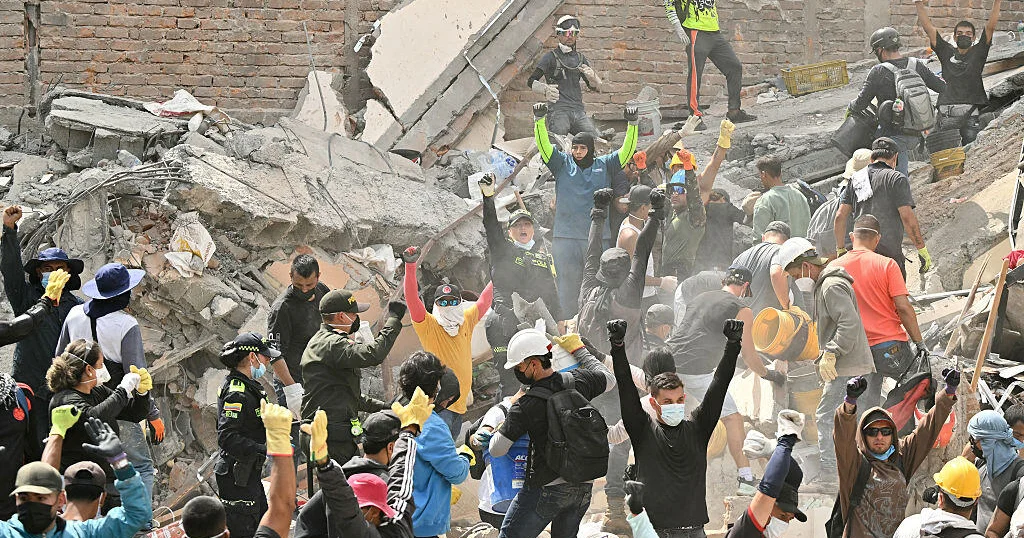
Wertynews.com – Regional assistance has begun arriving in Colombia on Wednesday, as rescue workers intensify their search through debris following a devastating 7.4 magnitude earthquake. The tremor, which struck the western portion of the country on Monday, left a trail of destruction that included collapsed structures, warped roadways, and crushed vehicles.
This catastrophe has placed significant pressure on Colombia’s newly elected president, Abelardo de la Espriella, and his administration as they coordinate emergency responses. Meanwhile, local communities are mobilizing to deliver essential supplies to the hardest-hit neighborhoods.
Mounting Casualty Figures
Speaking on Wednesday evening, President de la Espriella confirmed that at least 265 individuals lost their lives in the disaster. While official reports indicate approximately 500 people remain unaccounted for, independent civilian databases suggest the missing count exceeds 4,100. The president noted that more than 25,800 households have been affected by the earthquake.
“Our efforts are focused on the disappeared,” he told journalists in Colombia’s capital.
Rescue teams are working tirelessly through the wreckage in Cali, Pereira, Manizales, and Quibdo—the cities experiencing the most severe damage. With each passing hour, the window for locating survivors narrows considerably.
Critical Rescue Window
Emergency response organizations emphasize that the initial 48 to 72 hours represent the most vital period for extracting living victims, though this timeframe may extend if trapped individuals have access to sustenance and hydration.
Alejandro Eder, Cali’s mayor, informed reporters on Wednesday afternoon that rescue personnel are still discovering evidence of life beneath collapsed structures and are racing against time to save those trapped.
“The next 20 hours are the most critical to find and rescue people alive,” he said. “Every minute is vital.”
Social media footage captured a heartwarming scene from Monday, showing an infant being extracted from a ruined building in Cali. In the video, a survivor can be heard telling rescuers, “I’m with a baby,” while the baby’s cries echo through the debris.
Meanwhile, in Pereira, rescuers successfully freed 32-year-old Daniela Largo from the rubble late Tuesday. Her extraction required a complex 12-hour operation during which crews carefully carved an opening to release her pinned arm while a physician administered intravenous fluids to stabilize her condition. Carried to an ambulance wrapped in a blue blanket, the young woman was greeted by embracing firefighters and cheering spectators.
Craig De Meillon, a search-and-rescue volunteer from Miami, Florida, participated in Daniela’s rescue. “It was kind of like a football moment, when everyone is like shaking hands, like, ‘Yes, yes!'” De Meillon told CBS News when asked how it felt to see the woman freed.
Not every outcome brought joy. Another poignant moment arrived when a man was extracted from a building in the same city, lifeless and covered in a white blanket.
Community Efforts and Aftershock Concerns
During search operations, volunteers and bystanders must maintain relative silence in the middle of busy urban areas to detect the faintest sounds of life from beneath the debris.
In one remarkable instance captured by CBS News cameras in Pereira, volunteers formed human bucket brigades, manually passing rubble piece by piece for hours. Then, during one of those quiet moments, a Colombian army unit utilizing specialized equipment and sniffing dogs detected signs of life, triggering cheers from hundreds of onlookers.
Across Colombia’s coffee-growing region—among the areas most severely impacted—authorities have transformed sports arenas, schools, and other public facilities into shelters for thousands of displaced residents. In both Pereira and Cali, families have been sleeping outdoors in parks, with some fearing additional tremors or structural failures in their damaged homes, while others have no homes to return to at all.
Colombia’s geological service has recorded 130 aftershocks since the initial earthquake.
“We have the most important things: a roof over our heads, food, water and, in my case, medical care,” said Edith Penagos, 48, who was staying with her teenage son in one of the white tents set up in a Pereira park.
Rodrigo León Loya, a seismologist and geosciences professor at the University of the Andes, explained that while the likelihood of another earthquake of similar magnitude occurring in the same location is low, he would not dismiss the possibility of continued seismic activity.
“Let’s remember that Colombia is full of active fault lines,” he said. “The question isn’t whether it can happen again. The question is rather when an earthquake of similar magnitude will occur at another of Colombia’s seismic sources.”
In numerous regions, including Choco—the earthquake’s epicenter—the official disaster response has been complicated by longstanding challenges of extreme poverty and civil conflict that have generated waves of forced displacement over many decades. The full extent of the earthquake’s impact in the jungled northwest region remains largely unclear due to limited access and ongoing communication difficulties.
Related Reading
Frequently Asked Questions
What is Colombia earthquake death toll rises as frantic?
Colombia earthquake death toll rises as frantic is the main topic of this guide. The article explains the context, practical details, and next steps readers should understand.
Why does Colombia earthquake death toll rises as frantic matter?
Colombia earthquake death toll rises as frantic matters because readers are looking for a useful answer, not just a short summary. Good content should match search intent and help them decide what to do next.