
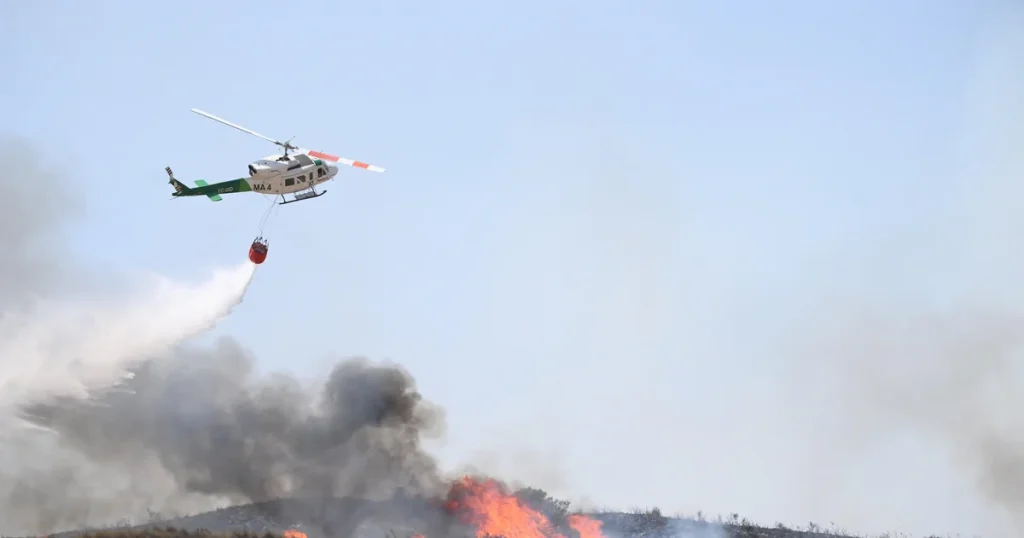
Hundreds of Firefighters in Spain Battle Deadly Wildfires
Wertynews.com – In a gripping display of resilience, hundreds of firefighters in Spain are working around the clock to combat a series of wildfires that have already claimed at least 12 lives. The blazes, which ignited in the semi-arid region near the Sierra de Los Filabres mountains in Almería province, have rapidly spread across 25 square miles of forest and farmland. These fires have posed immense challenges for emergency crews, with helicopters and fixed-wing aircraft playing a critical role in containment efforts. The situation highlights the urgent need for coordinated action and resources to tackle the escalating threat of wildfires in the region.
Weather Conditions Affect Firefighting Operations
While favorable weather conditions, including light winds and high humidity, have provided some relief to firefighters, the intensity of the flames remains formidable. According to Antonio Sanz, the director of emergency services in Andalusia, the fire’s scale has required extended hours of work and strategic planning. Firefighters implemented controlled burns around the perimeter of the blaze overnight to prevent further spread, a tactic that proved essential given the speed at which the flames advanced. The wildfires began late Thursday, coinciding with Spain’s extreme heat, which had already set the stage for a severe fire season.
“I was driving through the flames, and it was actually flames. I thought, ‘I can’t stop, I just gotta go,'” Jeffrey Kember described to The Associated Press, capturing the chaos of his evacuation. His wife, Christine, was nearby, as they fled their Los Pinos farmhouse after hearing a siren. The couple’s experience underscores the personal risks faced by residents and emergency responders during these events.
During their escape, Kember and his wife were attempting to help a neighbor with two young children when they were forced to abandon their cars and flee on foot. The couple briefly became separated, with Kember struggling to locate his wife due to her lack of a phone. “It was eerie because all of a sudden I came out of the flames and it was all bright sunshine. It was like surreal. Ridiculous!” he added, reflecting on the dramatic contrast between the heat of the fire and the calm after it passed.
Climate Trends Intensify Wildfire Risks
Spain has experienced a pattern of increasingly severe heat waves, with temperatures frequently exceeding 104 degrees Fahrenheit. These extreme conditions, combined with high winds and prolonged periods of drought, have transformed smaller fires into catastrophic events. Justice Minister Félix Bolaños emphasized that the Almeira wildfire’s severity is a direct consequence of a “climate emergency,” noting that the flames advanced at a rate of 328 feet per minute at their peak. This rapid spread has strained firefighting resources and highlighted the critical role of climate patterns in exacerbating the crisis.
June 2025 saw Spain endure multiple days of record-breaking heat, contributing to over 1,000 additional deaths across Europe. The European Union’s Copernicus Climate Change Service reported that Western Europe has warmed twice as fast as the global average since the 1980s. This warming trend has not only intensified heat waves but also created conditions that fuel widespread wildfires. The current heatwave marks the third in six weeks, signaling a persistent challenge for both public health and emergency response systems.
Historically, Spain has dealt with devastating wildfires, with last year’s fire season burning more than 971,000 acres—over twice the size of London. Four people lost their lives during that period, and the deadliest blaze in the country’s history occurred in 1979 in Lloret de Mar, where 21 fatalities were recorded. The recent incidents serve as a stark reminder of the recurring threat posed by these natural disasters, especially in areas prone to dry conditions and strong winds. Regional authorities are now prioritizing early detection and rapid response to mitigate future losses.
Community Impact and Evacuation Efforts
The wildfires have had a profound impact on local communities, forcing over 1,400 residents to evacuate from eleven affected areas. Authorities have completed autopsies and collected DNA samples to identify the deceased, who are believed to include foreign nationals. This process is essential for understanding the demographic impact of the disaster and informing future preparedness strategies. The evacuation efforts have also highlighted the importance of clear communication and community coordination during emergencies.
In addition to human casualties, the fires have caused significant damage to infrastructure and ecosystems. The semi-arid region of Almería, known for its agricultural importance, has seen farmland scorched alongside dense forest areas. This loss of vegetation not only affects local economies but also increases the risk of long-term environmental degradation. Experts warn that without sustained efforts to address climate change, such events may become more frequent and severe, further straining firefighting resources and community resilience.
The ongoing battle against the wildfires has drawn attention to the need for better climate adaptation strategies. With the third-hottest year on record in Europe, the situation in Spain is part of a larger pattern of increasing wildfire frequency and intensity. Hundreds of firefighters in Spain are now working under unprecedented pressure, requiring advanced equipment and real-time monitoring to keep up with the rapid spread of flames. Their dedication is crucial,